Wine tasting is a short, repeatable routine of looking, smelling and sipping that lets you describe a wine and recommend it with confidence. Most guests do not want a lecture at the table. They want a server who has tasted what is on the list and can say in one honest sentence what the wine is like. If you are building that skill in a service team, the practical F&B skills in Adevo’s food and beverage training programmes are a good companion to this guide. Here you will learn the routine, the vocabulary to describe what you find, and how to run a simple session for your own team.
Key Takeaways
- Wine tasting follows four stages in a fixed order: appearance, nose, palate, then your conclusion about quality.
- You do not need a trained palate to start; you need a calm routine and a short list of words you use every time.
- Wine and food pairing begins with the wine’s sweetness, acidity, tannin and body, so tasting comes before recommending.
- A short team tasting before service does more for guest confidence than memorising a long wine list.
What Is Wine Tasting and Why Should Service Staff Learn It?
Professionals taste wine in a structured way, using sight, smell and taste, to judge its quality and style. Service staff do it for a simpler reason: you cannot sell what you cannot describe.
Think of Karan, a captain at a hotel restaurant in Hyderabad. A guest asked him which white on the list was “not too sweet”. Karan had never tasted them, so he read the label aloud, and the guest ordered the cheapest bottle. The next week his manager poured the whites for the team before lunch. Karan could now say, “This one is crisp and dry, this one is softer and fruitier,” and the guests ordered with far less hesitation.
That is the whole point of wine tasting for floor staff. It turns a name on a menu into a sentence a guest can act on.
How Does Wine Tasting Work Step by Step?
A structured wine tasting moves through four stages. International qualification bodies such as WSET assess a wine by appearance first, then nose, then palate, then conclusions. The method is used worldwide, so it is a valid global standard that Indian staff are trained against as well.
Practice makes this routine automatic. A short weekly session with one wine builds more vocabulary than a single long workshop, and online skill development courses help busy floor staff keep learning between shifts.
Follow the same order every time:
- Look at the wine: Tilt the glass against a white napkin or tablecloth. Note the colour and how clear it is.
- Smell the wine: Give it a gentle swirl, then bring your nose to the glass. Note whether the aroma is light or intense, and whether it reminds you of fruit, flowers, spice or something else.
- Taste the wine: Take a small sip and let it move across your whole mouth. Note sweetness, acidity, tannin, alcohol, body and finish.
- Decide what you think: Ask whether the wine is balanced, whether the flavours last, and who you would recommend it to.
The order matters because each stage gives you a clue for the next. A deep colour in a red hints at what the nose and body might show, and a quick check afterwards tells you whether you guessed right.
What does each part of the palate mean?
Palate words confuse new staff more than anything else, so keep them plain:
- Sweetness: how much sugar you can taste. A dry wine tastes not sweet at all.
- Acidity: the fresh, mouth-watering quality, like a squeeze of lime.
- Tannin: the drying grip you feel on your gums, mostly in red wines.
- Alcohol: the warmth you feel in your throat after you swallow.
- Body: how light or heavy the wine feels, like the difference between skimmed and full-fat milk.
- Finish: how long the flavour stays after you swallow.
How Do You Run a Wine Tasting for Your Restaurant Team?
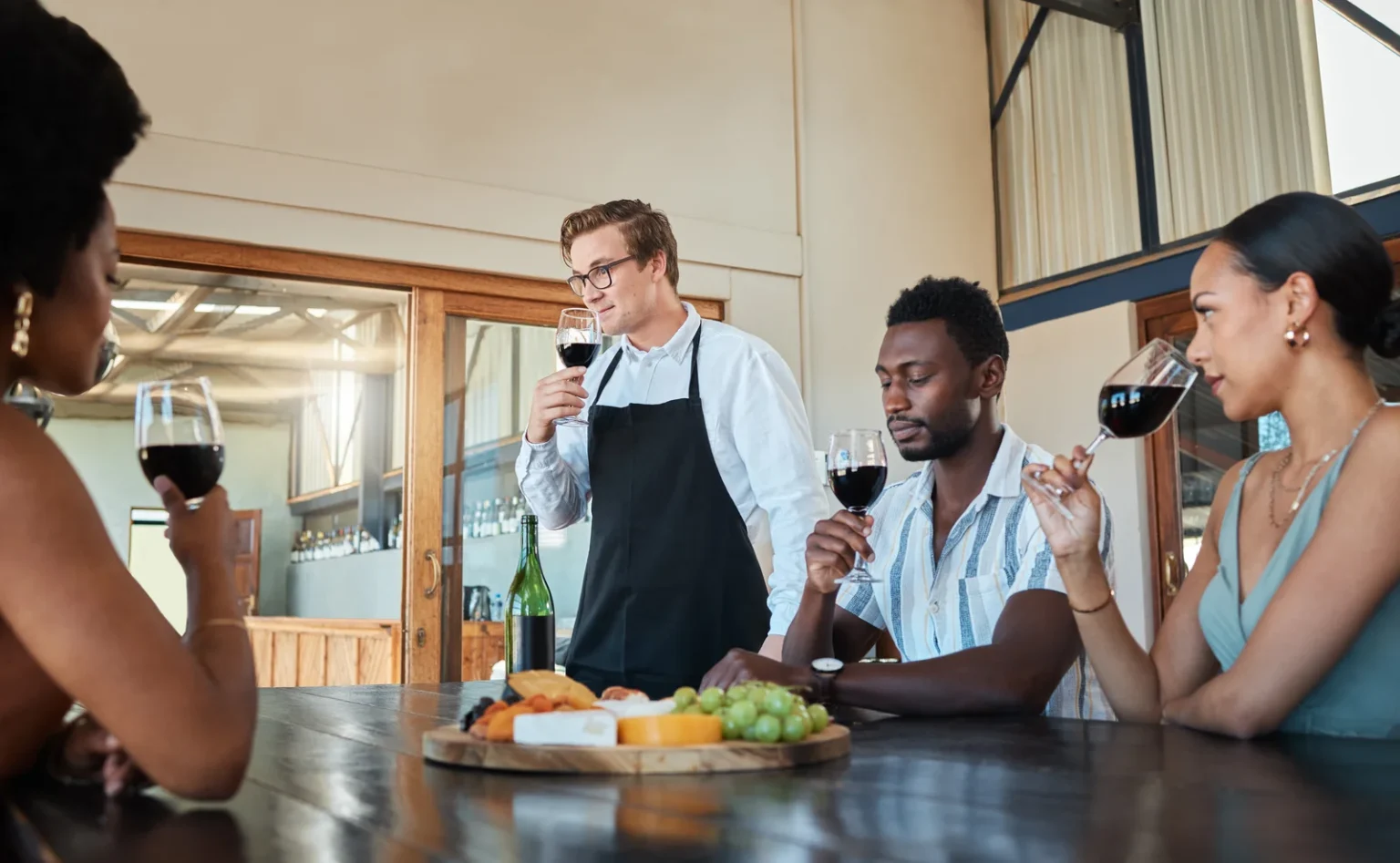
A good team session is short, structured and led by someone who has tasted the wines first. The aim is shared language, not perfect scores.
- Pick two or three wines: one from each style you sell most, such as a dry white, a light red and a sparkling wine.
- Pour small amounts and go in order: appearance, nose, palate, conclusion for every glass.
- Write one sentence per wine: everyone drafts their own before anyone hears the group answer.
- Compare notes: discuss where your words differ and why.
- Link it to the menu: ask which dishes on tonight’s menu each wine would suit.
Banquet teams can use the same routine when a client wants to approve a wine before an event. A tasting also prepares staff for a question hosts raise often, which is how corkage charges work for guests who bring their own wine. Staff who can taste a guest’s bottle properly, and explain the policy calmly, avoid awkward moments at the table.
Want your own team to taste with confidence? A modular session built around your wine list takes less time than most owners expect.
What Do You Need to Set Up a Wine Tasting?
You need less than you think, but each item protects the result. The wine, the glass and the room all change what you taste.
- Clean, odour-free glasses: a trace of soap or a musty cupboard smell ruins the nose.
- Wine at the right serving temperature: whites and sparkling wines cool, reds a little cooler than a warm dining room.
- A neutral room: no strong incense, cooking smells or perfume nearby.
- Plain water, unflavoured bread and a spittoon: to reset your mouth, and because professionals spit during a tasting.
Pour small amounts, because a tasting is about attention, not volume. Rules on drinking age and permits differ by state, so check ID against your local excise rules before any trainee joins.
How Does Wine and Food Pairing Connect to Wine Tasting?
Wine and food pairing starts with what you found in the glass. Once you know a wine’s sweetness, acidity, tannin and body, you can match it to a dish by balance rather than by memorised rules.
- Match weight with weight: a light, crisp wine suits a light dish, and a full-bodied red suits a rich one.
- Let acidity cut through fat: a fresh white with something creamy or fried clears the palate.
- Watch tannin with spice: very tannic reds can feel harsher beside hot chilli, so ask how spicy the dish is.
Indian tables often share many dishes at once. In that case, suggest a flexible, medium-bodied wine that works across the spread, and let the guest taste before they commit. Servers get better at this when they practise on real menus, which is the idea behind F&B training programmes built around your own outlet.
Which Indian Wines Should Staff Taste First?
Start with wines your guests are most likely to order. India has two main wine-growing areas: Maharashtra, especially around Nashik, and Karnataka. Tasting local bottles first gives you real talking points.
“Nashik Valley Wine” is a registered Geographical Indication in India, listed with the GI Registry. A geographical indication protects the name of a product that comes from a particular place, so a guest who asks “is this really from Nashik?” gets a clear answer.
Priya, a restaurant owner in Pune, started her staff tasting with one white and one red from nearby vineyards. She asked each server to write one honest sentence about each wine and read it out. Within a month, her team could recommend a local bottle without reaching for the menu, and guests began asking for Indian wine by name.
How Do You Describe a Wine to a Guest Without Sounding Pretentious?
Describe the wine in everyday words and stop after one or two sentences. A reliable formula has three parts: the style, the main flavour, and what it goes with. For example: “This is a dry, crisp white with citrus notes, and it works well with grilled fish.” Then ask, “Does that sound like what you had in mind?”
Rohit, a floor manager at a lounge in Mumbai, once heard a new server tell a table, “This one is very complex and layered.” The guests nodded politely and ordered something else. Rohit coached him to say, “It is smooth with soft red fruit, easy to drink with the tandoori platter.” The next table ordered it.
If you do not know, say “let me check with the sommelier”. Guessing costs more trust than admitting a gap.
Where Should You Go Next After Learning Wine Tasting Basics?
This guide is the hub for the wine knowledge cluster on this site. Each topic below goes deeper into one part of wine tasting and service, so pick the one that matches your next training need.
| Topic | What it covers | Read next |
|---|---|---|
| Decanting | When and how to decant at the table | Decanting wine for restaurant staff |
| French regions | The main regions behind many wine lists | French wine regions for sommeliers |
| Glassware | Matching glass shape to each wine style | Types of wine glasses for servers |
| Fermentation | How grape juice becomes wine | Wine fermentation basics |
| Storage | Keeping bottles in good condition | Wine storage basics |
| Styles | Telling still and sparkling wines apart | Still wine vs sparkling wine |
Conclusion
Wine tasting gives service staff a calm, repeatable way to know what they are selling. Learn the four stages, use plain words for sweetness, acidity, tannin, body and finish, and taste your own list before you recommend it. Start small: one wine, one notebook, one honest sentence.
Ready to train your floor team on wine? Ask about Adevo’s wine and F&B training built around your outlet.
Frequently Asked Questions: Wine Tasting
Q: What is wine tasting in simple terms?
A: Wine tasting is a short routine of looking at, smelling and sipping a wine to describe it and judge its quality. It follows the order appearance, nose, palate and conclusion. Service staff use it to recommend wines with confidence.
Q: What are the basic steps of wine tasting?
A: Look at the colour, swirl and smell the aroma, taste with a small sip, then form a view on balance and finish. Using the same order every time makes your notes comparable from one wine to the next.
Q: Do I have to swallow the wine during a wine tasting?
A: No. Professionals often spit to stay alert, and a spittoon or cup is normal at a team tasting. Rules on alcohol and age differ by state, so follow your outlet’s policy and local excise rules.
Q: How does wine and food pairing relate to wine tasting?
A: Wine tasting tells you the wine’s sweetness, acidity, tannin and body. Wine and food pairing then matches those traits to the dish, such as light with light or crisp with creamy.
Q: Which Indian wines should a beginner taste first?
A: Start with bottles from Maharashtra, especially Nashik, and from Karnataka, since these are the main wine-growing areas. Taste one white and one red, and write one sentence about each.