Wine storage comes down to a few habits: keep bottles on their side, in the dark, away from vibration, and at a steady cool temperature. Get those right and the bottle tastes the way the producer meant it to when it reaches the guest. Rohan, a bar manager at a beach restaurant in Goa, once found a half case of red wine standing upright beside the kitchen wall, next to the dishwasher that ran all evening. Nobody had done anything dramatic. The bottles had simply sat in the wrong spot for weeks, and the wine tasted tired. This guide shows how to set up wine storage in an Indian outlet, with or without a cellar, and Adevo’s F&B training programmes build the same habits into service teams.
Key Takeaways
- Good wine storage means bottles on their side, in the dark, away from vibration, draughts and sudden temperature change.
- Steadiness matters more than hitting an exact number; red wine is traditionally stored at 13 degrees C.
- Indian heat and unstable power are the biggest risks, so plan your wine storage around them, not around a textbook cellar.
- A simple rotation and check routine protects stock more than any single piece of equipment.
What Are the Basic Rules of Wine Storage?
Store wine on its side, in darkness, without vibration, draughts or sudden temperature swings. That is the whole foundation, and every other tip is a variation on it.
Wine is alive in a slow, quiet way. Heat speeds up its ageing and flattens the fruit. Light, especially strong light, can damage it. Constant movement unsettles the liquid and any sediment in older bottles. A cool, dark, still corner does more for a bottle than an expensive rack in a bright, busy room.
The rules look simple on paper, but a working restaurant puts pressure on every one of them. Stock arrives mid-service, storerooms double as dumping grounds, and the cool spot is often the one next to a compressor. Good wine storage is mostly a matter of choosing the right spot once and then protecting it.
Why Should Bottles Lie on Their Side?
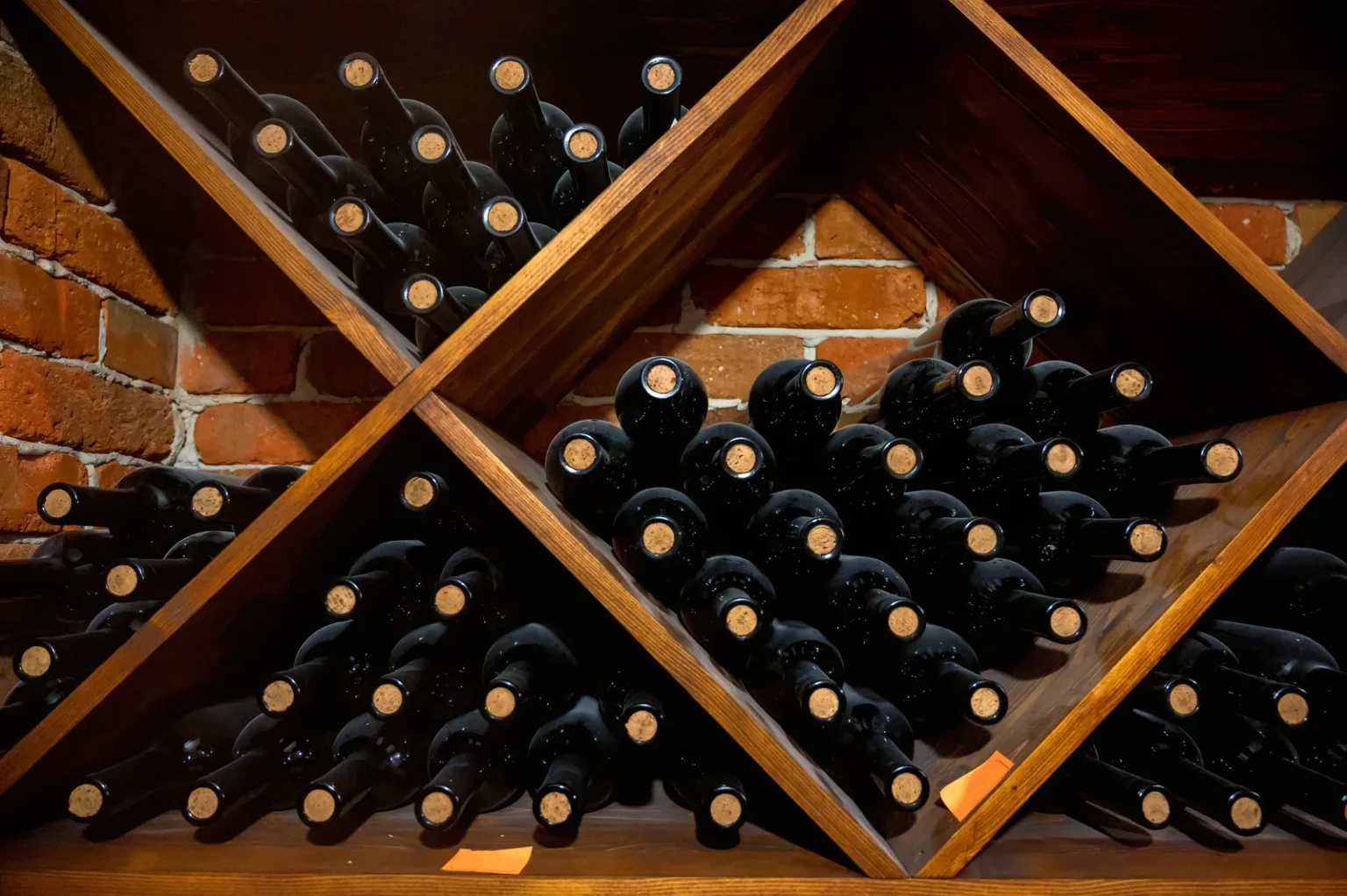
Cork-stoppered bottles lie on their side so the wine keeps the cork moist and the seal stays tight. A dry cork shrinks, lets in too much air, and the wine spoils faster.
The Food and Beverage Service Management notes from Uttarakhand Open University cover wine storage in section 2.6. They describe the same core rules: lay cork-stoppered wine on its side to keep the cork moist, keep it away from floor vibration, store it in darkness, and avoid draughts and sudden changes in temperature. This is a standard Indian hospitality syllabus, so it is a fair picture of what your own trainees are being taught. Owners who want managers to treat stock like an asset, not a shelf item, often start with structured hospitality management courses that cover inventory and cost control alongside service.
Screw-cap bottles do not need the cork to stay damp, but most outlets store everything on its side anyway. It saves space on a rack and keeps one habit for the whole team. Keep the label facing up so a captain can read the bottle without pulling it out.
What Temperature Is Right for Wine Storage in India?
The same Uttarakhand Open University notes give 13 degrees C (55 F) as the storage temperature for red wine. Treat that as a target, then remember the larger rule: a steady temperature beats a perfect one.
A cellar at a constant, slightly warm level is kinder to wine than a cold room that swings up and down every time the power fails. Fluctuation makes the liquid expand and contract inside the bottle, and over time it stresses the seal.
In India the problems are practical. Summers push ordinary storerooms far above any sensible wine temperature. Power cuts switch off cooling without warning. A shelf near an oven, a geyser or an open kitchen door can cook a bottle without anyone noticing. So the first job is to find the coolest, steadiest place you have and defend it from heat.
White and sparkling wines are chilled for service, but long-term wine storage for them follows the same logic: cool, dark and steady. Chill only what you will pour soon, because repeated chilling and warming damages the wine. A cheap thermometer on the shelf pays for itself the first time it catches a failed cooler. Check it at the start of every shift and write the reading down in a simple log book, so a slow drift shows up before a bottle suffers. Treat the room like any other food store and keep it as clean as kitchen hygiene standards expect of a kitchen.
Does Humidity Matter for Wine Storage?
Yes. Very low humidity can damage wine over time because a cork only lets in a very small amount of oxygen, and a dried cork lets in more. Decanter, a UK wine publication, explains this in its humidity advice. It is a global source, so read it as a principle and apply it to Indian conditions.
Most Indian bars do not have a cellar with controlled humidity. That is fine for a working outlet. You are rarely keeping a bottle for decades; you are holding stock for weeks or months. Two practical points follow:
- Do not place wine near an air conditioner outlet or a dry, blowing draught.
- Do not worry about damp so much that you store bottles in a wet room where labels peel and mould grows.
Meera, a restaurant owner in Jaipur, set up her wine storage in an air-conditioned dining room because it felt cool and safe. The room was dry, the bottles stood near the vents, and several corks looked shrunken when she checked them. She moved the stock to an interior storeroom with steadier air and fitted a simple thermometer. The labels stayed clean, and the corks stayed firm.
How Can You Manage Wine Storage Without a Cellar?
You can protect wine without a cellar by choosing one steady, dark, cool spot and fitting it with a rack and a thermometer. A small wine fridge also works for a bar with limited stock, as long as it is on a reliable power supply.
Follow these steps when setting up a space:
- Pick the spot: an interior room, away from the kitchen, boilers and direct sunlight.
- Check the floor: avoid places near compressors, generators or anything that shakes.
- Fit a rack: bottles on their side, labels up, with enough room to reach each one without disturbing the others.
- Add a thermometer: read it at the start of every shift and note any change.
- Plan for power cuts: know who to call and where the stock moves if cooling fails.
Keep the wine storage area clean and closed, too. Pests, dust and leaking pipes damage labels and cases. Clear the floor, fix leaks quickly and keep cartons off the ground. Service teams pick up this routine faster when it is part of food and beverage service training, not a note on the storeroom door.
If space is tight, separate your stock by use. Keep the wines you pour daily within reach and the slower, pricier bottles in the coolest part of the room.
How Do You Rotate Stock in Wine Storage?
Use the oldest stock first, label it clearly and keep a simple log. In wine storage, rotation protects the bottles you forget about at the back of the rack.
Most wines on an Indian restaurant list are meant to be drunk fairly young. A bottle that sits for a year in unsteady heat does not improve; it declines. So write the delivery date on the case or shelf tag, place new stock behind old, and check the thermometer reading against your stock sheet each week.
Imran, a beverage supervisor at a hotel in Hyderabad, noticed that one red kept coming back from tables with a flat, stewed taste. He traced it to a pallet stacked beside a service lift, where vibration and heat built up all day. He moved the pallet, set up a first-in, first-out tag on every shelf, and the returns stopped. The wine had not changed; the storage had.
What Should Staff Check Before Serving a Stored Bottle?
Before a bottle goes to the table, check the cork, the label and the smell. A pushed-out cork, seeping wine or a sharp, cooked or musty smell is a signal to set the bottle aside and tell your supervisor.
Training staff to spot these signs protects the guest and the margin. A server who can say “this bottle looks wrong, let me bring another” is worth more than a server who pours and hopes. Pair this habit with tasting practice, so the team knows what a healthy bottle should smell and taste like. Our guide on wine tasting basics for F&B service staff covers that skill step by step.
Good wine storage and good service are linked. If your stock is stored badly, even the best-trained captain cannot fix what is already in the bottle. If your team does not recognise a faulty bottle, good storage is wasted on the guest’s table.
Want your service team to handle stock and service with confidence? Talk to us about a modular programme built around your own bar and storeroom.
Conclusion
Wine storage is a habit, not a purchase. Keep bottles on their side, in the dark and still, at a steady cool temperature, and protect them from Indian heat and power cuts. Rotate stock, log the temperature and train staff to spot a spoiled bottle before it reaches the table.
Want your team handling wine stock the right way? Ask Adevo about F&B training for your outlet built around your bar, your storeroom and your list.
Frequently Asked Questions: Wine Storage
Q: What is the best way to store wine at home or in a bar?
A: Store bottles on their side, in the dark, away from vibration and draughts, at a steady cool temperature. Pick the coolest interior spot you have. For wine storage in a bar, add a rack and a thermometer so you notice problems early.
Q: What temperature should red wine be stored at?
A: The Uttarakhand Open University food and beverage service notes give 13 degrees C (55 F) for red wine. In India, a steady temperature that stays near that target is better than a colder one that swings. Avoid heat sources and unreliable power.
Q: How should wine be stored if you have no cellar?
A: Use an interior room or a small wine fridge, keep bottles lying down, and shield them from sun, kitchen heat and vibration. Check the temperature every shift. That is enough for most working outlets that hold stock for weeks or months.
Q: Why is wine stored on its side?
A: Cork-stoppered bottles lie on their side so the cork stays moist and the seal stays tight. A dry cork can shrink and let in extra air, which spoils the wine faster.
Q: Does humidity affect wine storage?
A: It can. Very low humidity can damage wine over time because corks admit only a small amount of oxygen, and dry corks admit more. Keep bottles away from air-conditioner vents and dry draughts, and avoid damp rooms too.