A corkage charge is the fee a restaurant, hotel or banquet venue levies for opening, chilling and serving a bottle that the guest has brought instead of buying it from the venue. The idea is simple, but in India it sits inside a tangle of state excise rules, so staff often explain it badly. This guide shows what the charge covers, where it is allowed, and how to handle the conversation at the table or in the banquet office, with context from Adevo’s F&B training programmes for service and banquet teams.
Key Takeaways
- A corkage charge pays for service, glassware and handling when a venue serves a bottle the guest supplied.
- Whether guests may bring their own alcohol at all depends on state excise rules and your licence, so confirm before you quote anything.
- Always state the corkage charge before the event or order, in writing for banquets, never at billing time.
- A short, calm script and a written policy protect both the guest relationship and the outlet.
What Is a Corkage Charge?
Think of a corkage charge as a service fee for handling a bottle of wine or other beverage that the guest provides. It is not a tax and not a penalty. It pays for the staff time, glassware, ice and service that the venue still provides.
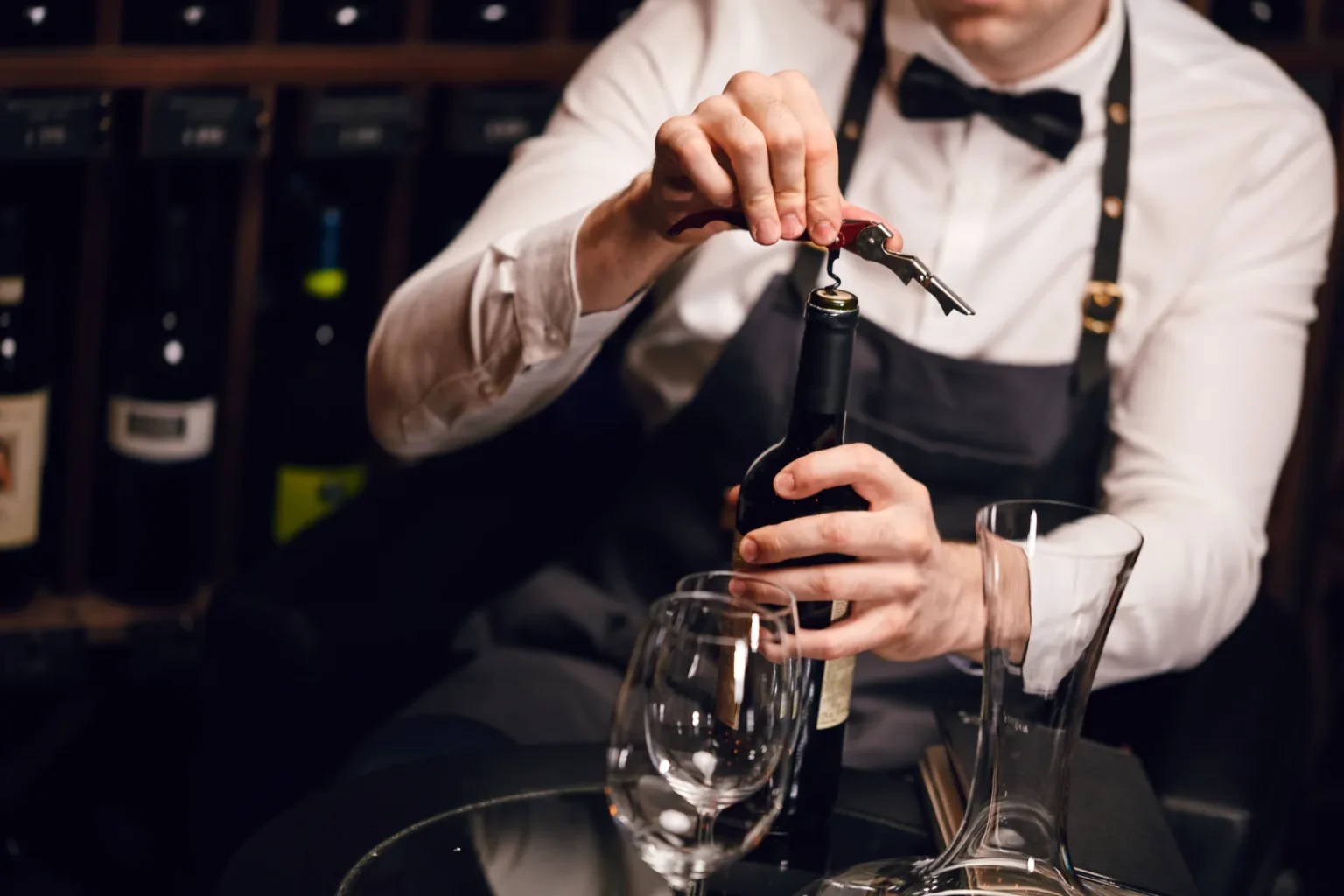
Think of what happens when a guest hands over a bottle. A captain opens it, a steward brings clean glasses, someone chills it, and the table is served and cleared. All of that has a cost even though the venue did not sell the drink.
The word comes from “cork”, the traditional wine stopper, but venues apply the same idea to any approved bottle. In many countries it is routine. In India, it exists only where state rules and the venue’s licence allow guests to bring their own beverages.
Why Do Venues Levy a Corkage Charge?
Venues levy it for three reasons: cost recovery, margin protection and control.
- Cost recovery: staff time, glassware breakage, washing and ice all cost money.
- Margin protection: beverage sales often carry a large share of an outlet’s profit, so a bottle brought from outside removes that income.
- Control: a fixed charge discourages abuse and keeps the practice orderly.
Sensible venues also see the upside. A guest who brings a special bottle for an anniversary may order extra food, desserts and other drinks. A fair corkage policy can win loyalty without giving away the whole beverage margin.
To see how beverage and service charges are written into event paperwork, review the guide to banquet setup types for your event, then add your corkage terms to the same event paperwork.
Is a Corkage Charge Legal in India?
It depends on the state and on your licence. India has no single national rule, because alcohol is regulated by each state’s excise department.
Sommelier India notes that the Indian excise system is convoluted, that bringing a personal bottle of wine to drink in a restaurant is still illegal, and that some states have embraced change. That is why many restaurants cannot offer corkage at all.
For staff, the practical rules are simple:
- Never assume: Ask the manager whether your outlet is allowed to accept outside bottles.
- Check the licence and any event permit: Banquets may follow different rules from restaurants in some states.
- Do not improvise: If you are unsure, say that you will check and come back.
A venue that quotes the fee where it has no permission can put its licence at risk. When in doubt, the manager or the excise team decides, not the captain.
How Is a Corkage Charge Calculated?
Venues usually set the fee in one of three ways. The model matters less than the clarity.
- Per bottle: a fixed amount for each bottle opened.
- Per event or per table: a flat fee for the whole function or booking.
- Percentage-based: a share of the value of what is brought in.
Whichever model you use, write it in the policy. Staff should be able to say the number and the basis in one sentence, such as “our corkage charge is a fixed amount per bottle, and it includes glassware, chilling and service.”
How Does a Corkage Charge Differ From Service Charge and Cover Charge?
Guests often confuse the three. A clear explanation avoids arguments at billing.
| Charge | What it pays for | When it applies |
|---|---|---|
| Corkage charge | Serving a guest-supplied bottle | Only when outside bottles are allowed |
| Service charge | Overall service staff | On the bill, as per outlet policy |
| Cover charge | Entry, music or an event | At entry or booking |
Keep the three separate on the bill. If a guest queries a line, you should be able to explain each in one sentence.
Explaining charges calmly is a people skill as much as a policy one. Staff who handle that conversation well often come from teams that practise communication, which is why many outlets pair product knowledge with hospitality management courses for supervisors.
How Should Banquet and F&B Staff Handle a Corkage Request?
Handle the request in a clear sequence. A calm, consistent script protects the guest relationship.
- Check the policy: Confirm that outside bottles are allowed for this outlet or event.
- Tell the guest before the event or order: Quote the fee, what it includes and any limits.
- Confirm in writing for banquets: Add it to the booking or event order.
- Inspect the bottle with the guest: Check that it is sealed and appropriate.
- Serve properly: Use clean glassware, correct temperature and the usual service standards.
- Bill it clearly: Show it as its own line.
- Keep a record: Note the bottle, the charge and the approval.
Farhan, a banquet manager in Hyderabad, once let a wedding family bring wine without quoting a corkage charge in advance. At billing, the father felt surprised and the conversation turned tense. After that evening, Farhan added a corkage line and a short explanation to every event order, and the problem did not return.
What Should a Written Corkage Policy Include?
A good policy fits on one page and uses plain language that a new steward can follow on the first day. It should answer the questions guests and staff ask most.
- Whether outside bottles are allowed, and for which outlets or events
- The amount and how it is calculated
- What the charge includes: glassware, chilling, service
- Any limit on the number or type of bottles
- Who approves exceptions
- A reminder that staff may refuse service where rules or safety require it
Share the policy with every captain, steward and banquet coordinator, and rehearse the script at the pre-shift briefing. For a wider view of how beverage income and costs are tracked, read the restaurant profit and loss statement guide.
What Mistakes Do Staff Make With Corkage?
Most problems repeat. These five mistakes are the common ones.
- Quoting at billing time: the guest feels ambushed.
- Promising something the licence does not allow: the venue takes the risk.
- Treating it as a punishment: a defensive tone ruins the evening.
- Skipping glassware care: the fee implies full service.
- Not recording the event: disputes cannot be settled later.
Neelam, a captain at a city restaurant, used to say “that is our rule” when guests asked about the charge. After a short briefing, she changed her line to “that covers the glasses, the chilling and the service at your table”, and complaints about the charge dropped.
Want your service team trained on guest conversations like this? Talk to us about a programme built around your outlet.
How Should Managers Train Teams on Corkage Policy?
Train in short, practical sessions. Brief the policy, rehearse the script and review any complaints weekly.
Start with the legal question, because it decides everything else. Then train the script, the billing line and the record.
Conclusion
The corkage charge is a fair fee for serving a bottle the guest brings, but it only works where state rules and your licence allow it. Confirm the policy first, quote the charge before the event, put it in writing and explain it in one calm sentence. Clear rules protect the guest, the staff and the licence.
Ready to build clear service policies with your team? Ask Adevo about F&B and banquet training for your outlet built around your own rules and guests.
Frequently Asked Questions: Corkage Charge
Q: What does corkage charge mean?
A: A corkage charge is a fee a venue charges for serving a bottle that the guest brings. It covers service, glassware, chilling and handling. It applies only where outside bottles are permitted.
Q: Is corkage charge allowed in India?
A: It depends on the state and the venue’s licence. Alcohol is regulated by each state’s excise department, and in many places bringing your own bottle to a restaurant is not allowed. Confirm your local rules before quoting any charge.
Q: How much is a typical corkage charge?
A: There is no standard amount. Venues set the charge per bottle, per event or as a percentage. State the model and the number clearly before the guest orders.
Q: Is a corkage charge the same as a service charge?
A: No. A service charge covers overall service on the bill, while corkage applies only to a guest-supplied bottle. Show them as separate lines so guests understand what they are paying for.
Q: Can staff refuse a bottle that a guest brings?
A: Yes, where policy, licence or safety requires it. Staff should explain politely, offer an alternative from the menu and call the manager if the guest objects.