The right type of banquet setup depends on one question: what will guests do in the room? Listen, write, eat, talk or stand each point to a different layout, and a wrong answer shows up within the first hour. Adevo’s food and beverage training courses give banquet teams operational checklists and supervisory skills for consistent event setups.
Sunita coordinates events at a hotel in Lucknow. A family booked an engagement function for 120 guests, with a ring ceremony followed by dinner. The event order said “banquet style”, so her team set round tables facing every direction. During the ceremony, half the room watched the back of someone’s head, and the family’s photographer could not find a clear angle. Sunita’s captain reset the front six tables into rows during the speeches. The ceremony went ahead, a little late and a little awkward.
You know this pattern: the layout was correct for dinner and wrong for the ceremony that came first. This guide gives you a four-question method for choosing the right type of banquet setup, then matches it to common Indian events, and shows how your banquet hall setup can narrow the options before you start. Keep the event order open as you read, and test each section against a booking you handled recently.
Key Takeaways
- The right type of banquet setup follows the guests’ main activity, so decide that before you decide on tables.
- Events with two phases, such as a ceremony and then dinner, usually need two layouts and a planned changeover.
- Your banquet hall setup (pillars, stage position, entrances) removes some options before the choice even starts.
- A written layout on the event order prevents most last-minute resets.
What Decides the Right Type of Banquet Setup?
Four questions decide the right type of banquet setup: what guests will do, how many will attend, how long the event runs, and how food will be served. Teams that answer all four before touching the floor rarely reset. Hospitality programmes, including soft skills training courses built for banquet and service teams, treat these questions as the first step of event planning, not an afterthought.
- Guest activity: Listening points to theatre or classroom, eating to rounds, discussing to horseshoe or boardroom, and mingling to cocktail tables.
- Headcount: The same room holds fewer people in table layouts than in rows, so confirm the number against the layout, not the hall’s brochure figure.
- Duration: A short briefing tolerates tight theatre rows, but a five-hour wedding needs comfortable seating and room to walk.
- Food service: Plated service needs wide aisles for staff, buffets need station space and queue room, and family-style needs bigger tables.
Answer these in order and the type of banquet setup usually becomes obvious. When two answers conflict, such as a long event with a very large headcount, the layout becomes a compromise, and the event order should record which factor won.
Which Type of Banquet Setup Suits Each Event?
Each event type has a default layout, and the exceptions come from the four questions above.
Weddings and Receptions
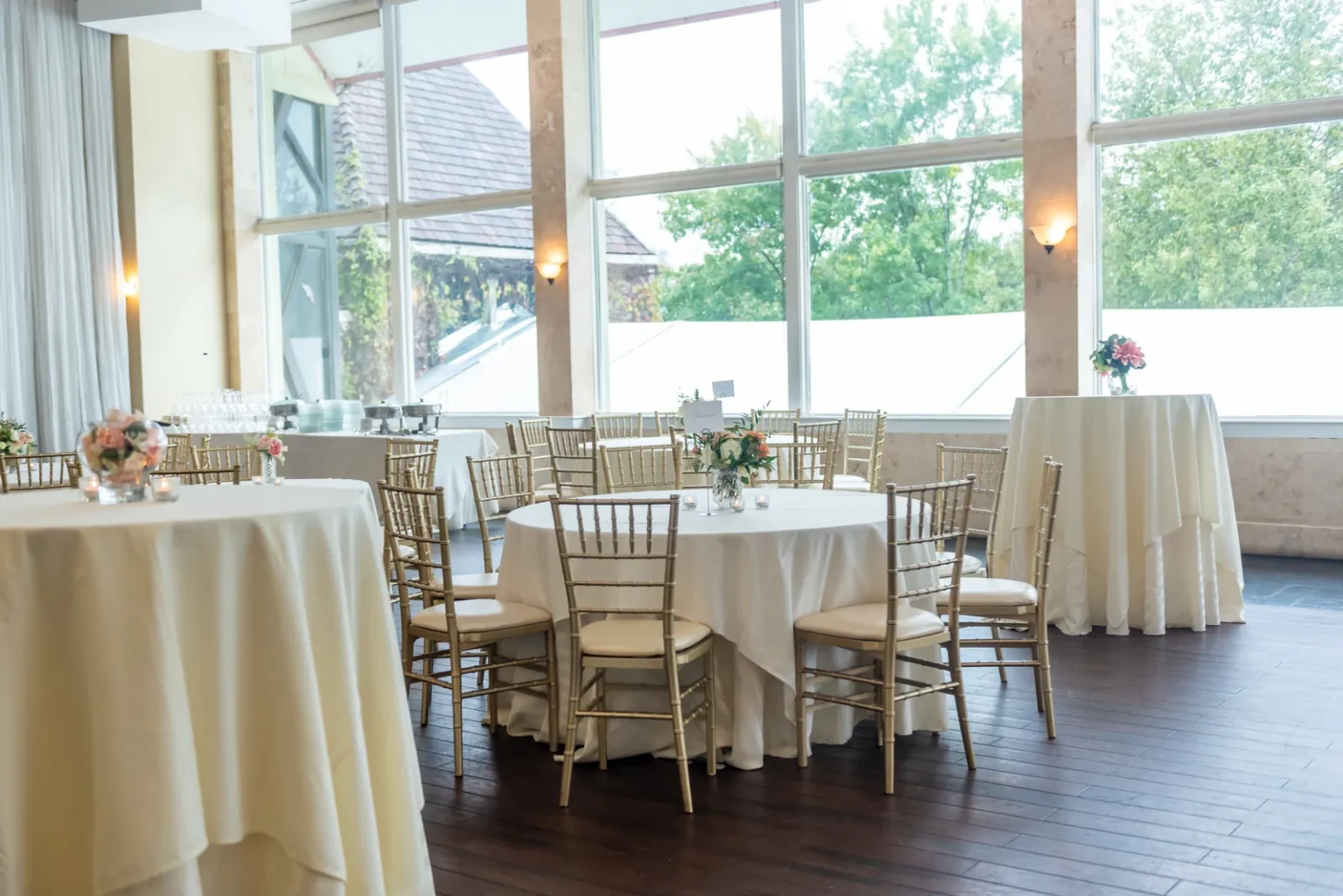
Round tables with food stations are the usual type of banquet setup for Indian weddings, because families sit together and guests move between tables and stations. Add cocktail tables for arrivals and seating pockets for elders. If a ceremony runs in the hall, plan rows for it and a timed changeover to rounds.
Corporate Conferences
Theatre or classroom suits a conference, depending on whether delegates write. Add rectangular rows or rounds for the lunch break, and plan who moves the furniture and when. Corporate clients notice delays more than decoration.
Training Sessions and Workshops
Classroom, horseshoe and herringbone layouts work for training because the trainer can see every learner. Choose horseshoe for interactive groups and classroom for note-heavy sessions. Avoid theatre for anything longer than a briefing.
Product Launches and Presentations
Theatre maximises capacity and keeps every chair pointed at the screen. If the launch includes dinner, cabaret seating keeps the stage in view while guests eat.
Awards Nights and Cultural Programmes
Cabaret, with seats on one side of each round table, balances a meal and a clear view of the stage. Rounds with a few angled tables are a cheaper alternative if the stage is wide.
Want your banquet team to match every event to the right layout? Explore Adevo’s food and beverage training for banquet teams and give every captain the same checklist.
Board Meetings and Leadership Offsites
Boardroom or hollow square keeps every participant on equal footing. Check that the room is not too large, because a boardroom table in a big hall feels empty and swallows voices.
Cocktail Evenings and Networking Events
Reception style, with high tables and a few lounge seats, lets guests circulate. It also fits more people into the same hall than any seated format.
How Does Your Banquet Hall Setup Limit the Choice?
Your banquet hall setup removes options before you start: pillars block sightlines, a low ceiling kills a tall stage, and a single entrance makes a buffet queue dangerous. Walk the room with the event order in hand, and mark which layouts it can actually carry.
Large venues solve this with flexibility. The Grand Ballroom at Delhi’s Yashobhoomi convention centre can host around 2,500 guests, according to The Week, and the centre’s seating can switch between flat floor and tiered formats. Most hotel halls have no such luxury, so your banquet hall setup is a fixed puzzle, not a blank canvas.
Check these fixed features before promising a layout to any client:
- Pillars and columns: They break rows and block stage views, so avoid long theatre rows behind them.
- Stage position: A stage on a long wall suits cabaret and theatre, while a stage on a short wall suits rows.
- Entrances and service doors: Place buffet stations away from them so queues do not block arrivals.
- Ceiling and lighting: Low ceilings dim the effect of tall centrepieces and make large screens harder to see.
Record each limit once on a standard floor plan for the hall, so the sales team quotes only layouts the room can actually carry.
Food and beverage managers handle these trade-offs daily, and our pillar guide to banquet setup types shows the layouts they choose between.
Imran manages events at a hotel in Mumbai. A tech company wanted a 250-person product launch with dinner. The hall had two pillars near the stage and a single entrance. Imran proposed cabaret seating angled around the pillars, with the buffet moved to a side room. The client agreed because he showed a floor plan, not a promise. The launch ran on time and the buffet never blocked the door.
How Do You Match the Setup to Your Team and Timing?
Any type of banquet setup only works if your team can build it in the time you have. Count the staff, the hours and the furniture before you commit, and be honest about changeovers.
The banquet team often includes a manager, a coordinator, captains and stewards, with each role handling different parts of the setup.
A simple timing rule helps: build the layout with the most furniture first, and adjust with the least. Theatre rows take little time to set but long to strike, while rounds take longer to build and need cover settings. Allow extra time for any layout with a stage, a head table or a decorated backdrop.
What Goes Wrong With the Wrong Type of Banquet Setup?
The wrong type of banquet setup shows up as discomfort long before anyone complains.
- Cramped aisles: Staff cannot reach guests, and plates arrive late.
- Poor sightlines: Guests turn their chairs, and the room looks untidy.
- No writing space: Delegates balance laptops on knees in theatre rows.
- Echoing, empty rooms: Too few guests in too large a layout feels like a failed event.
- Mid-event resets: The team moves furniture in front of the guests.
Most of these start with an event order that names a headcount and not a layout. Make the layout a required field, and many of them disappear. The banquet manager and coordinator own that check, and the overview of the food and beverage department shows how those roles divide the work.
Ready to train a banquet team that picks the right type of banquet setup every time? Talk to Adevo about banquet training and we will map a programme to your venue.
Conclusion
Choosing the right type of banquet setup is a four-question habit: activity, headcount, duration and food service. Check the answers against your banquet hall setup, write the layout on the event order, and plan the changeover if the event has two phases.
Priya, a trainee steward in Coimbatore, kept a pocket card with the four questions for her first two months. By the third month she was asking the sales team about the layout before they asked her. A team that asks the questions early stops resetting rooms in front of guests.
Frequently Asked Questions: Type of Banquet Setup
Q: How do I choose the right type of banquet setup?
A: Start with what guests will do in the room, then check headcount, duration and food service. Match those answers to a type of banquet setup, and confirm the hall can hold it. Write the final choice on the event order.
Q: Which type of banquet setup is best for a wedding?
A: Round tables with food stations suit most Indian weddings. Add cocktail tables for arrivals and rows for any ceremony held in the hall. Plan the changeover between phases in advance.
Q: Which type of banquet setup suits a conference?
A: Theatre suits short presentations, and classroom suits sessions where delegates take notes. Use rectangular rows or rounds for the lunch break. Plan who moves the furniture and when.
Q: What is a banquet hall setup?
A: A banquet hall setup is the fixed layout of the room itself: pillars, stage position, entrances, ceiling height and service doors. It limits which table layouts you can use. Walk the room with the event order before you promise a layout to a client.
Q: Can one event use more than one type of banquet setup?
A: Yes, and many do. Weddings often move from reception style to rounds, and conferences move from theatre to rows for lunch. Allow a changeover window and name it on the event order.
Q: Who decides the type of banquet setup for an event?
A: The client’s purpose decides it, the sales team records it, and the banquet manager checks that the room and team can deliver it. The floor team then builds to the written plan.