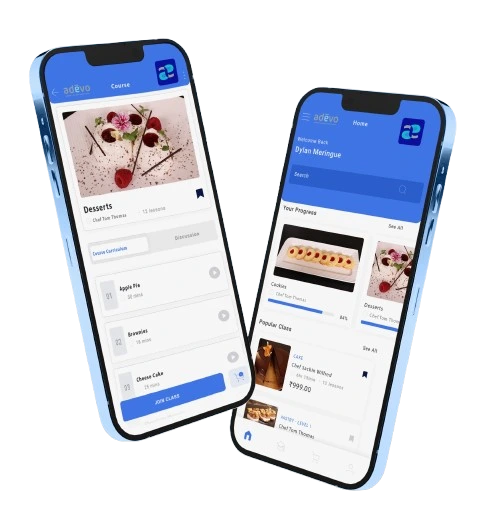

The food and beverage department is the operational heart of any hotel or restaurant. For owners and managers in India, Adevo’s food and beverage training courses are built around what this department actually demands: service SOPs, cost control, and FSSAI compliance.
In most Indian hotels, it generates between 25 and 40 percent of total property revenue. It is also the department with the highest attrition, the most compliance pressure, and the widest gap between trained and untrained performance. Understanding how the food and beverage department is structured, who does what, and how it runs day to day is the starting point for any property owner or HR head trying to improve F&B results.
Key Takeaways
- The food and beverage department covers all food and drink service across a property: restaurants, bars, banquets, room service, and kitchens.
- Most Indian hotels run a three-layer F&B structure: senior leadership, supervisory roles, and ground-level service staff.
- The department’s revenue performance depends on trained people as much as on menu design or outlet concept.
- FSSAI compliance and internal SOPs are the food and beverage department’s responsibility, not just the kitchen’s.
What Does the Food and Beverage Department Actually Do?
For any hotel or restaurant, the food and beverage department owns the guest experience from the moment someone picks up a menu to when they settle the bill. That scope is wider than most people outside the industry assume, and it is worth understanding in full before thinking about structure, roles, or training.
The food and beverage department is directly responsible for everything guests eat and drink across a property. In a hotel, that means the all-day dining restaurant, the bar, room service, banquet catering, coffee shop service, and poolside snack counters — all running simultaneously, often with overlapping teams, under one department’s management. In a standalone restaurant, the scope is tighter but the operational intensity is the same.
On a busy Friday evening, the food and beverage department might be managing 120 covers in the restaurant, a 300-person banquet in the hall, 25 room service orders, and a bar running at capacity — all at once. The department’s ability to plan for that load, brief its teams, coordinate with the kitchen, and respond to problems in real time is what separates properties that guests return to from those they avoid.
The department manages five core functions — and none of them runs in isolation:
- Food service delivery: All-day dining, speciality restaurants, coffee shops, room service, poolside counters
- Beverage service: Bars, wine service, conference beverage stations
- Banquet and event catering: Corporate events, weddings, MICE bookings
- Kitchen coordination: Food production, dispatch timing, food safety compliance
- Cost and inventory management: Menu pricing, F&B cost targets, wastage tracking
- Guest feedback: Complaint handling, service recovery, ratings management
A cost problem is usually a training problem. A compliance gap is usually a systems problem. The food and beverage department’s job is to hold all of these together, across shifts, every day.
Strong soft skills training courses embedded at the service level turn the department into a consistent revenue driver. Without that foundation, the same department becomes a recurring complaint source, regardless of how good the food is.
In a mid-to-large hotel, the department may operate five or more distinct outlets simultaneously, each with its own service style, team, and revenue target.
Consider Ankit, an F&B Director at a 120-room business hotel in Pune. On a typical weekday, his team runs breakfast for 80 covers, a corporate lunch for 40 delegates, afternoon conference breaks, and dinner across two outlets, all while coordinating a weekend banquet with the sales team. Every function is the food and beverage department’s responsibility to execute, track, and account for.
See how Adevo’s food and beverage training courses are designed to support each layer of this operation.
How Is a Food and Beverage Department Structured?
The structure of the department varies by property size, but most Indian hotels and restaurants follow a three-layer model: senior leadership, supervisory operations, and ground-level service.
Senior Leadership Layer
The F&B Director or F&B Manager sits at the top of the department. In larger properties, there may be both roles:
- F&B Director — strategy, outlet development, P&L ownership, reports to General Manager
- F&B Manager — day-to-day operations, staff scheduling, compliance oversight
Supervisory and Operations Layer
Below senior management, the department typically includes:
- Outlet Manager or Restaurant Manager (one per venue)
- Banquet Manager
- Bar Manager
- Floor Supervisors or Captains (shift-level team leads)
- F&B Coordinator (scheduling, BEO management, internal communication)
Service and Kitchen Layer
This is where most of the department’s headcount sits:
- Kitchen team: Executive Chef, Sous Chef, Chef de Partie, Commis
- Service team: Waiters, stewards, bartenders, runners
- Support roles: Cashiers, hostesses, room service associates
Small standalone restaurant (up to 50 covers)
- Owner or Manager (acts as food and beverage department head)
- Supervisor
- Service and kitchen team
Mid-size hotel (50–150 rooms)
- F&B Manager
- Outlet Supervisor / Captain
- Service staff
- Banquet Coordinator
Large hotel (150+ rooms)
- F&B Director
- F&B Manager
- Outlet Managers, Bar Manager, Banquet Manager
- Floor Supervisors, Captains
- Service staff, kitchen team
Effective restaurant staff training in Indian F&B operations changes how fast each layer of the food and beverage department can absorb new staff, new menus, or new service standards.
Key Roles in the Food and Beverage Department
Each position in the department has a defined scope and a distinct set of skills it requires.
- F&B Director: Sets strategy, manages P&L for the department, leads outlet development, and liaises with the General Manager and ownership on revenue targets.
- F&B Manager: Runs day-to-day operations of the department: staff scheduling, outlet performance reviews, vendor relationships, and compliance oversight.
- Restaurant Manager or Outlet Manager: Manages a specific venue within the department: team rostering, guest feedback, daily revenue reporting, and service standard maintenance.
- Floor Supervisor or Captain: Directs service staff during a shift, handles real-time problem-solving, and acts as the operational connector between management and the ground team.
- Waiter, Steward, Bartender: The guest-facing layer of the department. Their skill level (menu knowledge, service technique, complaint handling) directly determines guest satisfaction scores and online ratings.
- F&B Coordinator: Manages scheduling, banquet event orders, and internal administrative functions for the department across outlets.
The department also relies on the kitchen team (Executive Chef, Sous Chef, Chef de Partie), who may sit within the department structure or under a separate culinary division depending on the property’s size and reporting lines.
Food and beverage management covers how these roles connect in practice: the daily responsibilities, decision-making scope, and career path of the manager who holds the department together.
How the Food and Beverage Department Runs Day to Day
The department operates in three recurring phases: pre-service, live service, and post-service. Each is as operationally important as the next.
- Pre-service: The department runs briefings: mise en place checks, reservation review, menu updates, allergen flags, and staff floor assignments. Outlet readiness is confirmed before the first cover arrives.
- During service: The team coordinates between front-of-house and kitchen, handles guest complaints in real time, manages table turns, and tracks revenue against daily targets.
- Post-service: The department closes registers, logs feedback, reviews waste against targets, updates inventory, and briefs the incoming shift.
This cycle repeats across every outlet, every day. In a well-run department, it is documented, trained, and measured. In a poorly run one, it is improvised; the gaps show up as guest complaints, food waste, or missed cost targets.
Priya, an F&B Supervisor at a 200-room resort in Goa, restructured her team’s pre-service briefing from an unstructured 10-minute check to a 20-minute session with menu updates, allergy alerts, and a clear floor assignment review. The department’s complaint rate on service issues dropped within six weeks. The operation had not changed, just how the team prepared for it.
Structured food and beverage training courses give the kitchen team a common production language — from mise en place discipline to dispatch timing and food safety compliance during live service.
What Makes the F&B Department Perform in Indian Properties
The food and beverage department in India operates under conditions that make operational discipline and structured training non-negotiable.
- Language diversity: Teams often span multiple languages and varied literacy levels, requiring the department to use multilingual communication, visual SOPs, and structured briefings in the team’s working language.
- FSSAI compliance: Every F&B operation is a regulated food business under FSSAI. Supervisors and managers, not just the kitchen, must understand licensing requirements, hygiene standards, and food safety training obligations. FSSAI’s food business operator guidelines define the baseline every licensed F&B operation in India must meet.
- High attrition: Indian hospitality sees significant staff turnover at the service level. A department that can onboard and train quickly has a structural advantage over one that relies on experienced staff staying put.
- Volume variability: Hotels in India see wide occupancy swings: full capacity on festival weekends and low occupancy mid-week. The department must manage labour and food cost across these fluctuations without compromising service standards.
India’s hotel and restaurant sector is one of the country’s fastest-expanding employment markets, with new hotel supply coming online across metros and tier-2 cities consistently. That growth means increased demand at every property tier — and every one of them needs a food and beverage department that can deliver.
For hotel owners and HR heads asking where to start, the answer is the same regardless of whether you run one outlet or ten: understand what the food and beverage department needs to function, who fills each role, and what training closes the gap between current performance and the standard you want.
Want to build a stronger food and beverage department? Adevo’s food and beverage training courses are built for Indian hotel and restaurant teams — online, on-site, and customised to your operation. Talk to Adevo to build a program for your property.
Consider Deepa, HR Manager at a mid-market hotel chain in Chennai with four outlets. New F&B staff were being onboarded through unstructured orientation for their first two months. When the team introduced a structured induction program covering FSSAI basics, service SOPs, and menu knowledge, time-to-productivity for new joiners halved. The food and beverage department ran the same covers, with a measurably more confident team doing it.
Want your F&B team trained to the standards this department needs? Ask Adevo about food and beverage training courses built around your team and your guests.
Conclusion
The food and beverage department is not just where food and drink are served. It is one of the most training-sensitive, compliance-dependent, and guest-visible operations in any hospitality property. A department with clear structure, defined roles, and trained people at every layer is what separates properties that grow their F&B revenue from those that simply maintain it.
If you are building or strengthening your food and beverage department, Adevo’s food and beverage training courses are built for Indian hotel and restaurant teams, online and on-site, from service staff to supervisory leadership.
Frequently Asked Questions: Food and Beverage Department
Q: What is the food and beverage department responsible for in a hotel?
A: The food and beverage department is responsible for all food and drink service across a property: restaurants, bars, room service, banquets, and in-house catering. It manages kitchen production, food safety compliance, guest-facing service, and outlet revenue.
Q: What is the typical structure of a food and beverage department in an Indian hotel?
A: Most F&B departments in Indian hotels follow a three-layer structure: senior leadership (F&B Director or Manager), supervisory roles (outlet managers, floor supervisors, captains), and service staff (waiters, stewards, bartenders, kitchen team). The department structure scales in complexity with property size.
Q: Who heads the food and beverage department?
A: The department is typically headed by an F&B Director in large hotels or an F&B Manager in mid-size and smaller properties. They own P&L, team performance, and compliance for the entire department, reporting to the General Manager.
Q: How does the food and beverage department coordinate with the kitchen?
A: The department works closely with the kitchen team on service timing, menu planning, food safety standards, and complaint handling. In most properties, the Executive Chef reports to or alongside the F&B Director, making the kitchen functionally integrated into department operations.
Q: What qualifications does food and beverage department staff need in India?
A: Entry-level roles typically require a hotel management diploma or short-term F&B certificate. Supervisory and management positions require operational experience, formal F&B training, and FSSAI food safety certification for compliance-facing responsibilities.
Q: Why does training matter so much for the food and beverage department?
A: The food and beverage department has the highest guest-facing exposure and the highest attrition of any hotel department. Structured training reduces errors, speeds onboarding, ensures FSSAI compliance, and directly improves the guest satisfaction metrics that drive repeat business and online ratings for the property.