Introduction
A new server didn’t know allergen protocols. A guest got sick. The restaurant lost ₹2 lakh to settlement, lost reputation for months, and lost the server who quit from guilt.
Meanwhile, a competitor invested ₹50,000 in structured F&B training. New hires reached full productivity in 3 weeks instead of 8. Turnover dropped 25% because staff felt trained and valued. Service quality improved. Revenue increased 8% in 6 months.
The difference between these two restaurants? One viewed training as cost, the other as investment.
If you’re running a restaurant in India, this guide gives you a complete staff training framework—from pre-hire assessment through independence, tailored for Indian F&B operations and multilingual teams. soft skills training courses are foundational, but implementing structured training yourself starts with understanding your team’s needs.
The difference between these two restaurants? One viewed training as cost, the other as investment.
This guide gives you a complete staff training framework for your restaurant—from pre-hire assessment through independence, tailored for Indian F&B and multilingual teams.
Understanding Your F&B Team Structure
Before training, understand roles and skill needs.
Front-of-House Roles:
- Server/Captain – Takes orders, serves, handles complaints, suggests wines. Skills: product knowledge, conversation, multitasking, memory.
- Bartender – Makes drinks, rings sales, makes recommendations. Skills: drink recipes, speed, personality, upselling.
- Busser/Service Assistant – Clears tables, refills water, resets tables. Skills: attention to detail, speed, teamwork.
- Host/Receptionist – Greets guests, manages reservations, checks guests in. Skills: communication, organization, problem-solving.
Back-of-House Roles:
- Chef/Executive Chef – Manages kitchen, develops menu, leads team. Skills: culinary knowledge, leadership, food safety.
- Line Cook/Station Chef – Prepares food at specific station (grill, sauces, plating). Skills: cooking technique, speed, quality consistency, food safety.
- Prep Cook – Prepares ingredients, stocks stations. Skills: knife skills, organization, food safety.
- Dishwasher – Washes dishes, maintains cleanliness. Skills: speed, quality, food safety.
Support Roles:
- Manager/Supervisor – Oversees operations, handles complaints, manages staff. Skills: leadership, problem-solving, communication.
- Host Trainer/Senior Server – Trains new staff. Skills: communication, patience, knowledge.
Pre-Hire Assessment & Onboarding
Training starts before day 1.
During Hiring Process:
Interview questions to assess trainability:
- “Tell me about a time you learned something difficult. How did you approach it?” (Assesses learning willingness)
- “What was your favorite job and why?” (Assesses what motivates them)
- “How do you handle pressure?” (Assesses stress management)
Check references, especially for hospitality experience.
Day 1 Onboarding (4 hours):
- Welcome & orientation (venue tour, facilities tour, team introductions)
- Paperwork (employment forms, tax, bank details)
- Culture introduction (“Here’s how we operate, our values, our expectations”)
- Buddy assignment (pair with experienced staff member)
- First shift observation (follow buddy, observe, don’t do much)
First Week Assessment:
Supervisor assesses:
- Communication skills (can they understand instructions? Can they communicate clearly?)
- Language proficiency (do they understand English? Hindi? Can they understand guests?)
- Trainability (are they asking questions? Are they coachable?)
- Physical ability (can they handle the physical demands?)
Core Training Modules for F&B Staff
Module 1: Food Safety & Allergen Awareness (8 hours)
Every F&B person must understand FSSAI compliance.
Topics:
- Hand hygiene (when & how)
- Cross-contamination prevention
- 8 major allergens
- Food storage & temperatures
- Equipment cleaning
his directly connects to understanding how to reduce staff turnover in hospitality — well-trained staff feel confident and valued, leading to higher retention.
Module 2: Menu & Product Knowledge (6 hours)
Servers can’t recommend what they don’t know.
Topics:
- Dish descriptions (ingredients, preparation, calories, spice levels)
- Dietary attributes (vegetarian, vegan, gluten-free, dairy-free)
- Cooking times (“Chef, how long for the lamb curry?”)
- House specialties & best sellers
- Wine/beverage pairings
Module 3: Service Standards (8 hours)
Practical service skills.
Topics:
- Greeting guests warmly
- Table setup standards
- Order taking (clarity, special requests)
- Plate presentation
- Service sequence & timing
- Clearing & resetting
- Handling payment
Module 4: Soft Skills (6 hours)
Communication, problem-solving, teamwork.
Topics:
- Active listening
- Emotional intelligence
- Problem-solving (complaint handling)
- Teamwork & communication
- Stress management
- Conflict resolution
Module 5: POS System & Billing (4 hours)
Technical skills for your specific system.
Topics:
- POS login & navigation
- Order entry & modifications
- Payment processing
- Splitting bills
- Discounts & comps (approval levels)
- Cash handling & security
Module 6: House-Specific Training (4 hours)
Your restaurant’s unique way of doing things.
Topics:
- Your specific SOPs
- House specialties & secret recipes
- Local suppliers & sourcing philosophy
- Pricing & promotions
- House rules (phone policy, break times, dress code)
Multilingual Training Strategy
With India’s linguistic diversity, training must be accessible.
Challenge: A Tamil-speaking server doesn’t understand a Hindi-speaking manager’s safety instruction about chemical storage.
Solution:
- Provide training materials in multiple languages (English, Hindi, Tamil, Telugu, Marathi)
- Key safety terms translated & posted visually
- Pair with multilingual buddy for first weeks
- Manager provides translations or uses gestures/demonstrations
- Written instructions (picture-based for lower literacy)
Kitchen Communication System:
- Order tickets clearly written (not verbal only)
- Hand signals for common requests
- Designated Hindi/regional-language-speaking supervisor in kitchen
- Kitchen meeting weekly (all languages represented)
Training Timeline & Competency Milestones
Week 1: Orientation & Observation
- Milestone: Understands restaurant layout, culture, basic safety
Week 2: Shadowing & Practice
- Milestone: Can handle simple tasks (clearing tables, taking water orders, basic service)
Week 3: Supervised Service
- Milestone: Takes full orders with supervisor nearby, handles regular service scenarios
Week 4: Independence
- Milestone: Works independently during non-peak shifts, escalates as needed
Month 2-3: Mentored Independence
- Milestone: Handles peak shifts competently, recognized by guests, trusted by team
Creating Restaurant Staff Training SOPs
Document your training process so it’s consistent.
SOP: New Hire Training Process
Day 1:
- 9 a.m. – Welcome meeting (HR, general manager)
- 10 a.m. – Venue tour (all areas, guest areas, staff areas)
- 11 a.m. – Paperwork completion
- 12 p.m. – Uniform fit & issuance
- 1 p.m. – Lunch break
- 2 p.m. – Food safety module (2 hours)
- 4 p.m. – Meet assigned buddy, begin shadowing
Week 1 Schedule:
- Daily: 4-hour shifts (morning/mid-shift to observe service flow)
- Daily: 30-minute debrief with trainer (What did you notice? What questions?)
- Friday: Food safety quiz (80% pass required)
Week 2-3 Schedule:
- 6-hour shifts (includes service times)
- Supervised service (trainer nearby, guest interactions observed)
- Post-shift feedback
Week 4 Schedule:
- 8-hour shifts, independent with escalation
- POS training during slow hours
- House SOP training
Addressing Common Training Challenges
Challenge 1: High Turnover (Staff Leave During Training)
Solution:
- Hire oversize for projected turnover (if expecting 30% annual turnover, hire 30% more staff)
- Completion bonus (staff who complete 3-month training get ₹5,000 bonus)
- Flexible scheduling (accommodate school, family obligations)
Challenge 2: Language Barriers
Solution:
- Multilingual trainer or buddy system
- Visual training materials (pictures, diagrams, demonstration videos)
- Patience—allow more time for comprehension
- Regular check-ins (“Do you understand?”)
Challenge 3: Wage Pressures (Staff Need Income, Not Long Training)
Solution:
- Pay during training (don’t expect staff to train for free)
- Accelerated path (core training in 2 weeks, extended learning over 2 more weeks)
- Completion bonus (recognition for completing training)
Challenge 4: Inconsistent Quality (Depends on Trainer)
Solution:
- Standardized curriculum (same training for all staff)
- Trainer certification (trainers are trained before training others)
- Documentation (training checklists ensure nothing’s missed)
- Backup trainers (if primary trainer unavailable)
Measuring Training Success
Competency Assessments:
At end of each week:
- Knowledge quiz (food safety, menu, SOPs) – target: 80%+ pass
- Practical assessment (observed service) – supervisor rating
- Guest feedback (mystery shopper during supervised shifts)
Business Metrics:
- New hire productivity: How many days until handling peak shifts independently? (Target: <30 days)
- Order accuracy: % of orders served correctly (Target: 98%+)
- Guest satisfaction: Average rating from tables served by new hires (Target: 4+/5)
- Staff retention: % of trained staff still employed after 6 months (Target: 80%+)
- Time-to-productivity cost: Training cost vs. revenue generated (Target: ROI positive by month 3)
Conclusion: Training Investment Pays Dividends
Well-trained F&B staff:
- Provide better guest experience (higher ratings, repeat bookings)
- Make fewer mistakes (lower comps, waste, customer complaints)
- Stay longer (lower turnover costs)
- Upsell effectively (higher check averages)
- Manage difficult situations confidently (fewer escalations, better outcomes)
Your action plan:
- Design curriculum: Tailor the 6 modules to your restaurant
- Document SOPs: Write your training process down
- Hire trainers: Identify 2-3 experienced staff to lead training
- Implement: Start structured training with next new hire
- Measure: Track metrics to assess success
- Refine: Adjust based on what works
The investment is modest. The returns—better service, higher guest satisfaction, lower turnover, higher revenue—are substantial.
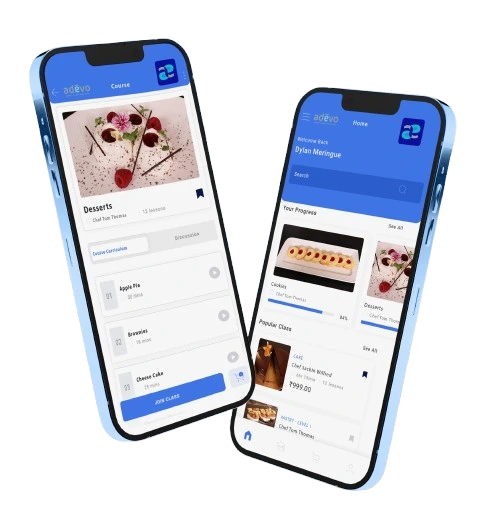
Ready to implement structured restaurant staff training? Adevo’s soft skills training courses include F&B-specific modules. Our hospitality management courses cover training program design and delivery.
Book a consultation: We’ll assess your current training gaps and design a program that fits your restaurant’s size, cuisine style, and customer profile.