Wine fermentation is the process in which yeast eats the sugar in grape juice and turns it into alcohol and carbon dioxide. Every wine on your list, from a light white to a heavy red, starts with that one change. Guests rarely ask about it, but a server who can explain it in two clear sentences earns trust faster than one who recites tasting notes.
This guide covers how wine fermentation works in the tank, why red and white wines differ, and what to say at the table. It suits servers, bartenders and managers, and it sits beside the service modules in Adevo’s F&B training programmes for outlets that want one shared language about wine.
Key Takeaways
- Wine fermentation is yeast turning grape sugar into alcohol and carbon dioxide, and it is the step that makes wine.
- Red wine ferments with the grape skins, which give it colour and tannin, while white wine ferments from white grapes or from juice taken off the skins.
- Some wines go through a second, softer step called malolactic fermentation, which changes how sharp or round they taste.
- You do not need to be a winemaker; you need an accurate two-sentence answer ready for the guest.
What Is Wine Fermentation and Why Does It Matter at the Table?
Wine fermentation decides much of a wine’s strength, body and style, because it turns grape sugar into alcohol. Indian law is specific about the product. The FSSAI compendium on alcoholic beverages defines wine as the undistilled drink made by partial or complete alcoholic fermentation of the juice of fresh, sound, ripe grapes.
That definition gives you three facts worth repeating to a curious guest. Wine is not distilled, it comes from grapes, and fermentation can be stopped early or allowed to finish. The same document names yeast as the agent that ferments sugars into ethanol and carbon dioxide.
Picture Farhan, a captain at a hotel restaurant in Pune. A guest asks whether wine is “just fermented grape juice”, and he freezes. His F&B manager gives him a short answer: yeast turns the grape sugar into alcohol, and red wine does this with the skins in the tank. A week later another guest asks the same thing, Farhan answers in a breath, and the guest asks him to choose the next glass. The product knowledge was small. The confidence it gave him was not.
Outlets that want the same confidence in guest conversation often add online skill development courses alongside product knowledge, so staff can explain wine fermentation and then guide the choice.
How Is Wine Made From Grape to Glass?
The wine making process follows the same broad order in every winery, and wine fermentation sits in the middle of it. Here is the sequence a trainee should be able to repeat:
- Harvest and sorting: pickers bring in ripe grapes, and the winery sorts out poor fruit.
- Crushing and pressing: the winery breaks the grapes to release juice, and for white wine it usually separates the juice from the skins early.
- Fermentation: yeast converts the sugar to alcohol and carbon dioxide in a tank or barrel.
- Settling and maturing: the young wine rests, clears and develops flavour before bottling.
- Bottling: the winery fills, closes and labels the finished wine for sale.
If a guest asks how is wine made, this list is your answer. Keep it to one breath and add the detail only when they ask for more.
How Does Wine Fermentation Work Inside the Tank?
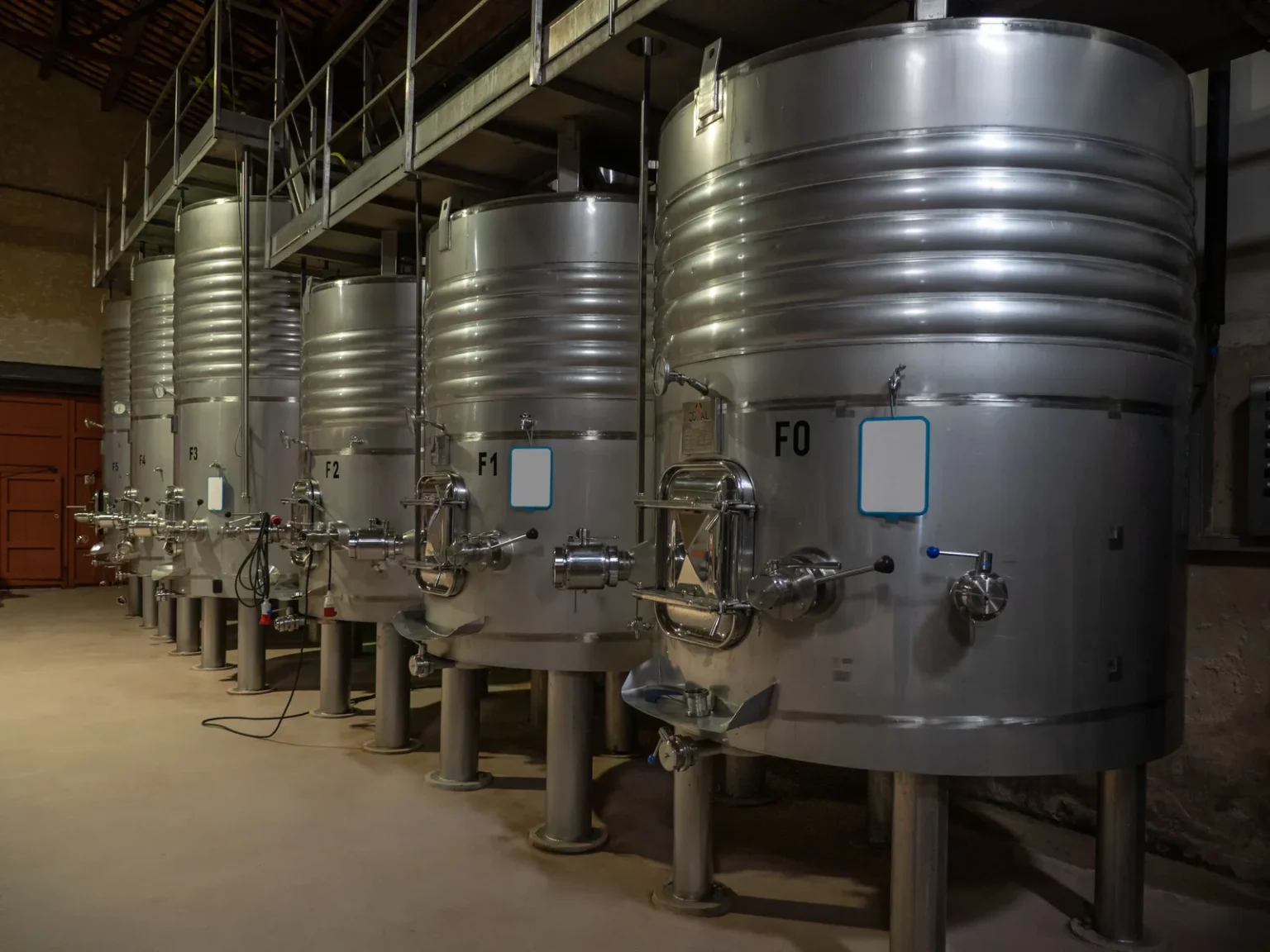
Yeast feeds on sugar and gives off alcohol and carbon dioxide as it works. The carbon dioxide escapes as gas in a still wine, which is why the finished bottle is flat. The alcohol stays and gives the wine its strength.
Two things control the result: how much sugar the yeast is allowed to finish, and how warm the winemaker keeps the tank. A cooler ferment is the usual choice for whites, which protects fresh fruit aromas. A warmer ferment suits reds, which need help drawing colour and structure from the skins, since the skins hold most of what makes a red wine look and feel the way it does. Winemakers set these conditions deliberately, and no two wineries do it exactly alike, which is why two bottles of the same grape can taste different. Bars need the same discipline outside the tank, and a bar that follows clear standard operating procedures for a bar opens, stores and pours wine the same way every shift.
Sugar left in the glass is the line between a dry and a sweet wine. Under the FSSAI compendium, a dry wine carries no more than 0.9% sugar. If the yeast eats nearly everything, the wine tastes dry. If fermentation is stopped early or the yeast cannot finish, more sugar stays behind and the wine tastes sweeter. A guest who says “I like it less sweet” is really talking about what the yeast did.
How Does Red Wine Fermentation Differ From White?
Red wine ferments in contact with the grape skins, and the skins supply the colour. White wine comes from white grapes, or from juice taken off the skins before fermentation begins. That single difference explains most of what guests notice in the glass, from the shade of the wine to the grip on the gums, and it is the first thing worth explaining.
The MANAGE grape entrepreneurship handbook adds two useful details. Longer skin contact gives a stronger colour and more tannin, and fermentation can run from a few days for lighter wines up to about 30 days for stronger ones.
Tannin is the drying, grippy feeling on the gums after a sip of a firm red. Here is how wine fermentation with or without skins plays out in service:
- Red wine: skins stay in the tank, so colour and tannin are higher, and the wine often suits a slightly cooler serve than a warm dining room.
- White wine: it sees little or no skin contact, so it comes out lighter in colour and fresher, and staff usually serve it chilled.
- Rosé sits between the two, because a short spell of skin contact gives it a pink colour.
Want your servers to explain wine this clearly? Adevo’s food and beverage service training courses can add a short product-knowledge module built around your own wine list.
What Is Malolactic Fermentation and Why Do Guests Taste It?
A second, gentler step called malolactic fermentation lets bacteria convert sharp malic acid into softer lactic acid. According to the Kerala Farm Information Bureau, winemaking normally involves two fermentations: the first is alcoholic and driven by yeast, and the second is malolactic and driven by lactic acid bacteria.
This second step does not add alcohol, unlike the first stage of wine fermentation. It changes texture. A wine that has been through it tends to feel rounder and less tart, and many reds and some whites are made this way on purpose.
For the floor, the point is simple. A guest who wants something soft and creamy may enjoy a wine that went through malolactic fermentation, while one who wants crisp may prefer a wine that skipped it. You do not need to say the term aloud.
Why Does Wine Fermentation Matter for Storage and Service?
Fermentation is finished by the time a bottle reaches you, but the work it did still needs protecting. Wine that has been through a careful ferment can still be spoiled by heat, light or careless opening.
Consider Meera, the bar manager at a busy gastropub in Bengaluru. Her team poured wine by the glass but could not say why one white tasted fresher than another. She added a one-line “how it was made” note to each by-the-glass card, and her servers stopped saying “I’m not sure” at the table.
Wine fermentation also explains a few service habits:
- A wine with higher tannin can taste harsh if served too cold, so watch the temperature of reds in a hot room.
When you are unsure whether a bottle has a fault, set it aside and ask your manager. Do not pour it to find out.
Fermentation is only the first half of the story. The second half is what the guest actually smells and tastes, and that is covered in our guide to wine tasting basics for F&B service staff.
How Can You Explain Wine Fermentation to a Guest in Plain Words?
Use a three-step answer that fits in a single breath. It works because it follows the order the guest is already imagining:
- Start with the sugar: “Wine starts as grape juice, and the juice is full of natural sugar.”
- Add the yeast: “Yeast eats that sugar and turns it into alcohol, and that process is fermentation.”
- Link it to the glass: “Red wine ferments with the skins, so it has more colour and grip. White wine ferments without them, so it is lighter and fresher.”
Then stop and let the guest ask for more, because over-explaining makes a guest feel lectured.
Arjun runs a family restaurant in Jaipur and was nervous about adding wine to his menu. He asked each server to learn the three-step answer and to say it once, aloud, to a colleague before service. Within a fortnight, staff who used to hand over the list in silence were recommending glasses with a short reason. He did not change the list.
Conclusion
Wine fermentation is simple to say and powerful in the glass. Yeast turns grape sugar into alcohol, skins give red wine its colour and tannin, and a second, softer step can round the taste. Learn the sequence, keep the vocabulary short, and give guests a clear answer without a lecture.
Ready to build wine confidence across your floor? Ask Adevo about wine and beverage service training built around your outlet and your wine list.
Frequently Asked Questions: Wine Fermentation
Q: What is wine fermentation in simple words?
A: Wine fermentation is yeast eating the sugar in grape juice and turning it into alcohol and carbon dioxide. The carbon dioxide escapes in still wine, and the alcohol stays in the bottle. It is the step that turns grape juice into wine.
Q: How long does wine fermentation take?
A: It depends on the style. According to MANAGE, fermentation can run from a few days for lighter wines up to about 30 days for stronger ones.
Q: What is the difference between red and white wine fermentation?
A: Red wine ferments with the grape skins, which give colour and tannin. White wine is made from white grapes or from juice taken off the skins, so it is lighter in colour and fresher in taste.
Q: What is malolactic fermentation?
A: It is a second fermentation in which bacteria turn sharp malic acid into softer lactic acid. It does not add alcohol. It makes the wine feel rounder and less tart.
Q: How is wine made, and where does fermentation fit?
A: The wine making process runs from harvest to crushing, fermentation, maturing and bottling. Fermentation sits in the middle, and it is the step that creates the alcohol.