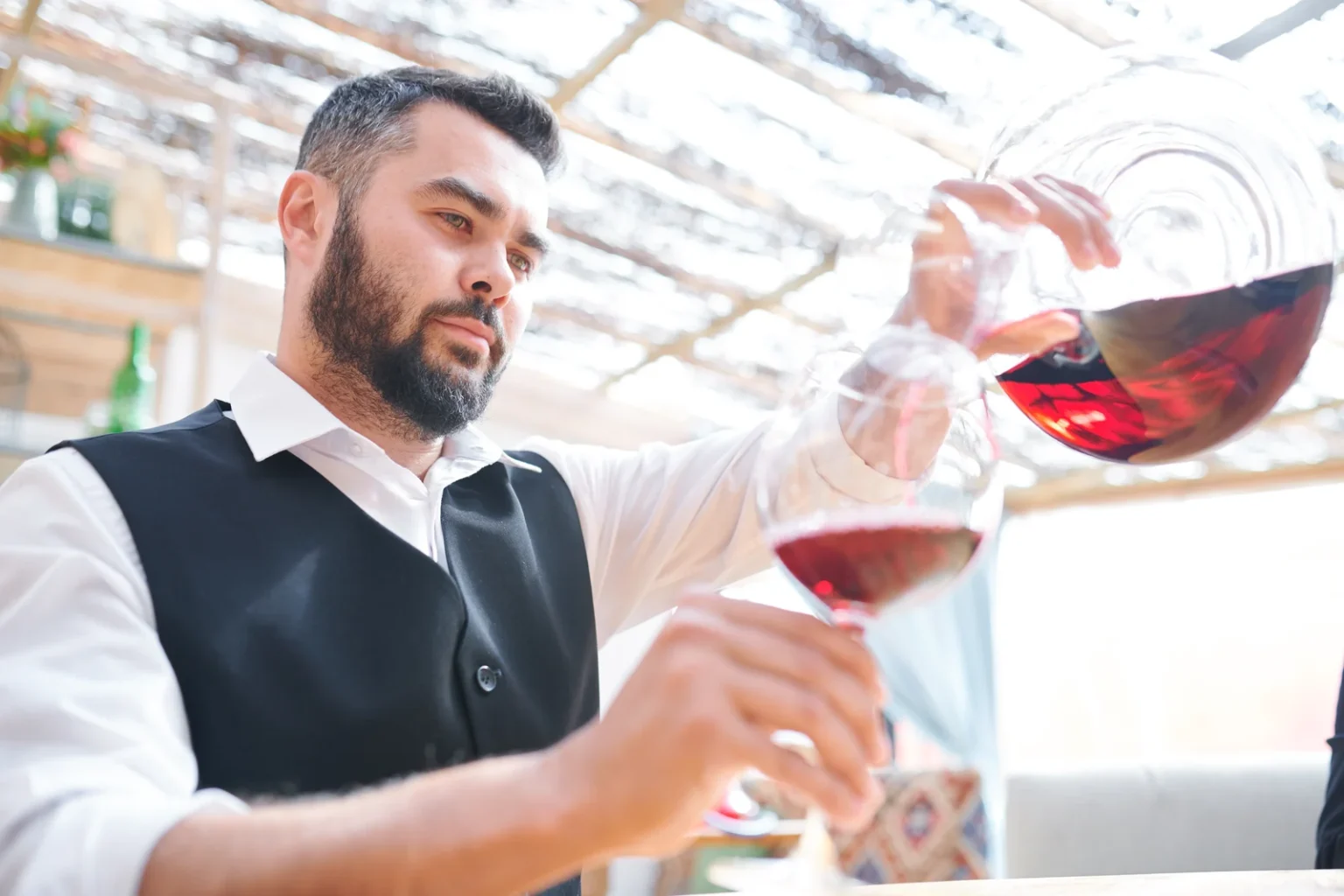
Decanting wine means pouring it from the bottle into a wine decanter, either to leave sediment behind or to let a young, tight wine open up. In a restaurant you do it at the table, with the host watching every move. This guide covers which bottles need it, what to carry and how to pour calmly during a busy service. If you want your whole floor practising these skills together, look at Adevo’s F&B training programmes for service teams.
Key Takeaways
- Decanting wine has two purposes: separating older wine from its sediment, and giving a young, closed wine air so it opens up.
- Older and delicate wines need a slow, gentle pour with a light under the bottle neck; young, full-bodied reds can be poured more freely.
- Prepare the trolley before you reach the table, because a missing serviette or a smelly decanter is noticed at once.
- Ask the host about timing, decant just before serving, and stop pouring the moment sediment reaches the neck.
What Is Decanting Wine and Why Do Restaurants Do It?
Restaurants do it for two reasons: to remove sediment and to give a wine air. Sediment is the harmless deposit that older red wines throw as they age. Nobody wants it in the glass.
Aeration is the second reason. A young, full-bodied red can smell tight and closed when first opened, and a decanter lets it meet the air so the aromas loosen.
Consider Neha, a captain at a hotel fine-dining room in Mumbai. A regular guest ordered an older red for an anniversary dinner. Neha stood the bottle upright in the afternoon, explained her plan at the table, and decanted without a drop of sediment reaching the glass. The guest asked for her by name next time.
Which Wines Are Worth Decanting?
The usual candidates for decanting wine are older red wines and vintage ports, because both throw sediment. Young, full-bodied reds that seem closed are the second group. Most white and sparkling wines do not need it.
- Older red wine or vintage port: decant for sediment, slowly and gently.
- Young, full-bodied red: decant for air, with a more open pour.
- Delicate older wine: handle with care, since too much air can fade it.
- Everyday white, rosé or sparkling: serve chilled from the bottle.
Sorting bottles like this is a habit you can teach. Adevo builds it into hospitality management courses for supervisors who want teams that work with less hand-holding.
The Court of Master Sommeliers is an international body, and many Indian fine-dining staff are trained against its service standards. In its guidance, splash decanting suits young, full-bodied reds that seem closed. It is not meant for older or delicate wines, and it does not remove sediment. The Court of Master Sommeliers publishes the full wording.
If you are unsure about a bottle, ask your sommelier or senior captain before the guest orders it.
What Do You Need on the Trolley Before Decanting Wine?
You need a clean decanter, a light source, cloths and small plates. Check everything in the pantry, not at the table.
- A clean wine decanter: free of smell, rinsed and dry, since a trace of detergent taints the wine.
- A candle or small flashlight: to see the wine inside the bottle neck.
- Serviettes: to wipe the neck and catch drips.
- Underliners: small plates for the cork, the bottle and the decanter.
- A decanting basket: to carry a bottle that has rested on its side without disturbing the sediment.
A trolley that is ready before service saves you a walk back to the stores in front of the guest.
How Do You Do Decanting Wine for an Older Red, Step by Step?
Stand the bottle upright beforehand, open it quietly, then pour slowly with a light under the neck. Stop when sediment reaches the neck.
- Stand the bottle upright earlier: this lets sediment settle. Ask your seniors how long your outlet allows.
- Show the label: confirm the wine with the host before opening.
- Open it gently: cut the capsule, draw the cork slowly and place it on an underliner.
- Wipe the neck: remove any dust or bits of cork.
- Light the neck: hold the candle or flashlight beneath the shoulder of the bottle.
- Pour in one steady motion: keep the bottle low over the decanter.
- Stop at the first sign of sediment: the last bit stays in the bottle.
- Present and serve: set the decanter on an underliner, offer the host a taste, then pour.
The Court of Master Sommeliers also describes a small step after a sediment decant. You rinse the empty bottle with a little of the wine, never water, and return that wine to the decanter. Water would leave the bottle smelling wrong.
Calm hands matter as much as the method. The habits in waiter skills every F&B trainee should master build them.
How Is Decanting Wine for Air Different?
For a young, closed red the pour is looser, because there is no sediment to protect. You let the wine splash a little on its way in, so it meets plenty of air. You still show the bottle, open it politely and pour without spilling. You skip the candle and the careful stop.
Rohit, a young steward at a steakhouse in Bengaluru, once used the slow candle method on a young, powerful red. The wine stayed tight for most of the course and the guest mentioned it to the manager. His captain showed him the open pour the next day.
Match the method to the wine, not to what looks most impressive.
What Mistakes Do Servers Make When Decanting Wine?
Most mistakes in decanting wine come from rushing or from not asking the host. Prevent them with a short checklist.
- Decanting too early: a wine left standing in a decanter can go flat before the main course.
- Using a damp or smelly decanter: the guest tastes the problem before the wine.
- Pouring too fast: sediment swirls up and reaches the glass.
- Ignoring the host: some guests prefer the wine in the bottle, and that choice is theirs.
- Rinsing with water: it changes the taste of what you serve.
If the host declines, accept without comment and keep the decanter nearby in case they change their mind.
How Should Staff Talk to the Host During Decanting Wine?
Keep it brief and let the pour do the work. Say one clear sentence, such as “I will pour this slowly so the sediment stays behind,” then stay quiet.
Timing matters most. Ask when the host wants to start drinking and decant just before that, not at the moment of ordering. There is no fixed number of minutes that suits every wine, so guess nothing.
Banquets raise the pressure because many tables want service at once. Timing, clear speech and calm hands matter most when the floor is full, and Adevo’s food and beverage training courses use role play and floor exercises to practise service under that pressure.
Three small habits make decanting wine look effortless at the table:
- Place the cork on an underliner: the host may want to look at it, and you should never hand it over loose.
- Keep the empty bottle in sight: guests often want to read the label again while the wine is poured.
- Pour the first taste for the host only: wait for a nod before filling the other glasses.
When the bottle is finished, clear the decanter only after the host agrees the table is done with it. A guest who is still talking about the wine may want one more look.
Want your servers confident at the table? Adevo can design a short practical module on wine service for your own outlet, using your own decanters and your own wine list.
How Do You Train a Team in Decanting Wine?
Train it as a physical skill, not a theory lesson. Servers learn decanting wine best by pouring water from an empty bottle until their hands stop shaking, then repeating it with an inexpensive real wine under supervision.
Priya manages a small restaurant in Pune with a growing wine list. Her team avoided selling older bottles because nobody felt sure about decanting. After a practice session with empty bottles and water, two servers volunteered for those orders, and the older bottles began to sell.
A simple plan has three drills:
- Set-up drill: build the trolley and check the decanter.
- Pour drill: practise a slow pour and a splash pour, and notice the difference.
- Table drill: one person plays the host while another speaks the script and decants.
Once the basic drills feel natural, add a short tasting step so the server can also describe what the guest is about to drink. Pair this with our wine tasting basics guide for F&B service staff, which covers how a server describes the wine once it is in the glass. Rotate turns so every server practises, and review mistakes kindly.
Conclusion
Decanting wine is a small skill with a big effect on how a guest feels about the whole meal. Know which bottles need it, prepare the trolley first, ask the host about timing, and pour slowly when sediment is the concern. Practise decanting wine until the movements feel ordinary.
Question about training your floor team? Ask about Adevo’s F&B training for wine service built around your outlet.
Frequently Asked Questions: Decanting Wine
Q: What is decanting wine?
A: Decanting wine means pouring it from the bottle into a separate vessel called a decanter. It leaves sediment behind in older wines or gives a young, closed wine some air. Restaurants usually do it at the table in front of the host.
Q: Which wines should you decant?
A: Older red wines and vintage ports are the usual candidates because they throw sediment. Young, full-bodied reds that seem closed also benefit from air. Most white and sparkling wines are served straight from the bottle.
Q: Do I need a special wine decanter?
A: No. A wine decanter for service is simply a clean, odour-free glass vessel. What matters is that it is dry, spotless and ready before the guest sits down.
Q: How long before serving should I start decanting wine?
A: Decant just before serving, and ask the host when they want to begin drinking. No single time fits every wine, so your senior captain or sommelier should guide each bottle.
Q: What should I do if sediment reaches the neck of the bottle?
A: Stop pouring at once. The last portion stays in the bottle, which is the point of the slow pour. Do not top up the decanter from the dregs.