Still wine is wine with no carbon dioxide bubbles, while sparkling wine holds trapped CO2 that fizzes the moment you pour. That one difference changes how you chill the bottle, open it, pour it and talk about it at the table. Most new floor staff in Indian restaurants and hotels learn this on the job, usually after a guest asks a question they cannot answer. This guide covers both types of wine, the service steps that differ, and how to steer a guest’s choice, alongside the F&B training programmes Adevo runs for service teams.
Key Takeaways
- Still wine carries no carbon dioxide bubbles, while sparkling wine gets its fizz from a second fermentation sealed inside the bottle.
- Chilling, opening and pouring differ between the two, so one habit applied to both will spoil one of them.
- Guests choose by occasion and food, so the best recommendation starts with a question, not a bottle.
- Fortified wine is the third main group, and staff should know it exists before a guest asks about it.
What Is the Difference Between Still Wine and Sparkling Wine?
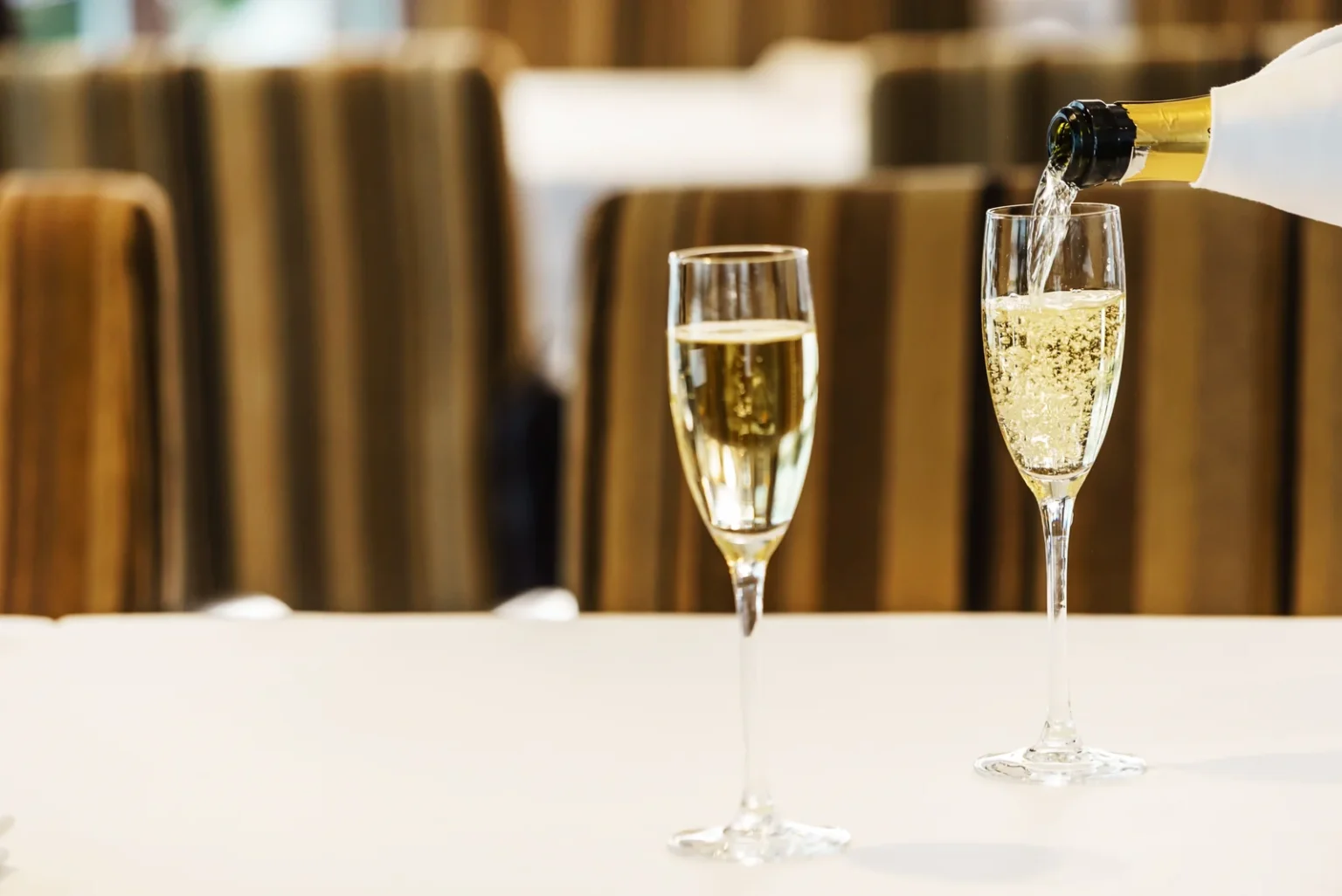
The difference comes down to carbon dioxide. Wines are broadly sorted into still, fortified and sparkling, according to hospitality notes from Parvathys Arts and Science College, and still wine is the group with no carbon dioxide in the glass. Sparkling wine keeps its CO2 trapped until the bottle opens, which is why it fizzes.
Still wine covers the reds, whites and rosés that make up the bulk of a typical list. Guests rarely use the term at the table; they ask for a red or a white. Staff use it to separate these bottles from sparkling and fortified wine, and it helps when you read a menu, a delivery note or a stock sheet.
Rohan is a steward at a 60-cover hotel restaurant in Pune. A guest at table nine asked whether the house white was still or sparkling, because her husband avoided fizzy drinks. Rohan did not know what she meant and fetched his supervisor. After that shift, the captain ran a short briefing on the two styles. A week later another guest asked the same question, and Rohan answered it himself, pointed to the sparkling section and took an order for both.
Briefings like that work best when supervisors can also coach guest conversation, so many outlets add soft skills training courses in Bangalore to their bottle-handling practice. A trainee then learns what to say as well as what to do.
How Does Sparkling Wine Get Its Bubbles?
The bubbles come from a second fermentation that happens with the wine sealed in a bottle, so the carbon dioxide has nowhere to go. Every sparkling wine made this way starts life as still wine.
India has its own example. Sula, the Nashik producer, makes sparkling wine by the traditional method, its winemaker told Business Standard in a 2016 IANS feature. The winemaker described a base of still wine made in a tank, yeast and sugar added in the bottle, and a second fermentation inside the sealed bottle that traps the CO2.
Why should a server care about the production method? Because the pressure sits inside the bottle until you release it. That makes handling a safety matter as well as a style point, and it is why trainees should practise on empty or spare bottles before they work a live table. Tell them to treat every sparkling bottle as if it were full of pressure, because it is. In Indian outlets, bottles often sit in warm storerooms between delivery and service, so feel each bottle first. A warm one needs ice and water before it goes anywhere near a guest, so keep an ice bucket stocked at the station before service starts. It also explains why a sparkling bottle that was shaken, warmed or dropped behaves very differently from a still bottle in the same condition.
How Should You Recommend Still Wine or Sparkling Wine to a Guest?
Ask first, then suggest. Three short questions do most of the work: what is the occasion, what are you eating, and what do you usually enjoy? Recommendations belong inside the order, not after it, so practise them as part of taking a guest’s order step by step.
Here is how the answers usually point:
- A toast or celebration: sparkling wine suits the moment and is easy to pour for a group.
- A full meal with several courses: a white or red gives you more choice to match each dish.
- A guest who dislikes fizz: a white, red or rosé, and say plainly that it has no bubbles.
- A guest who wants something light before dinner: a chilled sparkling glass opens the evening well.
Meenakshi is a banquet captain at a wedding venue in Jaipur. The host asked for “wine for the toast” without saying more. Instead of pouring whatever was open, she asked whether the toast was a single moment or a long cocktail hour. He wanted one moment, so she served sparkling wine for the toast and placed still white wine on the dinner tables. The host noticed that nobody had to ask what each bottle was.
How Do You Serve Still Wine and Sparkling Wine Differently?
Serve both at the right coolness, open each with the right technique, and pour into the right glass. Sparkling wine demands more care at every step. Chill whites and sparkling wine before service, and serve reds cooler than a warm dining room.
| Point | Still wine | Sparkling wine |
|---|---|---|
| Temperature | Whites chilled; reds cooler than the room | Well chilled |
| Opening | Corkscrew, cut the foil, lift the cork | Remove cage and foil, ease the cork out |
| Glass | Wider bowl for reds, smaller for whites | Narrow flute or tulip |
| Pouring | Leave room in the bowl to swirl | Pour slowly in short stages as foam settles |
Opening sparkling wine is the step trainees fear most, so teach it as a fixed routine. Follow this order every time:
- Chill and dry the bottle: wipe off condensation so it does not slip in your hand.
- Remove the foil: keep the bottle angled away from every guest and from yourself.
- Loosen the wire cage: keep one hand over the cork while you do it.
- Turn the bottle, not the cork: hold the cork firmly and ease it out so it releases with a soft sigh, not a pop.
- Pour in stages: a small first pour, a pause for the foam to settle, then top up.
Want your floor team to handle sparkling service with confidence? Our F&B service training for floor teams covers bottle handling and guest conversation, built around your own outlet and wine list.
What Mistakes Do Servers Make With Still Wine and Sparkling Wine?
Most errors come from treating the two types the same way. Watch for these:
- Serving sparkling wine warm, which makes it foam out and taste flat.
- Shaking or knocking a bottle just before opening it.
- Pointing the bottle at a guest while removing the cork.
- Overfilling a flute so the foam spills before the guest lifts it.
- Serving red wine at room temperature in an Indian summer, when the room itself is warm.
Ananya supervises the bar at a rooftop restaurant in Bengaluru. During a power cut, the wine fridge warmed up an hour before a large reservation. Her team put the sparkling bottles in ice and water first, because those needed the most chilling, and moved the whites in next. They served the reds a little cooler than the room. Every guest got a drink at the right temperature, and nobody saw the problem.
What Are the Main Types of Wine You Should Know?
There are three main groups, and most lists add detail inside each. Knowing the groups lets you place any bottle quickly. Keep a one-page cheat sheet at the service station so new staff can check a bottle’s group at a glance.
- Still wine: reds, whites and rosés with no bubbles. This is the largest group on most lists.
- Sparkling wine: wine with trapped carbon dioxide, served chilled in a narrow glass.
- Fortified wine: wine strengthened with added spirit, usually poured in smaller measures.
Inside still wine, the next question is red, white or rosé, and then sweet or dry. Rosé sits between red and white in style, so serve it chilled. Sparkling wine also varies, from dry to sweet, and not every sparkling wine is Champagne, so avoid using that name for every bottle with a cork and a cage.
For the tasting method behind these labels, read our guide to wine tasting basics for F&B service staff, which shows how to describe what is in the glass. Once you can describe a wine in plain words, you can sell it with confidence.
Conclusion
Still wine and sparkling wine are two sides of the same list, and a good server handles both with equal confidence. Remember the core difference, carbon dioxide, and let it guide how you chill, open, pour and recommend. Practise the opening routine until it is automatic, add a clean serviette for the bottle neck, and ask the guest a question before you offer a bottle.
Want your team confident with every type of wine? Ask Adevo about F&B training programmes for your wine service built around your list and your guests.
Frequently Asked Questions: Still Wine
Q: What is still wine?
A: Still wine is wine with no carbon dioxide bubbles. Reds, whites and rosés all fall in this group. It sits apart from sparkling and fortified wine.
Q: What is the difference between still wine and sparkling wine?
A: Sparkling wine holds trapped carbon dioxide, so it fizzes, while still wine does not. The bubbles come from a second fermentation in the sealed bottle. That changes the serving temperature, the opening routine and the glass.
Q: How should sparkling wine be served compared with still wine?
A: Serve sparkling wine well chilled in a narrow glass and open it slowly, easing the cork out. Reds and whites follow a simpler routine with a corkscrew. Whites need chilling, and reds should be cooler than a warm dining room.
Q: What are the main types of wine a server should know?
A: The three main groups are still, sparkling and fortified wine. Within the still group you will mostly meet red, white and rosé. Learn the groups first, then the styles inside each one.
Q: Is every sparkling wine Champagne?
A: No. Many sparkling wines exist, including ones made in India, such as the Nashik producer Sula’s traditional method wine. Use the word Champagne only when the label says so.