Cooking skill gets you hired. Kitchen operations management gets you promoted. That’s the reality every Chef de Partie in India figures out sooner or later – usually later, after spending three to five years wondering why the Sous Chef position keeps going to someone else. If you’re building your career through hospitality management courses or learning on the job, this is the gap nobody tells you about.
The chefs who develop operational skills have almost no competition. Every Executive Chef and GM we’ve worked with says the same thing: they can find cooks. Finding someone who can run a kitchen? That’s the hard part.
This guide breaks down the 5 kitchen management skills Indian hotel kitchens actually evaluate when deciding who moves up. Not generic leadership advice. Specific, India-grounded skills you can start building this week.
Key Takeaways
- Five operational skills determine promotions past CDP: workflow design, food cost control, multilingual team leadership, FSSAI compliance management, and service coordination.
- Food cost should stay between 28-35% of revenue. A 3% reduction on Rs 50 lakh monthly F&B revenue saves Rs 1.5 lakh every month.
- The CDP-to-Sous jump takes 3-5 years for most chefs because culinary schools teach cooking, not operations.
Why Cooking Alone Won’t Get You Promoted
The shift from cook to kitchen manager is a shift from doing to directing. A CDP who can plate 200 covers flawlessly still might not get the Sous Chef role if they can’t manage food costs, run a pre-service briefing, or handle a supplier dispute at 6 AM.
Indian hotel kitchens have a specific version of this problem. Your team might speak four different languages. Your menu rotates across continental, Indian, and regional cuisines depending on the banquet calendar. Your food costs need to stay between 28% and 35% of revenue while ingredient prices swing with monsoon seasons and festival demand.
In our experience placing and training kitchen managers across 50+ hotel properties, we’ve seen technically brilliant chefs get passed over for promotion because they couldn’t manage a team handover, explain a variance in food cost, or train a new commis without losing patience. The kitchen doesn’t need another great cook. It needs someone who can make 15 cooks perform like a team.
If you want to reach Head Chef, start with our complete guide to culinary arts in India – these are the operational skills to build.
Skill 1: Kitchen Workflow Design and Station Management
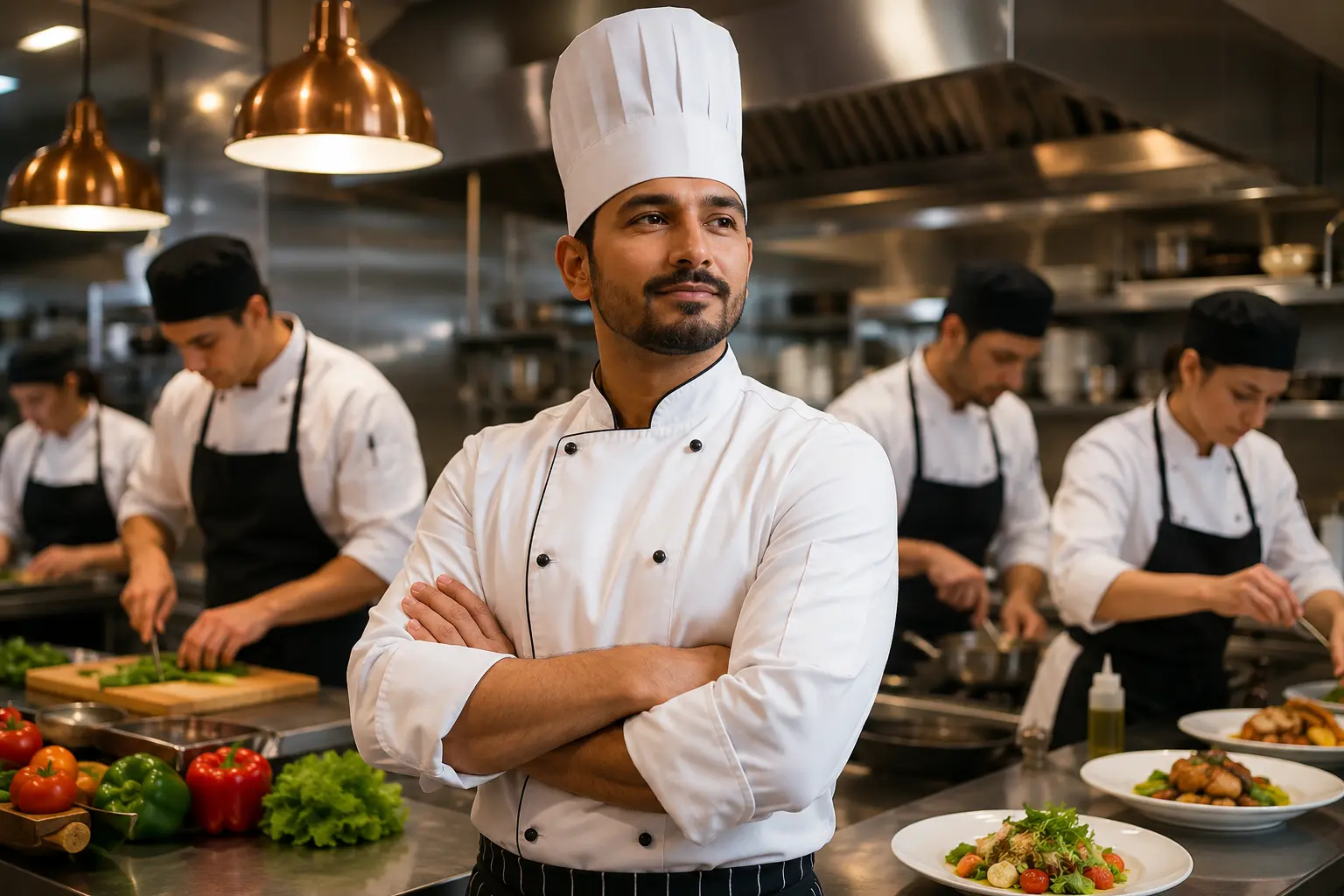
Kitchen operations management starts with how food moves through your kitchen. Not how fast you cook – how efficiently the entire system runs. A well-designed workflow means every station has what it needs before service starts, handoffs between stations are seamless, and ticket times stay consistent whether you’re doing 50 covers or 500.
In Indian hotel kitchens, this is harder than it sounds. You’re running a tandoor station, a continental line, a garde manger section, and often a live counter for events – all in the same service. Station rotation planning across multi-cuisine setups is a skill no culinary school teaches. You learn it by watching how experienced chefs manage the pass during a full-house Saturday dinner.
The practical version of this skill? Build a station prep sheet that covers every cuisine your kitchen runs. Map the physical flow from cold storage to prep to cooking to plating. Identify bottlenecks (usually between garde manger and the main line during heavy appetiser periods). Then redesign the flow so your team isn’t crossing paths or waiting on each other.
This is the kind of kitchen management that shaves 3-5 minutes off average ticket times without anyone cooking faster. For the foundational prep system that makes this possible, read our guide on mise en place.
Skill 2: Food Cost Control and Inventory Management
Food cost should be 28-35% of revenue in Indian hotels (FHRAI industry benchmark). If you’re a CDP or Sous Chef who can’t tell your GM what your actual food cost percentage was last week, you’re not ready for the next role.
This isn’t about being cheap. It’s about being precise. Daily inventory counts. Waste tracking by station. Yield testing on proteins (how much usable meat do you actually get from a kilo of chicken after trimming?). Understanding the “cost per cover” metric that your GM watches every single day.
In India specifically, food cost control has extra layers. Seasonal pricing swings – tomatoes at Rs 20/kg in winter and Rs 80/kg during monsoon. Local sourcing decisions that can save 15-20% on vegetables if you build relationships with mandis instead of relying solely on suppliers. Vendor management that includes negotiating credit terms, not just prices.
From working with hotel F&B teams across India, we’ve seen kitchen managers reduce food cost by 3-4 percentage points just by implementing daily waste logs and weekly yield tests. That’s not a small number. On a property doing Rs 50 lakh monthly F&B revenue, a 3% food cost reduction saves Rs 1.5 lakh every month. That’s the kind of result that gets you noticed by your GM.
The CDP who can present these numbers in a weekly review meeting is the one who gets the Sous Chef position. Full stop.
Skill 3: Team Leadership and Communication Across Languages
A kitchen team in Bangalore might include a tandoor cook from Rajasthan who speaks Hindi, a commis from Tamil Nadu, a steward from Karnataka, and a trainee from Kerala. Four languages. Four different ways of understanding urgency, respect, and instruction.
Most chef career guides list “communication skills” as a bullet point and move on. In an Indian commercial kitchen, communication is the actual job. Pre-service briefings. Shift handovers that don’t lose information. Conflict resolution between team members who don’t share a common first language. Training new staff on SOPs when the SOP manual is in English and half the team reads Hindi or Kannada.
This is where kitchen management becomes people management. And it’s the skill that separates a good cook from a good kitchen manager.
The chefs who crack this typically do two things well. First, they simplify instructions to the absolute essential – short, clear, demonstrated rather than explained. Second, they build training systems that don’t depend on language. Visual SOPs. Colour-coded labels. Buddy systems where an experienced cook trains the new one in their shared language.
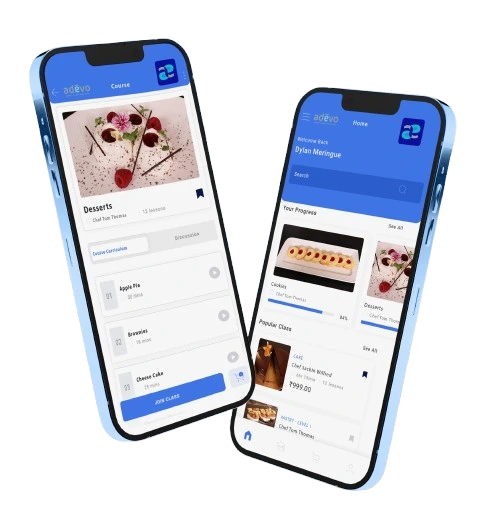
If you’re looking to build these skills systematically, explore Adevo’s Leadership & Management Training – it covers exactly this gap, with multilingual modules designed for Indian hospitality teams.
Skill 4: Food Safety and FSSAI Compliance Management
There’s a difference between following food safety rules and managing food safety for your entire kitchen. A Commis follows FSSAI guidelines. A kitchen manager makes sure everyone else does too.
This means owning the compliance process. Temperature logs filled out every shift – not just when someone remembers. HACCP implementation that’s actually enforced, not just printed on a poster. Colour-coded cutting boards that stay colour-coded even during a busy service when someone grabs the wrong one.
Every commercial kitchen in India requires one certified FSSAI Food Safety Supervisor per 25 food handlers. If you’re the person with that certification AND the operational ability to enforce it daily, you’ve just made yourself significantly harder to replace.
FSSAI compliance is becoming a competitive advantage, not just a legal requirement. Hotels that score well on FSSAI hygiene ratings use it in their marketing. The kitchen manager who runs a tight compliance operation isn’t just avoiding fines – they’re contributing to the property’s brand value. We’ve seen properties promote CDPs specifically because they were the only person on the team who could handle an FSSAI inspection without the Executive Chef being present.
Monsoon season is when this skill gets tested hardest. Humidity spikes, cold chain breaks happen more frequently, and pest pressure increases. The kitchen manager who has systems for this – not just reactions, but preventive systems – is the one who earns trust.
Skill 5: Service Coordination and Front-of-House Alignment
Most chefs think their job ends at the pass. The ones who become Head Chefs understand that their job extends to the guest’s table.
Service coordination means communicating with the F&B service team before, during, and after every service. It means knowing what’s happening in the restaurant – how many covers are booked, which tables have VIPs, what dietary restrictions have been flagged – before the first ticket comes through.
In Indian hotel kitchens, this gets complex during banquet and event operations. An Indian wedding might require 500 covers across vegetarian and non-vegetarian setups, with specific Jain restrictions for 30 guests, all served in a 45-minute window. The kitchen that handles this well has a chef who planned the service with the banquet manager, not one who received the order sheet an hour before.
Handling guest feedback from the kitchen side is another underdeveloped skill. When a complaint reaches the kitchen, most chefs get defensive. The chef who gets promoted is the one who treats it as data – what went wrong, how to prevent it, and how to communicate the fix back to the service team so the guest knows it’s being handled.
This is kitchen management at its most complete. You’re not running a kitchen. You’re running a food service operation.
How to Build These Skills Without Formal Training
You don’t need to go back to school. Most kitchen management skills are built on the job if you know what to focus on.
Shadow your Executive Chef during non-service hours. The admin work – ordering, cost reports, scheduling, vendor calls – is where kitchen management skills live. Ask to sit in on weekly F&B reviews. Volunteer to do the daily food cost calculation. That visibility is what builds your understanding of how the kitchen fits into the hotel’s business.
Take ownership of one operational area. If nobody is doing waste tracking properly, volunteer to build the system. If the pre-service briefing is disorganised, offer to run it. One concrete operational improvement is worth more on your promotion case than five years of excellent cooking.
Invest in structured training. Kitchen operations management isn’t something most chefs pick up naturally because culinary schools don’t teach it. Programmes built specifically for this gap – covering leadership, compliance, cost control, and team management – can compress years of trial-and-error into months of focused learning.
The Promotion Timeline: What’s Realistic in India?
| Role | Years of Experience | Key Ops Skill to Unlock |
|---|---|---|
| Commis (G3/G1) | 0-1 year | Following SOPs, basic station management |
| Chef de Partie | 2-4 years | Owning a station, training commis, basic cost awareness |
| Sous Chef | 5-8 years | Team leadership, food cost control, service coordination |
| Head Chef | 8-12 years | Full kitchen management, P&L responsibility |
| Executive Chef | 12+ years | Multi-outlet strategy, business development |
The jump from CDP to Sous takes longest for a reason. It’s where the skill set changes from cooking to kitchen management. Patience matters, but passive patience doesn’t work. Active kitchen management skill-building during your CDP years is what compresses the timeline.
Don’t job-hop every 18 months expecting the next property to hand you a promotion. Build the operational track record at one property for 2-3 years, then move with evidence of what you’ve improved. That’s the resume that gets you the Sous Chef interview.
Your Next Step
The kitchen doesn’t promote the best cook. It promotes the person who can run the operation. These five kitchen management skills – workflow design, food cost control, team leadership, FSSAI compliance, and service coordination – are what Indian hotel kitchens evaluate when deciding who moves up from CDP to Sous Chef to Head Chef.
Start with one. Pick the skill where you’re weakest and build a visible improvement this month. Track your food cost. Run a pre-service briefing. Volunteer for the FSSAI inspection prep. One operational win opens the door to the next, and the next, until the promotion conversation isn’t about whether you’re ready. It’s about when.
Frequently Asked Questions
What is kitchen management?
Kitchen operations management is the process of running a professional kitchen beyond cooking. It includes workflow design, food cost control, team leadership, food safety compliance, inventory management, and service coordination. In Indian hotel kitchens, it also involves managing multilingual teams, multi-cuisine menus, and FSSAI regulatory requirements.
How long does it take to become a Head Chef in India?
Reaching Head Chef typically takes 8-12 years of combined experience. The breakdown: 1-2 years as Commis, 2-4 years as Chef de Partie, 3-5 years as Sous Chef, then Head Chef. The timeline depends heavily on your kitchen management skills, not just your cooking ability.
What is the most important skill for a kitchen manager?
Team leadership and communication. Food can be taught. Managing a team of 15-40 people across multiple languages, shifts, and cuisine stations during high-pressure service is the skill that separates career CDPs from Sous Chefs. In Indian kitchens specifically, multilingual communication is the single biggest differentiator.
Do I need a degree to become a Head Chef?
No. A 9-12 month NSDC/THSC-accredited diploma combined with strong kitchen management skills is sufficient. Many Head Chefs and Executive Chefs in Indian five-star hotels started with diplomas, not degrees. What matters more than a degree is your operational track record and your ability to run a kitchen as a business.