If you’ve ever watched a front desk agent fumble through check-in while a guest stands there visibly irritated, you already know the cost of not having a hotel SOP in place. At Adevo, we offer hospitality management courses built around exactly this gap. Not the document sitting in a binder somewhere. The actual, practiced, lived-in procedure that your team follows without being reminded.
A well-run property isn’t just about good people. It’s about good systems. And a hotel SOP is the foundation of those systems. Whether you’re managing a 40-room business hotel in Nagpur, a 200-room full-service property in Bangalore, or a standalone restaurant with three shifts and high turnover, every hotel SOP, whether front office, kitchen, or housekeeping, is what makes consistency possible when you’re not in the room.
Adevo’s founders have spent a combined 80+ years running operations across Taj, Oberoi, Le Meridien, and TGI Fridays. This guide is built from that experience, not from a generic template. Not theory, not a SaaS product pitch. Let’s make sure your hotel SOP procedures are actually built right and your entire hotel sop system works end-to-end.
Key Takeaways
– A hotel SOP is an operational system, not just a document. Properties without one spend more time correcting errors than delivering service.
– FSSAI requires licensed food businesses to have trained and certified Food Safety Supervisors on staff. This isn’t optional.
– Visual SOPs with illustrated steps are more effective for tier-2/3 city teams with multilingual or limited-literacy staff than text-heavy binders.
– The gap between having SOPs and actually following them is a training problem, not a policy problem.
What Is a Hotel SOP
A hotel SOP (standard operating procedure) is a documented, step-by-step instruction that tells staff exactly how to perform a specific task – from checking in a guest to cleaning a room to handling a fire evacuation. SOPs ensure every team member delivers the same standard of service, every shift, regardless of who is on duty.
That definition is the short version. The longer version is this: a hotel SOP is the operating system of your property. When your senior F&B captain calls in sick on a Saturday night, the junior staff shouldn’t be improvising. When your housekeeping team turns over three rooms simultaneously for an early check-in, they shouldn’t be guessing the sequence. SOPs make the system run independently of any single person.
There are two broad types:
- Operational SOPs – day-to-day procedures that govern how service is delivered (check-in, room cleaning, order taking, kitchen prep)
- Emergency SOPs – protocols for situations that can’t be improvised (fire evacuations, medical emergencies, food contamination incidents, guest complaints that escalate)
Both matter. Most properties have some version of the operational ones. Far fewer have solid emergency SOPs that staff have actually rehearsed.
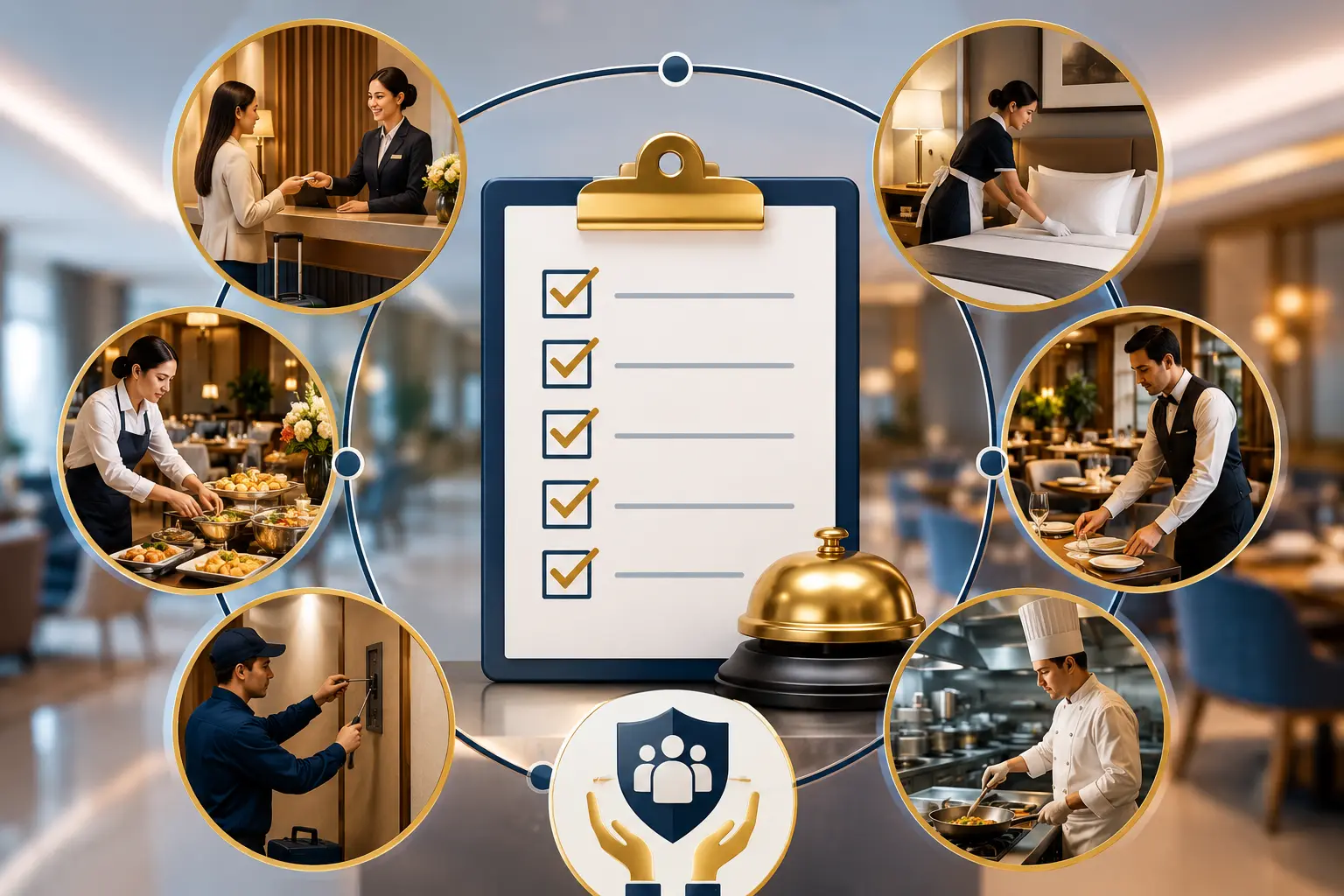
Hotel SOPs typically cover these core departments:
- Front Office (check-in, check-out, reservations, night audit, complaint handling)
- Housekeeping (room cleaning, laundry, public areas, lost and found)
- Kitchen (food safety, prep, cooking temperatures, allergen management)
- F&B Service (sequence of service, bar, banquets, room service)
- Maintenance and Engineering (preventive maintenance, guest requests, equipment)
- Safety and Security (fire evacuation, medical emergencies, incident reporting)
- Finance and Accounts (night audit, billing, revenue control, cash handling)
The real reason most hotel SOP implementations fail isn’t that they’re badly written. It’s that they’re written for compliance, not for usability. A 12-page hotel SOP procedure document for room cleaning doesn’t work in a property where half your housekeeping team reads English slowly. We’ll come back to this.
Why Every Hotel and Restaurant Needs SOPs
Consistency is the first reason. And it’s not about aesthetics. When a guest checks into your hotel today and returns three months later, they’re forming an expectation based on the first visit. If your service is different because a different team is on duty, you’ve created a problem that no amount of front desk charm will fully fix.
Faster onboarding is the second. A new server who is handed a written SOP for sequence of service and shadowed through it twice will be productive within a week. One who learns by watching gets inconsistent inputs from whoever they shadow. The gap between those two outcomes compounds with every hire, and in Indian hospitality with its high attrition cycles, you’re hiring constantly.
FSSAI compliance is the third reason, and it’s not optional. Under the FSSAI Food Safety and Standards Regulations, food businesses are required to maintain documented food safety management procedures including temperature controls, hygiene records, and pest management logs. Violations can result in licensing action. Your kitchen SOP is not just a training tool; it’s a compliance document.
The fourth reason is guest satisfaction. Properties that operate with clear, consistent hotel SOPs tend to resolve guest complaints faster because staff know exactly what they’re authorised to do. There’s no “let me check with the manager” for every minor issue. The SOP tells them.
For restaurants specifically, the restaurant SOP is what keeps your Friday night dinner service from unravelling when two servers call in sick. Standardised workflows mean the team that shows up can carry the load.
The Ministry of Tourism’s SAATHI initiative (System for Assessment, Awareness and Training for the Hospitality Industry, run with the Quality Council of India) reinforces how critical documented procedures are for operational continuity and guest safety across India’s hospitality sector.
Front Office SOPs Every Hotel Needs
The front desk is where your guest’s experience begins and ends. A weak hotel SOP in this department, when your hotel SOP for front office isn’t properly documented, shows up in two places: the first impression at check-in, and the final impression at check-out. Both moments have an outsized effect on how the guest remembers the stay.
Guest Check-In Procedure
The check-in SOP should cover the full sequence: greeting within 10 seconds of approach, identity verification (Aadhaar, passport, or government ID as per Indian regulations), room assignment, key issuance, property orientation, and baggage handling if applicable. The ID verification step is non-negotiable and often handled inconsistently when staff aren’t trained to a documented procedure.
Every property should also have a protocol for early arrivals, late check-ins, and guests who arrive with a booking discrepancy. What does your front desk staff do when someone arrives at 7 AM and the room isn’t ready? If they’re improvising, you’ll get different answers from different agents.
Guest Check-Out and Billing
The check-out SOP should specify the timeline for final billing review, how to handle disputed charges, the process for key return, and baggage storage for late departures. A common failure point is the “soft check-out” – where a guest has paid and left but the room hasn’t been flagged as vacant in the system for over an hour. This costs you potential same-day revenue.
Reservation and Overbooking Management
Your reservation SOP needs to include a clear protocol for when you’re overbooked. This happens in every property. What’s the escalation path? Who authorises a walk? Which properties do you have reciprocal agreements with? If this lives only in the manager’s head, your front desk staff are exposed.
Night Audit
The night audit SOP is one of the most neglected procedures in smaller properties. It should define the exact reports to be run, the reconciliation sequence, how to handle open folios, and who to escalate to if there’s a variance. In independent hotels without a PMS, this is especially critical.
Complaint Handling at the Front Desk
Every hotel SOP library should have a standalone complaint handling procedure. The LAST framework (Listen, Acknowledge, Solve, Thank) is a useful base, but the SOP needs to go beyond that. It should specify what a front desk agent is authorised to offer (room upgrade, meal credit, late check-out) without manager approval, and when to escalate. The faster a complaint is resolved, the better the chance of recovery.
Housekeeping SOPs: Room Cleaning to Laundry
Housekeeping is where guests most directly experience the standard of your property. A guest won’t usually notice a great housekeeping job. They’ll notice every bad one. The hotel SOP for housekeeping is the difference between those two outcomes.
In our experience deploying housekeeping training across properties in tier-2 cities like Mysuru and Coimbatore, the most consistent failure is the departure room turnaround. Teams know how to clean a room. They don’t always know the priority sequence when four rooms need to be turned for back-to-back check-ins. A visual SOP with a decision tree for this scenario has a measurable impact within the first week of implementation.
Occupied Room Cleaning Procedure
The hotel SOP for occupied room cleaning should define: the entry protocol (knock, announce, enter sequence), the cleaning sequence (top to bottom, left to right to avoid recontamination), the amenity replenishment checklist, the bed-making standard, and the bathroom cleaning protocol with chemical specifications. Chemical specifications matter. Using the wrong dilution ratio on bathroom surfaces is both ineffective and a safety risk.
Checkout Room and Departure Room Turnaround
This is the procedure with the tightest time pressure. The SOP should specify the full checklist, the expected completion time by room type, how to flag maintenance issues discovered during turndown, and the inspection sign-off process. Skipping the sign-off step is where rooms go out with dirty glasses or stained linen.
Public Area Cleaning
Public area cleaning SOPs need to specify frequencies by area and time of day, not just a daily task list. The lobby floor, elevator buttons, and restrooms during peak F&B hours need a different schedule than what happens at 6 AM.
Lost and Found Protocol
Your hotel SOP for lost and found should cover: logging the item with date, location found, and staff name; secure storage procedure; guest notification if identity is known; and the disposal or charity process for unclaimed items after a defined period. In India, high-value items found in guest rooms have specific legal implications – your SOP should reflect this.
Linen and Laundry Management
The laundry SOP covers sorting, washing standards by linen type, quality check before redistribution, and inventory tracking. In properties that outsource laundry, the SOP also needs to define the handover and return inspection process. Damaged or stained linen that comes back and goes straight onto a bed is a preventable failure.
Kitchen SOPs for Food Safety and Consistency
The kitchen SOP is where operations and compliance intersect most directly. In Indian hospitality, this means FSSAI. Every kitchen operating under a food business licence is required to maintain documented food safety procedures, and inspections do happen. The kitchen SOP is your first line of defence.
Food Receiving and Storage
The receiving SOP should define the inspection checklist for each incoming delivery: temperature check for refrigerated goods, packaging integrity, best-before dates, and supplier documentation. Items that fail the check should have a clear rejection procedure. This isn’t just about food safety; it’s about cost control. Receiving substandard raw material because staff don’t have a clear rejection protocol costs your kitchen in waste and rework.
Storage procedures should cover the FIFO (first in, first out) principle, temperature ranges by food category (per FSSAI guidelines: cooked food above 63°C or below 5°C to avoid the danger zone), and labelling standards. Cross-contamination prevention – particularly separating raw meat from ready-to-eat foods – should be explicit in the SOP, not assumed.
Prep and Cooking Standards
Your kitchen SOP for prep should cover knife safety, cutting board colour coding, marinade temperatures, and mis en place standards for each service period. For cooking standards, the SOP should specify minimum internal temperatures for each protein category. This is where a lot of standalone restaurant kitchens are weakest – the chef knows the standards but they haven’t been documented for the team.
Allergen Management
Allergen management has to be a standalone SOP, not a footnote in the general kitchen procedure. It should cover: how allergen information is communicated to guests, the preparation protocol for allergen-free orders (clean surface, dedicated utensils), and the escalation path when a guest has a serious allergy. In India, consumer awareness of food allergies is increasing, and liability exposure is real.
Kitchen Hygiene and Cleaning Schedule
The hotel SOP for kitchen hygiene should specify cleaning frequencies and methods for every surface and equipment type: countertops, cutting boards, knives, grills, fryers, cold storage units, and floor drains. It should include the approved cleaning chemicals and dilution ratios. This is also where pest prevention protocols belong – particularly for Indian kitchens where humid climates create higher risk.
Waste Management
The hotel SOP for kitchen waste management needs to cover: segregation of organic and non-organic waste, disposal frequency, cold storage for organic waste in hot climates, and record-keeping for FSSAI audits. Hotels and restaurants in tier-1 cities also need to comply with municipal solid waste regulations.
Restaurant and F&B Service SOPs
The restaurant SOP and the broader F&B service procedures are where guest experience lives and dies in real time. This is the department with the most guest-facing touchpoints, the highest staff-to-guest ratio at peak service, and the greatest scope for inconsistency if the sop in food and beverage service isn’t embedded into daily practice.
For complete F&B SOP audit and improvement guide documentation and the broader F&B service framework, see the dedicated guide covering all 6 hotel outlets.
Sequence of Service – From Greeting to Farewell
The sequence of service is the backbone of your F&B operation. It should define every touchpoint from the guest’s arrival to departure: greeting and seating, menu presentation, order taking, food service sequence (by course, by position), beverage pacing, check presentation, and the farewell. Many properties have a verbal standard but not a written one. When a new server joins, they learn whatever sequence the person training them happens to follow that week.
Order Taking and POS Procedure
The order-taking SOP covers how orders are taken (pad, POS handheld, or memory), how modifications are communicated to the kitchen, how voids and reprints are authorised, and how allergy notifications flow from the dining room to the kitchen. The POS procedure is separate but linked – it should define who can apply discounts, how splits are handled, and what the server does when the system crashes during service.
Table Setup and Clearing Standards
Your table setup SOP should be specific enough that any team member can replicate it exactly: cover counts per table type, the position of each piece of cutlery and glassware, napkin fold, condiment placement, and centrepiece standards. Clearing standards should specify the sequence (glasses last, crumbs brushed before dessert, etc.) and what a reset to service-ready looks like.
Bar Service and Beverage SOPs
The bar SOP covers a distinct set of procedures: drink recipes and standards (portion, garnish, glassware), opening and closing procedures, cash handling and register reconciliation, handling guest intoxication, and the minor-age policy. In India, the legal drinking age and excise regulations vary by state – your bar SOP needs to reflect your state’s specific rules, not a generic national standard.
Banquet and Event Service Procedures
The banquet sop is operationally closer to project management than daily service. It starts with the banquet event order (the document that drives all planning) and covers: setup timelines, floor plan execution, equipment checks, buffet standards, service team briefing, and breakdown procedures. One gap we see consistently in Indian banquet operations is the absence of a pre-event walkthrough checklist. Teams set up the room but don’t formally verify it against the event order before guests arrive.
Room Service SOP
Room service is a department where timing and presentation standards often drift because no one is supervising delivery once the tray leaves the kitchen. The SOP should cover order confirmation with the guest (including estimated delivery time), tray setup standards, knock-and-announce protocol, setup in the room, and the clearance procedure.
Maintenance and Engineering SOPs
The hotel sop for maintenance is often the last procedure set to be formalised, particularly in independent and budget properties. The logic seems to be: maintenance is reactive, so why document it? But the most costly maintenance issues are the ones that weren’t caught preventively.
Preventive Maintenance Schedule
A preventive maintenance hotel SOP defines what is checked on daily, weekly, monthly, and quarterly cycles, with clear ownership and a signed record for each item:
- HVAC filters – cleaned or replaced on a fixed cycle
- Water heater temperatures – checked and logged
- Elevator inspection logs – reviewed and filed
- Fire suppression system checks – tested and certified
- Generator test runs – run under load, not just started
Properties without this end up with a generator that hasn’t been tested in eight months and fails during a power cut on a busy weekend.
Guest Room Maintenance Requests
The room maintenance SOP covers how a request is logged (front desk, PMS ticket, or phone), the response time standard by priority level, the entry protocol for occupied rooms, completion sign-off, and follow-up with the guest. Response time standards are particularly important – a leaking tap that a guest reports at 9 PM should have a defined resolution window, not “we’ll look at it tomorrow.”
Equipment Inspection and Safety
Every piece of kitchen and laundry equipment needs an inspection SOP that specifies the checks, the frequency, and the escalation if something is out of spec. This is both a safety issue and a cost issue. Equipment that is inspected regularly fails less catastrophically.
Safety and Security SOPs
Emergency hotel SOPs are the ones you hope you never use. They’re also the ones where a gap in procedure has the most serious consequences.
Fire Evacuation Procedure
The fire evacuation hotel SOP should be property-specific: assembly point locations, zone-by-zone sweep responsibilities, how to account for guests who haven’t evacuated, communication protocol with the fire department, and the re-entry procedure. Staff should rehearse this. Reading the SOP once during induction isn’t sufficient. In properties with high guest turnover, the in-room fire card is your first touchpoint with the guest – make sure it’s accurate to your current layout.
Medical Emergency Response
The hotel SOP for medical emergencies should specify: who is trained in basic first aid, where the first aid kit is and what it contains, when to call for an ambulance versus managing on property, how to handle a guest who is unresponsive, and post-incident documentation. In Indian hotels, there’s often an assumption that “someone will know what to do.” That’s not a procedure.
Guest and Staff Incident Reporting
Every incident – whether a guest fall, a kitchen burn, a theft, or a food complaint – should have a documented report within 24 hours. The incident report SOP should specify the format, who receives a copy, how it’s stored, and how it feeds into a monthly review. This protects your property legally and builds the data you need to improve.
How to Make SOPs That Your Team Actually Follows
This is the section most SOP guides skip. Having the document is step one. Getting your team to actually use it is a different problem entirely.
In Indian hospitality, the gap between written SOPs and operational reality is widest in three situations: when staff are newly joined and haven’t been formally inducted, when there’s been a long gap between training and the task, and when the team is under peak-service pressure and falls back on habit. The solution isn’t stricter enforcement. It’s better training design.
Visual SOPs work better for multilingual and limited-literacy teams. This is a tier-2/3 city reality that most SOP templates don’t address. A text-heavy, 15-step written procedure for room cleaning isn’t useful for a housekeeper in Ranchi who reads Hindi slowly and doesn’t read English at all. An illustrated SOP with annotated photographs of the correct and incorrect outcome is infinitely more usable. We’ve seen this change compliance rates within a single training cycle.
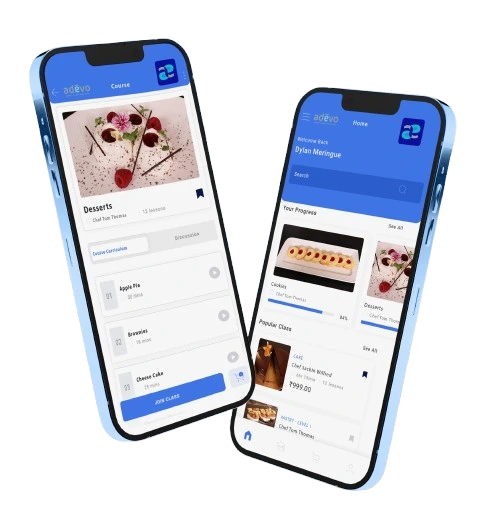
Digital delivery changes accessibility. When a server can pull up the sequence of service on their phone during a break or before the shift starts, they’re more likely to follow it than if it lives in a binder behind the manager’s desk. For hotels looking to move from paper binders to mobile-accessible training, this is one of the highest-ROI changes available.
Training integration is the missing link. SOPs are not self-implementing. A property can have the best-written hotel sop library in the industry and still have staff following their own interpretations. The reason is always the same: the SOP was written and filed, but not trained. Every SOP needs a corresponding training touchpoint – whether that’s a demonstration, a supervised practice session, or a micro-assessment. For a deeper look at how to build SOPs that are designed for training from the start, our kitchen SOP guide (linked earlier in this article) shows this training-first approach applied in depth to a single department.
Review cycles matter. SOPs need a quarterly review, minimum. Menu changes, team changes, regulation updates, and physical changes to the property all make procedures obsolete. An SOP that describes a service sequence for a POS system you replaced two years ago is worse than having no SOP, because staff follow it partially and fill in the gaps with whatever they’ve learned.
In Adevo’s consulting work, we recommend assigning each department head ownership of their SOP set, with a named review date and a sign-off from the GM after each update. It takes about two hours per quarter per department. The cost of not doing it is far higher.
Frequently Asked Questions: Hotel SOP
Q: What is SOP in hotel industry?
A: A hotel SOP (standard operating procedure) is a written, step-by-step instruction that defines how a specific task should be completed in a hotel or restaurant. SOPs cover all departments – from front office and housekeeping to kitchen and F&B service – and ensure consistent service delivery regardless of which staff member is on duty.
Q: How many SOPs does a hotel need?
A: In Adevo’s operational experience, a full-service hotel typically maintains a hotel SOP library of around a hundred individual procedures across all departments. A budget or mid-scale property can operate effectively with roughly half that number, covering the most critical tasks. Start with the highest-risk and highest-frequency tasks: check-in, room cleaning, food safety, and emergency response.
Q: What is the difference between an SOP and a policy in hotels?
A: A policy states what should be done and why – it’s a principle or standard. An SOP tells staff exactly how to do it, in what order, using what tools. Example: “All guest complaints must be resolved within 30 minutes” is a policy. The step-by-step complaint handling procedure – how the agent listens, acknowledges, offers a solution, and documents the outcome – is the SOP.
Q: What is SOP in hotel housekeeping?
A: The hotel SOP for housekeeping defines the exact cleaning sequence, chemical usage, linen standards, and inspection process for each type of room and public area. It covers occupied room service, departure room turnaround, public area cleaning, and lost and found protocols. In practice, a well-followed housekeeping SOP is what makes a guest’s second stay as consistent as their first.
Q: What is SOP in food and beverage service?
A: The property SOP for food and beverage service covers the sequence of service (greeting through farewell), order-taking, table setup and clearing, beverage service standards, and special procedures for banquets, bars, and room service. It defines the standard for every guest-facing interaction in the restaurant or event space.
Q: Why are SOPs important in hospitality?
A: A hotel procedure matters because consistency is the product in hospitality. Guests pay for an experience they can predict will be good. SOPs make that possible across shifts, teams, and seasons. They also reduce onboarding time, limit legal exposure through documented compliance, and give staff the confidence to act without escalating every decision to a manager.
Conclusion
A property SOP isn’t a bureaucratic exercise. It’s the operational backbone of every smooth shift, every consistent guest experience, and every department that runs without a manager standing over it.
The properties that do this well aren’t the ones with the thickest SOP binders. They’re the ones that wrote procedures their teams can actually use, built training around them, and revisited them regularly. That’s the difference between an SOP that sits on a shelf and one that actually runs your operation.
If you’re starting from scratch, begin your hotel procedure rollout with your highest-impact, highest-frequency tasks: check-in, room cleaning, sequence of service, and kitchen food safety. Get those four right and you’ll have a foundation to build everything else on.
For Indian hotel and restaurant teams, the difference between a property SOP that is filed and one that is followed comes down to training. Build that bridge, and the procedures stop being paperwork and start running your property.