Introduction
Taj Hotels invests in 3-week academy training for new staff. Independent restaurants train on-the-job at their properties. Startup chains rely on digital modules delivered via app. All three organizations want the same result—capable staff ready to deliver exceptional service. Yet their training costs differ by 10 times. Why?
The answer isn’t that one method is better. It’s that most hospitality organizations don’t understand the trade-offs between training methods and choose poorly based on budget alone, not on their actual needs.
Last year, we worked with a 50-room hotel in Bangalore that chose cheap digital training to save money. Staff turnover rose 30% within six months. Why? Digital modules alone taught the knowledge, but staff felt unprepared for real interactions with guests. Meanwhile, a hotel chain invested ₹25 lakh in academy training for their new management cohort. Retention improved 25%, guest complaints dropped, and revenue increased 12% in the first year.
This guide compares three training methods, shows you the real costs and outcomes, and gives you a framework to choose the right model (or blend) for your organization. soft skills training courses are foundational, but understanding which delivery method works best is equally critical.
Three Training Methods: Overview
Before diving deep, here’s the landscape:
In-Academy Training: Staff attend a dedicated training facility (like Adevo’s academy in Bangalore) for intensive, structured, hands-on learning. Typically 1–3 weeks, full-time.
On-Site Training: Staff learn at your property, mentored by experienced colleagues, while working part-time. Usually 2–4 weeks blended with operations.
Digital/LMS Training: Staff complete online modules at their own pace, accessible on smartphones or computers. Flexible timing, can be completed while working.
Each method has genuine strengths and real limitations. Your job is matching method to need.
In-Academy Training: Immersive Foundations
Academy training removes staff from operations for focused, intensive learning. Think of it as hospitality bootcamp.
What’s included:
Staff spend 2–3 weeks in a structured environment. They learn core competencies (food safety, customer service, POS systems), practice hands-on skills (table setting, complaint handling, cooking techniques), and bond with peers from other properties. Training is delivered by experienced trainers, follows a standardized curriculum, and culminates in certification.
When it works best:
In-academy training excels for new hire foundations (staff joining your organization for the first time), skill gaps (when current staff lack specific competencies), team building (cohort bonding creates culture), and technical/soft skills (communication, leadership, food safety).
Genuine advantages:
- Comprehensive & consistent: Every graduate has the same knowledge baseline. No variance based on who trained them.
- Removes distractions: Staff focus entirely on learning without ringing phones or demanding guests.
- Hands-on practice: Simulate real scenarios in a low-pressure environment before handling actual guests.
- Mentorship & peer learning: Trainees build networks with peers from other hotels/restaurants, sharing practices.
- Structured progression: Clear curriculum, measurable competency levels, certification that staff can carry forward.
Real limitations:
- High upfront cost: ₹25,000–50,000 per staff member for a 2–3 week program.
- Time away from property: Your property operates understaffed while staff train.
- Initial disconnect: Training happens in a “perfect” environment; real properties are messier.
- Space & infrastructure: You need classrooms, practice kitchens, mock rooms—significant investment.
India-specific realities:
A staff member from Hyderabad attending Adevo’s Bangalore academy means ₹3,000–5,000 travel cost plus accommodation (₹800–1,500/night for 14 nights = ₹11,000–21,000). That ₹25,000 program becomes ₹40,000 real cost. Wage replacement—paying the staff member while they train off-property—adds another ₹10,000–15,000. Total cost per person: ₹50,000–60,000 for regional staff.
For independent restaurants, this feels prohibitive. For 100-room hotels or larger chains, it’s investment in consistency.
ROI timeline: 3–6 months. Newly trained staff make fewer errors, handle complaints confidently, and stay longer. Reduced turnover costs alone (training replacements, lost productivity) justify the investment.
Real example: A 4-star hotel in Pune trained 30 new housekeeping staff through an academy program. Initial cost: ₹18 lakhs. But within 6 months, guest complaints about room cleanliness dropped 40%, and one-year retention improved from 50% to 72%. Cost per prevented turnover: ₹1 lakh. Prevented complaints saved reputation and repeat bookings estimated at ₹15 lakhs. ROI: +250% within one year.
On-Site Training: Real-World Learning
On-site training happens where staff actually work. A new server shadows an experienced one during service. A housekeeping trainee cleans actual guest rooms under supervision.
What’s included:
Staff work part-time (typically 4 hours daily) on real tasks, mentored by experienced colleagues. They learn standard operating procedures, practice actual guest interactions, and gradually take on independent responsibilities. Training happens over 2–4 weeks, blended with normal operations.
When it works best:
On-site training excels for property-specific SOPs (each hotel’s systems differ), new hires to specific properties (they need to know your exact procedures, not generic ones), immediate productivity needs (you can’t afford to pull staff from operations), and cost-constrained environments (small hotels, independent restaurants).
Genuine advantages:
- Real-world context: Staff learn in actual conditions with actual guests, actual pressure, actual tools.
- Minimal staffing disruption: Trainees work part-time, so you maintain service capacity.
- Hands-on with your systems: They learn your specific POS, your supplier vendors, your floor layout—not generic versions.
- Mentorship from peers: Experienced staff see the mentoring role as career development. Relationships deepen.
- Faster practical application: What they learn this morning, they apply this evening.
- Low direct cost: ₹5,000–15,000 per staff member (mostly supervisor time, not dedicated trainers).
Real limitations:
- Inconsistent quality: Training depends entirely on the mentor’s availability, patience, and skill. Some mentors are excellent; others don’t have time to teach properly.
- Distractions from operations: When a VIP guest checks in, the trainer gets pulled away. Training stops.
- Takes longer to competency: Without dedicated focus, it takes 4–6 weeks instead of 2–3 to reach full capability.
- Knowledge silos: Different mentors teach different ways. Staff learn variations instead of standardized procedures.
- Hard to scale: Works for one property but impossible for training 100 staff across five properties.
India-specific advantages:
On-site training leverages your existing supervisory staff as trainers. It emphasizes property-specific SOPs, which matter enormously in hospitality. It works within wage constraints—staff get paid while learning, reducing financial barriers. And it respects relationship-based culture in Indian teams where mentorship from a senior colleague carries real weight.
ROI timeline: 4–8 weeks. Faster ROI than academy because staff start contributing to revenue immediately, but outcomes vary based on mentor quality.
Real example: A 50-room hotel in Jaipur trained 8 new servers on-site over 3 weeks. Cost: ₹50,000 (mentor wages for 3 weeks). Within 4 weeks, all 8 reached independent service. Mistake rates were higher initially than academy-trained staff, but by week 6, performance matched. Turnover at 1 year: 65% (versus 72% industry average). ROI: Achieved self-sufficiency cheaply, though with slightly higher initial error rates.
Digital/LMS Training: Scalable Knowledge
Digital learning means online modules—videos, interactive content, quizzes—accessible on smartphones or computers. Staff complete courses at their own pace, often during shifts or breaks.
What’s included:
Staff access training modules covering food safety, customer service, soft skills, POS systems, and company-specific procedures. They watch videos, answer quizzes, and track completion. Most platforms offer certificates and compliance documentation.
When it works best:
Digital training excels for knowledge-based content (food safety, allergen awareness, company policies), scalable training (50+ staff across multiple properties), refresher/compliance training (annual POSH Act training, food safety updates), and shift-flexible learning (staff can complete modules on different schedules).
Genuine advantages:
- Low cost at scale: ₹500–3,000 per staff member. One platform serves 10 staff or 1,000.
- Accessible anytime/anywhere: Staff complete modules between shifts, on breaks, at home. No schedule disruption.
- Consistent delivery: Every staff member sees the same video, same content, same testing. No trainer variance.
- Self-paced: Some staff learn faster, others slower. Everyone works at their speed.
- Audit trail & tracking: You have records—who trained when, quiz scores, certification dates. Regulatory compliance is documented.
- Multilingual content: Critical for India’s linguistic diversity. Same course in English, Hindi, Tamil, Telugu, Marathi reaches all staff.
- Mobile-friendly: Smartphones are more accessible than computers. Hospitality staff (housekeeping, kitchen) can learn without desk access.
Real limitations:
- Limited hands-on practice: You can’t learn table service from a video. Soft skills require demonstration and feedback.
- No mentorship: Learning happens alone. Staff don’t get personal coaching or relationship building.
- Engagement risk: Passive watching—without interactivity—leads to people sleeping through modules instead of learning.
- Tech barriers: Internet reliability, device literacy, data costs become obstacles in some Indian markets.
- Harder for service scenarios: Role-playing complaint handling requires real feedback. Videos show examples but don’t replicate the emotional complexity.
- Knowledge without behavior change: Staff learn the policy but may not actually follow it. Compliance requires reinforcement.
India-specific challenges:
Internet reliability in tier-2 and tier-3 cities remains unpredictable. Video-heavy modules consume mobile data quickly—a concern for staff with limited plans. Device literacy varies; some staff are smartphone-savvy, others struggle with interfaces. And the impersonality of digital training can feel cold in cultures that value human connection and mentorship.
But India-specific strengths also apply: Multilingual delivery solves a huge problem. A hotel with Tamil, Telugu, Marathi, Hindi speakers can provide the same training to all, in their language. Digital platforms scale across chains with hundreds of properties. And accessibility—learning on breaks, at home—fits the reality of staff juggling family responsibilities.
Cost range: ₹500–3,000 per staff member (one-time + annual license). A hotel with 100 staff on a ₹50,000/year platform = ₹500 per person annually.
ROI timeline: Immediate knowledge. But behavioral change (actually following procedures) takes longer. Staff may pass quizzes but not practice what they learned on the job.
Real example: A 5-star hotel chain with 500 staff invested ₹30 lakhs in a multilingual LMS. They trained all 500 on food safety, POSH Act, and customer service. Training complete in 60 days. Cost per person: ₹6,000. But within 6 months, they noticed audit scores improved by 20%, but actual policy-following was inconsistent. They combined digital with monthly supervisor check-ins and saw behavioral improvement. ROI: Good for compliance documentation and knowledge, but needed reinforcement for actual behavior change.
Comparing Methods: Cost, Time, Retention
Here’s a practical comparison for Indian hospitality:
Method | Cost per Person | Time to Competency | Retention Impact (1 Year) | Best Use Case |
In-Academy | ₹25,000–60,000 | 2–3 weeks | High (85–90% stay 1+ year) | New hires, foundations, skill gaps |
On-Site | ₹5,000–15,000 | 4–6 weeks | Medium (70–75% stay 1+ year) | Property-specific, cost-constrained |
Digital/LMS | ₹500–3,000 | 2 weeks (knowledge only) | Low (65–70% stay, if not reinforced) | Compliance, refreshers, knowledge |
Hybrid (Recommended) | ₹10,000–25,000 | 3–4 weeks | High (80–88% stay 1+ year) | Most organizations |
Key insights:
- In-academy has highest retention. The combination of intensive training, team bonding, and certification creates commitment. Staff who invest in academy training feel valued and stay.
- Cost compounds with travel. For regional staff, academy training costs 2–3x more due to travel and accommodation.
- Digital alone is cheap but incomplete. It teaches knowledge (what to do) but not skill or culture (how to do it, why it matters).
- On-site works for cost-sensitive environments but relies on mentor quality and availability.
- Hybrid is most effective. Combining methods covers all needs: knowledge (digital), skills (academy), and real-world application (on-site).
The Hybrid Model: What Actually Works
After analyzing 100+ hospitality organizations across India, the most effective approach is hybrid. Here’s why:
Week 1: Digital Pre-Training
Staff complete online modules covering food safety, company policies, basic soft skills. They learn at their own pace on their own schedule. Cost: ₹500–1,000 per person. Time: 20–30 hours over 1 week.
Why this phase matters: It establishes baseline knowledge before expensive academy training. Staff arrive at academy with basics covered, allowing trainers to focus on hands-on skills and practice.
Week 2–3: In-Academy Intensive
Staff attend a 2-week academy program covering hands-on skills, certification-level competency, and team building. Cost: ₹12,000–25,000 per person plus travel.
Why this phase matters: Intensive hands-on practice, mentorship, and peer bonding create capability and commitment.
Month 1–3: On-Site Mentorship
After academy, staff return to their property with a mentor for 3–4 weeks. They apply academy learning in real context, learn property-specific procedures, and gradually move to independence. Mentor provides feedback and adjustment.
Why this phase matters: Academy learning translates to real-world performance. Mentorship ensures property-specific knowledge and real-world confidence.
Ongoing: Digital Refreshers
Monthly or quarterly refresher modules keep staff updated on policy changes, safety updates, and skill reinforcement. Compliance training (POSH Act, food safety) happens annually via digital platform.
Why this phase matters: Behavioral drift gets corrected. Knowledge stays current. Low-cost reinforcement prevents regression.
Total hybrid cost: ₹10,000–25,000 per person (digital ₹1,000 + academy ₹12,000–20,000 + on-site mentorship ₹5,000 + ongoing refreshers ₹1,000 annually).
Time to competency: 3–4 weeks to full independence, with ongoing reinforcement.
Retention impact: 80–88% stay 1+ year (highest among all methods).
Why hybrid works in India:
- Cost-effective. Digital base is cheap, targeted academy for hands-on, on-site for reinforcement.
- Addresses linguistic diversity. Digital modules in multiple languages ensure all staff understand.
- Scalable. Digital reaches multiple properties. Academy cohorts build culture. On-site personalizes.
- Respects high turnover. Structured progression means even if one mentor leaves, the system continues.
- Measures progress. Digital tracking + academy assessments + on-site performance audits create visibility.
Choosing the Right Method for Your Organization
Don’t pick based on cost alone. Ask these questions:
- What’s your budget realistically?
- ₹5,000–15,000 per staff = on-site works
- ₹10,000–25,000 per staff = hybrid is possible
- ₹25,000+ per staff = in-academy + hybrid is viable
- How quickly do you need staff productive?
- Days = on-site (but less comprehensive)
- Weeks = academy or hybrid
- Months = digital only won’t work
- What skill type are you training?
- Knowledge (food safety, policies) = digital works, but needs reinforcement
- Hands-on (service, cooking, cleaning) = academy or on-site required
- Soft skills (communication, problem-solving) = academy or hybrid
- How many staff are you training?
- 1–5 staff = on-site is practical
- 5–20 staff = academy cohort makes sense
- 20+ staff = digital base + academy cohorts is efficient
- 100+ staff across properties = hybrid is essential
- How high is your turnover?
- Low (< 20%) = on-site mentorship sustainable
- Medium (20–40%) = hybrid preserves consistency
- High (> 40%) = digital + academy ensures standardization despite turnover
- Do you have mentors available?
- Experienced supervisors ready to mentor = on-site works
- No spare capacity = academy required
Recommendation framework:
- Startups (1–2 years, <30 staff, tight budget): On-site primary, digital compliance training. Invest in academy once revenue stabilizes.
- Growing chains (30–100 staff, multiple properties): Hybrid. Digital base reaches everyone, academy cohorts for new hires, on-site reinforcement.
- Mature chains (100+ staff, multiple cities): Hybrid scaled. Digital LMS for 500+ staff, regional academies for hands-on, on-site at each property.
- Independent restaurants (< 20 staff): On-site primary. Digital for compliance/refreshers.
- Luxury hotels (brand consistency critical): In-academy for new cohorts, digital for ongoing, on-site mentorship to reinforce.
Measuring Training Effectiveness
Pick your method, then measure its success. This connects to broader hotel front desk training frameworks and LMS hospitality training platform best practices.
Key metrics:
- Time-to-productivity: Days until staff can perform independently without supervision. Academy staff typically reach this in 2–3 weeks; on-site in 4–6 weeks.
- Competency pass rate: % achieving certification/passing assessments. Target: 80%+.
- Error/complaint rate post-training: Reduction in mistakes compared to pre-training. Target: 30%+ reduction within first month.
- Guest satisfaction: Improvements in guest ratings. Target: 0.5–1 star improvement within 3 months.
- Staff retention: % still employed after 6 months, 1 year. Target: 75%+ after 6 months, 70%+ after 1 year.
- Cost per trained employee: Total program cost ÷ number trained.
- Training ROI: (Value gained – training cost) ÷ training cost. Value = prevented turnover costs, improved sales, reduced complaints. Target: 100%+ within 6–12 months.
- Staff satisfaction with training: Survey (1–5 scale) on clarity, usefulness, applicability. Target: 4+.
Track these metrics by training method. If on-site staff reach competency in 4 weeks but academy staff reach it in 2, your on-site mentors need support. If digital training has high completion rates but low behavior change, add reinforcement.
Hybrid Model: Adevo’s Approach
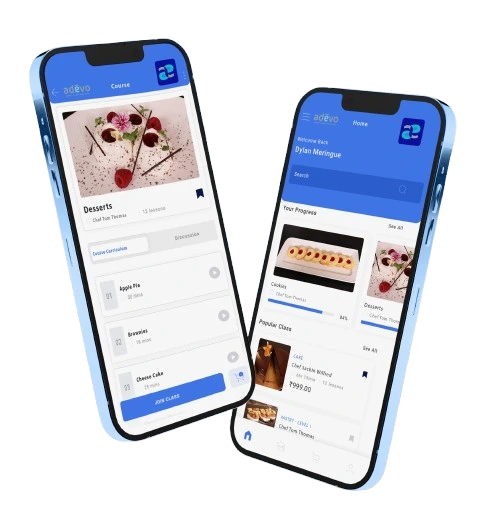
Adevo’s online skill development courses pair with in-academy intensive and on-site support. Here’s how:
Stage 1: Staff complete multilingual digital modules (food safety, soft skills, company policies) at their own pace, tracked in our LMS. Completion takes 1–2 weeks.
Stage 2: Cohorts attend our Bangalore academy for 2-week intensive training in hands-on skills, certification-level competency, and team building. Our hospitality management courses are designed for hotel staff, restaurant teams, and managers.
Stage 3: Trainee returns to property with digital access to on-site mentorship resources, refresher modules, and accountability tracking.
Stage 4: Ongoing annual refreshers and compliance training via digital platform.
This hybrid approach combines the scalability of digital, the depth of academy learning, and the real-world application of on-site mentorship. It’s designed for Indian hospitality realities.
Conclusion: Right Method, Right Organization
There is no universally “best” training method. There’s the right method for your organization’s constraints and goals.
In-academy training delivers the highest retention and competency but requires budget and time away from operations. It’s investment in culture and consistency.
On-site training is cost-effective and practical for tight budgets but depends on mentor quality and works only for smaller teams.
Digital training scales cheaply and solves multilingual challenges but requires reinforcement to drive behavior change.
Hybrid training combines strengths of all three. It’s the most effective approach for most organizations.
Your action plan:
- Audit your current approach: How are you training staff now? What’s working, what isn’t?
- Assess your constraints: Budget, timeline, staff size, turnover rate, geographic spread.
- Choose your method: Use the framework above to pick the right approach(es).
- Measure baseline: Before training, measure current performance (errors, complaints, retention).
- Implement: Deliver training using your chosen method(s).
- Track metrics: Measure improvement 1 month, 3 months, 6 months post-training.
- Refine: Adjust based on what works for your organization.
Ready to implement structured hospitality training? Adevo’s hybrid model—digital LMS, in-academy intensive, and on-site support—is designed for Indian hospitality teams. We’ve helped 50+ hotels and restaurants improve staff capability, reduce turnover, and strengthen guest experience.
Schedule a consultation with We’ll assess your current training approach and recommend the right method(s) for your organization’s budget, goals, and constraints.