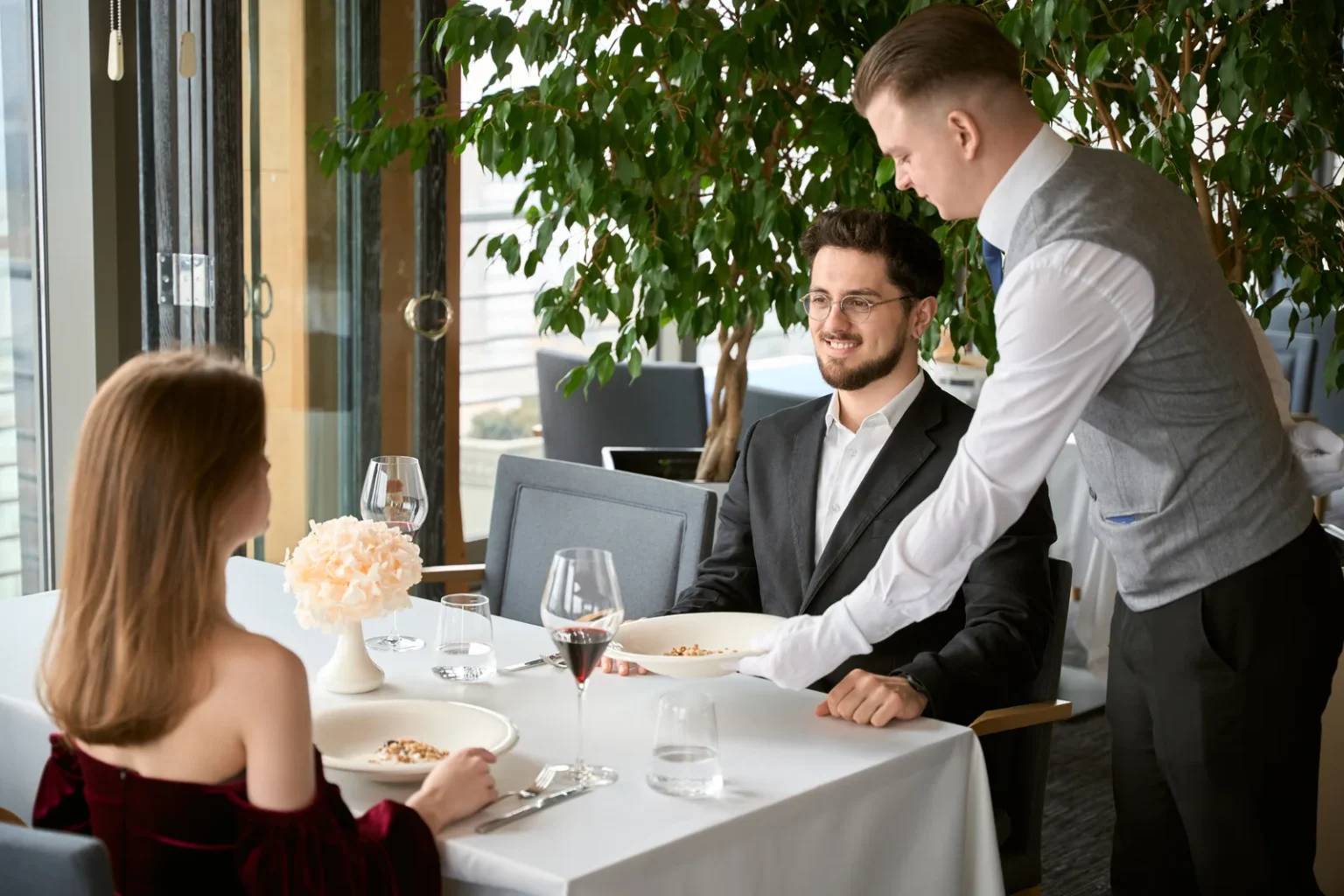
What is food and beverage service? It is the guest-facing side of a food and drink operation: welcoming, presenting and serving, from the first greeting to the farewell. A trainee who can carry a plate has learned one task; one who can explain what the job covers has learned the role. For a team still building that foundation, start with Adevo’s food and beverage training courses.
You know the pressure of a Friday dinner shift. Orders stack up, the kitchen pushes plates, and one badly handled table colours the whole evening. This guide covers the definition, the line between service and kitchen production, how service works in a hotel, the types at a glance and the basic sequence, so your team can answer what is food and beverage service in one voice.
Key Takeaways
- What is food and beverage service? The guest-facing work of presenting and serving food and drinks, from welcome to farewell.
- Service faces the guest and production faces the stove, so a great dish and a great server are separate skills that depend on each other.
- What is food and beverage service in a hotel? Work that runs across several outlets at once, each with its own pace and standards.
- Every style of service, however formal, follows the same basic flow: welcome, order, serve, clear, bill and farewell.
What Is Food and Beverage Service?
EFOS defines it as the process of preparing, presenting and serving food and drinks to guests in hotels, restaurants, cafés and other dining establishments. That is the definition to give when a new colleague asks what is food and beverage service on day one.
In daily practice, the kitchen cooks and the floor team presents and serves. Some trainees ask what is f and b service when they first see the shorthand on a rota; F&B simply means food and beverage.
Service covers more than carrying plates. It starts before the first order, continues while the team watches the table for requests and problems, and ends only after the bill and the goodbye.
Consider Ritu, a new trainee at a standalone restaurant in Pune. She cleared plates quickly but never greeted guests at the door. Her supervisor, Arjun, asked her to own the first thirty seconds of every table: greet, seat, offer water.
Within a few weeks her tables stopped calling for the captain. She had simply started treating service as the whole guest experience, not just the plate. When a newer trainee later asked her what is food and beverage service, she no longer said carrying plates.
Want every new trainee to start with this definition? Ask Adevo to build it into a modular programme for your outlet.
What Is Food and Beverage Service, and How Is It Different From Production?
Service faces the guest, and production faces the stove. Service covers presentation, timing and attention to the guest; production covers preparing and cooking.
Service is also the softer side of the department: tone, timing, eye contact and reading a table. Those habits are soft skills first and F&B techniques second, so they respond well to soft skills training courses in Bangalore or any structured programme that practises tone, timing and table reading.
| Aspect | F&B service | F&B production |
|---|---|---|
| Where it works | Dining room, bar, banquet hall | Kitchen and bakery |
| Main task | Present, serve, bill | Prepare and cook |
| Guest contact | Constant | Rare |
Knowing that line is the first half of any answer to what is food and beverage service.
Each side can ruin the other. A well-cooked dish that reaches the table cold fails the guest, and a polished server cannot rescue a poorly cooked plate. The hand-off is the pass: once the kitchen sends a plate out, the floor team owns its timing, temperature and presentation to the guest.
What Is Food and Beverage Service in a Hotel?
In a hotel, F&B service runs across several outlets at once, and each one asks something different of the team. Breakfast, a business lunch and a late bar all run on different clocks. The hotel version of the question, what is F&B service in hotel terms, has a wider answer than a single restaurant gives. A typical property may include:
- Quick, casual meals at an all-day dining restaurant or coffee shop
- Room service, where the guest never sees the dining room
- Slower, more formal service in a speciality restaurant
- Banquet halls for weddings, conferences and corporate events
- Evening drinks at a bar or lounge
Which outlets exist depends on the hotel. A business hotel in Bengaluru and a resort in Goa will not mirror each other. Banquets deserve special mention: CSJMU notes that the banquet hall is the highest revenue-producing F&B outlet in a commercial hotel. That makes banquet service quality a commercial issue as much as a guest one.
A standalone restaurant compresses all of this into one room, and the same person may seat, serve and bill, moving from host to waiter to cashier within a single hour. Whether the team works across five outlets or one dining room, a structured F&B training programme can build the foundation, and the outlet decides how deep each skill goes.
Take Neha, an F&B manager at a business hotel in Bengaluru. Her coffee shop team worked well, but the same people struggled when the roster sent them to a wedding banquet. The pace, the pre-planned menu and the guest numbers were all different.
She started rotating juniors through banquet shifts with a senior beside them, and the hand-offs between outlets got smoother. The juniors also learned to work to a fixed event timetable instead of reacting table by table. Her lesson holds for anyone asking what is food and beverage service in a hotel: the answer changes with every outlet, so the training has to change with it.
How Many Types of Food and Beverage Service Are There?
EFOS sorts the work into six types, based on how food reaches the guest.
- Table service: the guest sits and staff serve at the table, in styles from plated to silver service.
- Self-service: buffet and cafeteria formats, where guests fill their own plates.
- Assisted service: a carvery or salad bar where guests choose and staff help.
- Single-point service: takeaway, drive-through, kiosks and vending, all at one counter.
- Specialised service: room service, trolley and gueridon, lounge, tray and outdoor catering.
- Banquet service: large pre-planned functions such as weddings and conferences.
Many outlets mix types. A coffee shop may run a buffet at breakfast and table service at dinner, while a banquet hall runs a plated function one evening and a buffet the next. A server who knows which type the outlet runs on a given shift also knows how far to walk, what to carry and when to step in, so the type shapes the training as much as the schedule.
Each table-service style has its own rules, from the side a server approaches to who carves the joint, and that detail sits in our full guide to the types of food and beverage service. Choose the style before you write the rota, because the style decides how many people the shift needs.
What Is Food and Beverage Service Step by Step?
Whatever the style, the basic flow stays recognisable. Seen from the guest’s side, it runs in five steps:
- Welcome and seat the guest.
- Present the menu and take the order.
- Serve the food and drinks.
- Clear the table.
- Present the bill, take payment and thank the guest.
The order rarely changes, but the pace does. A business lunch wants speed, while an anniversary dinner wants room between the steps, so staff must read the table before they set the rhythm. That judgement is where trained staff stand apart. A full walkthrough with timing and standards for each step is a topic of its own, and our sequence of service guide covers it.
Imran, a captain at a busy restaurant in Hyderabad, noticed guests waving for the bill while plates still sat on the table. His team treated clearing and billing as one job, so neither happened on time.
He split them: the steward clears, the waiter brings the bill. The delay disappeared without hiring anyone, because the sequence was always there and his team had not owned each step. Ask his trainees today what is food and beverage service and they answer in five steps, each with a named owner.
Who Delivers Food and Beverage Service?
Every role in the chain touches the guest, so anyone asking what is food and beverage service should look at the people as well as the definition. EFOS lists these roles in a hotel F&B department, from the top of the reporting line down:
- Food and Beverage Manager
- Assistant F&B Manager
- Restaurant Manager or Outlet Manager
- Assistant Restaurant Manager or Supervisor
- Captain or Head Waiter
- Steward or Waiter
- Commis, Busboy or Runner
- Host or Hostess
- Bartender
- Room Service Order Taker
- Room Service Attendant
Titles shift by property, and in a small restaurant one person may carry several of them.
A written standard turns an org chart into daily practice. Well-written F&B SOPs spell out who does what at each step. A good service SOP fixes four things: how the team greets guests, how servers take orders, how fast courses move, and who handles a complaint that cannot be settled at the table. Without one, two captains on one floor run two different restaurants, and trainees learn from whichever one they stand beside.
How Does Adevo Teach What Is Food and Beverage Service?
Ask what is food and beverage service in Adevo’s training and the answer is a full cycle: the service checklist, table and restaurant setup, reservations, greeting and seating, order taking, service of water, beverages and food, silver service, clearance, and the guest’s exit. That mirrors the five-step sequence in this guide, with the detail a floor team needs to carry out each step to one standard.
Trainers can run it on site at your restaurant or hotel and shape it around your menu and outlets, including pre-opening training for a new property and a post-opening review. For distributed teams, the online version gives every outlet the same content, with analytics to show progress. Training is available in Hindi, Kannada, Tamil, Telugu and English.
How Does Adevo Help With Food and Beverage Service?
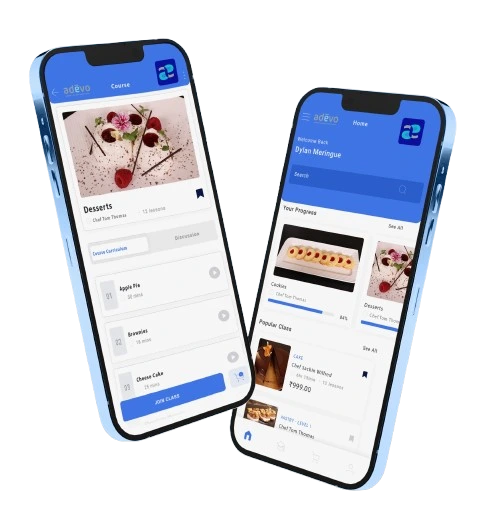
Adevo trains the full cycle behind this definition, from the service checklist and table setup to greeting, order taking, clearing and the guest’s exit. It is an integrated skill development platform for hospitality, and its name comes from Atithi Devo Bhava. Hotel chains, restaurant companies, clubs and corporate teams upskill staff through its online courses or bring on-site trainers to the property, where pre-opening training and a post-opening review are part of the work. Students, freshers and working staff earn certifications that show they are job-ready on the floor. The co-founders, with more than 80 years of combined experience that includes the Taj and Oberoi hotel groups, F&B outlets and hotel-management classrooms, also consult on SOPs and learning plans, with training in Hindi, Kannada, Tamil, Telugu and English.
Conclusion
So what is food and beverage service? It is the front-of-house craft of presenting and serving food and drinks, separate from the kitchen. It looks different in a hotel with several outlets than in a single restaurant, yet the roles, the types and the sequence follow the same logic.
Teach that logic first and every later skill, from wine service to banquet setup, has somewhere to attach. That is the working answer to “what is food and beverage service?” for any floor team.
Ready to give your team one shared definition of service? Ask Adevo about F&B training for your outlet built around your menu, your team and your guests.
Frequently Asked Questions: Food and Beverage Service
Q: What is food and beverage service?
A: It is the guest-facing work of a food and drink operation: welcoming, presenting, serving, clearing and billing, while the kitchen cooks. It runs from the guest’s welcome at the door to the farewell on the way out.
Q: What is food and beverage service in a restaurant?
A: In a restaurant, it is the work of the floor team: seating guests, taking orders, serving, clearing and billing. A standalone restaurant often combines several roles in one person.
Q: What is food and beverage service in a hotel?
A: In a hotel, F&B service covers every outlet where food and drinks are sold, such as restaurants, bars, room service and banquets. Each outlet keeps its own pace and standards, so training has to follow the outlet.
Q: How many types of F&B service are there?
A: EFOS groups F&B service into six types: table service, self-service, assisted service, single-point service, specialised service and banquet service. Many outlets mix more than one type in the same shift, so a trainee asked what is food and beverage service should be able to name all six.
Q: What is the difference between F&B service and F&B production?
A: F&B service faces the guest and covers presenting, serving and billing, while F&B production faces the stove and covers preparing and cooking. Both depend on the pass, where a finished plate changes hands from the kitchen to the floor team.
Q: What is the basic sequence of F&B service?
A: The basic sequence runs from welcoming and seating the guest, through the menu and order, to serving, clearing and the bill. It ends with thanking the guest.