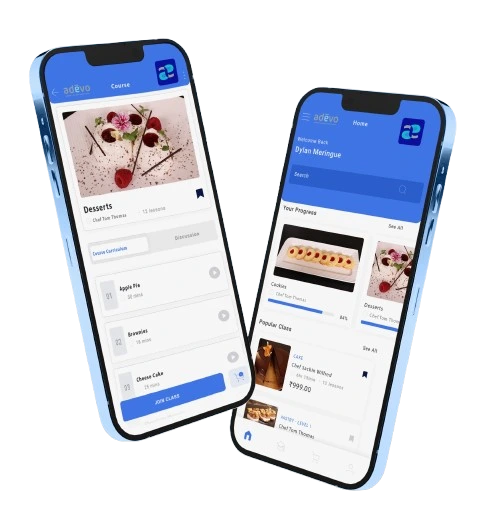

The hotel chains in India employ hundreds of thousands of F&B professionals across service, kitchen, bar, and banquet operations. If you are deciding where to build your career, the brand you join shapes everything: the service standards you learn, the progression timeline, the cities where openings exist, and the quality of training you receive. This guide breaks down the major hotel chains in India (both homegrown and international) and maps the F&B career paths available inside each one. Adevo’s online skill development courses are designed specifically to prepare professionals for these environments. Adevo’s food and beverage training courses help F&B teams build these skills on the job.
Key Takeaways
- India’s hotel chains offer structured F&B career ladders that standalone restaurants rarely match, with clear timelines from Waiter to F&B Manager within five to seven years.
- IHCL, Lemon Tree, and Marriott India are actively expanding into Tier 2 cities, which means F&B openings now exist far beyond Mumbai, Delhi, and Bangalore.
- International hotel chains in India follow global training standards, giving you a credential that travels across properties, both domestically and internationally.
- The F&B entry point at most hotel chains in India is a Waiter, Commis Chef, or Trainee role: the fastest route in is a structured hospitality course followed by an internship at the property itself.
Consider Arjun, a 23-year-old IHM graduate from Bhopal. He had two offers: a mid-scale standalone restaurant in his city and a Supervisory Trainee role at a Courtyard by Marriott in Pune. He took the hotel. Within three years he was an F&B Supervisor overseeing a 120-cover all-day dining outlet and two banquet rooms. The standalone restaurant is still running the same menu.
Why Hotel Chains in India Offer the Strongest F&B Career Foundation
Hotel chains in India invest in F&B training in a way that most standalone operations simply cannot. A large hotel group has dedicated L&D managers, standardised training modules, onboarding checklists, and promotion criteria that are documented and predictable. When a Supervisor leaves a chain property, there is a replacement pathway. When a Waiter hits six months, a review happens.
That structure is what separates hotel chains in India from independent operators when it comes to career building. You do not have to wait for someone to leave before you can move up. Promotion cycles exist. Brand standards create accountability at every level.
The other factor is scale. Hotel chains in India operate multiple outlets within a single property. A typical five-star hotel has a coffee shop, a fine dining restaurant, a bar, banquet facilities, in-room dining, and often a pool deck or rooftop. That means an F&B professional can rotate across service environments without changing employers. A Waiter who spends six months in the coffee shop, six months on banquets, and six months in fine dining has more practical range than someone who spent those same 18 months at one counter.
See how Adevo prepares F&B professionals for these environments — talk to us about a training plan →
India’s Home-Grown Hotel Chains: The Biggest F&B Employers
India has produced several hotel groups that now operate at genuine scale. These are the chains where the bulk of domestic F&B hiring happens, and where most professionals in the industry build their foundational years.
IHCL (Taj Hotels, Vivanta, Ginger): If there is one Indian hotel group that has done more to shape F&B service standards in this country than any other, it is IHCL. The Taj brand sits at the top of the luxury segment. Vivanta covers upper-upscale. Ginger serves the budget traveller. What matters for your career is that IHCL has been expanding aggressively into Tier 2 cities, recently signing a 100-key Vivanta property in Vellore, Tamil Nadu. For an F&B professional, this is not a minor detail. It means career openings in cities that simply did not have branded hotel positions five years ago.
Oberoi Hotels and Resorts: Getting into the Oberoi Group is harder than most hotel chains in India because they are selective about it. The Oberoi and Trident brands run service training programs that are genuinely demanding. The upside is that an Oberoi credential carries real weight in the Indian hospitality market, and the discipline you develop here is transferable everywhere.
ITC Hotels: ITC runs the ITC Grand Chola, WelcomHotel, and Storii brands with a particular strength in regional cuisine and large-format banquet operations. Several ITC properties are among India’s most active MICE venues, which means the banquet F&B team is large, well-organised, and continuously hiring.
Lemon Tree Hotels: Lemon Tree is the right answer for professionals entering the industry who want structured training without the five-star pressure. The group operates at mid-scale and upper mid-scale, is known for inclusive hiring practices, and offers a clear Waiter-to-Supervisor progression timeline that is actually followed.
OYO Hotels: Be clear-eyed about this one. OYO operates at budget scale and the F&B component at most properties is minimal. It is a reasonable starting point for someone who needs their first industry experience, but not where you build the service depth that hotel chains in India’s upper segments require.
Take Meera, an F&B Supervisor at a Lemon Tree Premier property in Coimbatore. She came in as a Waiter after completing a one-year food and beverage training program. Within 18 months she was managing a team of eight at the all-day dining outlet and handling banquet setups for weekend corporate events. The structured rotation system at the property gave her exposure to bar operations, in-room dining, and large-format events, all in her first two years.
Review your hotel front desk training guide for a parallel look at how front office careers are structured at the same hotel chains in India.
International Hotel Chains in India: Global Standards, Domestic Opportunities
The international hotel chains in India bring a different dimension to F&B careers. Their training systems are global: brand standards, mystery audits, certification programs, and cross-property transfer options exist in a way that domestic chains are still building toward.
Marriott has more F&B openings across India right now than any other international group. Their Associate Learning Programs are the most consistently structured of any international brand operating here, covering service certifications, upselling techniques, and complaint handling. The brands span the full price spectrum: JW Marriott and Westin at the top, Courtyard and Fairfield in the mid-segment. A Marriott credential from India is recognised at Marriott properties across Southeast Asia, the Middle East, and Europe.
Hyatt’s strength in India is resort F&B. The Grand Hyatt, Hyatt Regency, and Andaz brands operate in Goa, Jaipur, and Ranthambore, which means the F&B environments cover poolside dining, destination weddings, and multi-cuisine restaurants serving international guests. This is where you develop a range that urban hotel F&B cannot match.
Hilton (Conrad, DoubleTree, Hampton) operates across India’s metros with F&B training modules standardised globally. IHG’s InterContinental, Crowne Plaza, and Holiday Inn brands are particularly active in airport corridors and convention districts, which means high-volume F&B operations with consistent staffing needs. Accor covers the broadest price range: Sofitel and Novotel at the top, Ibis at the budget end — which means an F&B professional can build a career within a single group from entry level upward.
One thing applies to all of these: international hotel chains in India hire locally trained professionals at entry and mid-level, but the credential matters at the screening stage. A food safety certification, a course completion certificate from a recognised program, and an internship at a branded property all clear the first filter that most candidates fail.
F&B Roles These Hotel Chains in India Actually Hire For
Every hotel chain in India has a standard F&B staffing structure. Knowing where the roles sit helps you target the right entry point.
- Waiter / F&B Associate: The entry-level service role. Manages guest interaction, order taking, table setup, and basic upselling. Most hotel chains in India hire at this level with a hotel management diploma or certificate.
- Captain / Senior Waiter: Leads a section of the restaurant floor or a banquet table assignment. Usually promoted from within after 12-24 months of strong performance.
- F&B Supervisor: Manages a shift, handles guest escalations, coordinates with the kitchen, and trains junior staff. A Supervisor at a chain property typically manages eight to fifteen staff members.
- F&B Manager: Responsible for an outlet or a segment (say, all food operations for banquets). Reports to the Director of F&B. Most hotel chains in India hire at this level from outside when internal pipelines are thin.
- Director of F&B: The senior-most F&B role in a hotel, overseeing all food and beverage revenue, team performance, vendor relationships, and concept strategy. A role typically reached after eight to twelve years of structured progression.
The majority of F&B professionals at hotel chains in India enter at the Waiter or Trainee level and build from there. The chains that invest in training (IHCL, Marriott, Hyatt, Oberoi) tend to promote from within more consistently than the ones that treat F&B as a cost centre.
Want to build this into your team or your career? Talk to Adevo about structured F&B training programs designed for hotel chain environments.
How to Get Your First F&B Job at a Hotel Chain in India
The fastest path into hotel chains in India starts before you apply for a job. The hiring funnel at most branded properties follows a predictable pattern.
First, the credential check. Most hotel chains in India expect a hotel management diploma or equivalent from a recognised institution. National Council for Hotel Management (NCHM) affiliated institutes carry more weight than private institutes in hotel HR screening. A food safety certification (FOSTAC or equivalent) has become close to mandatory.
Second, the internship record. A completed internship at a branded property is treated as a proxy for cultural fit. If your internship was at a hotel chains in India property, even a mid-scale one, the hiring manager knows you have seen brand standards in action.
Third, the skills gap. Most entry-level F&B staff at hotel chains in India need training in mise-en-place, sequence of service, upselling techniques, and guest complaint handling. These are trainable skills, and the ones that separate candidates who get shortlisted from those who do not.
Take Rahul, HR Head at a mid-scale hotel in Bengaluru. He interviews dozens of candidates for F&B roles annually. His consistent observation: “The ones who stand out have done their training somewhere structured. They know the table setup, they know upselling, and they do not freeze when I ask them to handle a mock complaint. That takes deliberate practice.”
Adevo’s kitchen operations and culinary training courses are built around the operational realities of Indian hotel chains — covering service standards, kitchen coordination, and the floor skills that branded properties actually test for.
Which Hotel Chains in India Should You Target First?
The hotel chains in India are not just getting bigger. They are getting better distributed, with properties now opening in cities that were invisible to branded hospitality five years ago. For an F&B professional, that means more entry points, more exposure options, and a structured career path that was once only available in the metros.
The difference between a career built inside hotel chains in India and one built in the unbranded sector often comes down to one early decision: investing in structured training before you apply. The credential, the internship, and the operational skills you bring to an interview are the filters that branded hotel hiring teams use.
If you are preparing for a role at one of India’s hotel chains, explore Adevo’s kitchen operations and culinary training programs — structured specifically for the F&B standards that Indian hotel brands demand.
Want your hotel team trained to the standards top chains expect? Ask about Adevo’s F&B training built around your team and your guests.
Frequently Asked Questions: Hotel Chains in India
Q: Which hotel chains in India are best for starting an F&B career?
A: IHCL (Taj and Vivanta), Lemon Tree, Marriott India, and Hyatt are consistently strong starting points for F&B careers in India. IHCL and Lemon Tree hire in volume across Tier 2 cities. Marriott and Hyatt offer global training systems with cross-property transfer options.
Q: What qualifications do hotel chains in India require for F&B roles?
A: Most hotel chains in India require a hotel management diploma from an NCHM-affiliated institute, a food safety certificate (FOSTAC or equivalent), and a completed internship at a branded property. IHM Bombay and state IHMs carry particularly strong recognition with hotel chain HR teams.
Q: Do hotel chains in India hire staff without prior experience?
A: Yes. Most hotel chains in India hire Waiter Trainees and F&B Associates with no prior experience, provided the candidate has completed a hospitality training course. The first six months are typically structured as an on-the-job training period with a senior F&B team member assigned as mentor.
Q: How long does it take to become an F&B Manager at a hotel chain in India?
A: The typical trajectory at hotel chains in India is five to seven years from Waiter to F&B Manager. Professionals who rotate across outlets and complete supplementary training tend to reach Supervisor level in two to three years and Manager level in four to six.
Q: Are international hotel chains in India better for F&B careers than Indian brands?
A: Not necessarily better, but different. International chains offer global brand credentials and cross-property mobility. Indian brands like IHCL and Oberoi offer deep cultural training and strong domestic networks. The right choice depends on whether you want international mobility or depth in the Indian market.
Q: Which cities have the most hotel chains in India hiring for F&B roles?
A: Mumbai, Delhi, Bengaluru, Hyderabad, and Chennai are the traditional hiring hubs for hotel chains in India. Goa remains strong for resort F&B. Pune, Jaipur, Coimbatore, and Kochi are growing rapidly as IHCL, Lemon Tree, and Marriott expand their Tier 2 city presence.