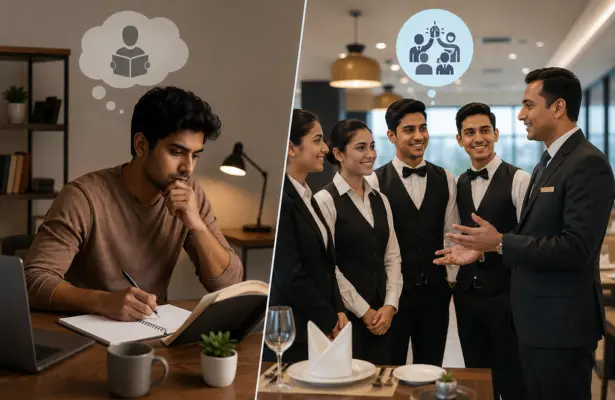
Every hotel manager in India has asked the same question at some point: can my team learn soft skills on their own, or do I need to invest in formal training?
It’s a fair question. Budget constraints are real. Staff schedules are tight. And there’s no shortage of free content online that promises to teach communication, empathy, and leadership. Before choosing either path, understanding the complete soft skills examples that hospitality roles require helps you see where self-study and structured programs overlap and where they don’t.
This article tackles self study vs soft skills training honestly, weighing self-study against structured programs. Both have a place. But for hospitality teams that serve guests face-to-face every day, one approach consistently outperforms the other.
Key Takeaways
- Self study vs soft skills training: self-study builds awareness, but structured training builds the skill through practice, feedback, and accountability.
- With 61 lakh new hospitality jobs projected by 2036-37, top-rated Indian properties rely on structured programs, not self-study alone (CII-EY via DD News, 2025).
- The strongest self study vs soft skills training model blends both: 4-6 weeks structured, ongoing self-study reinforcement, and quarterly refreshers.
What Does Self-Study for Soft Skills Actually Look Like
Self-study means learning through resources the individual chooses and consumes on their own schedule. For hospitality staff, this typically involves watching YouTube videos on communication skills, reading articles or books on guest service, or completing free online soft skills courses.
For hotel owners and L&D professionals evaluating hospitality management courses, understanding what self-study can and cannot deliver is essential before making a training investment.
The appeal is obvious: it’s free or cheap, flexible, and doesn’t require coordination across the team. A front desk executive can watch a 15-minute video on active listening during their break and theoretically apply it during the next shift.
The reality is more complicated. Self-study works well for building awareness. A staff member who reads about empathy in guest recovery understands the concept. But understanding a concept and performing it consistently under the pressure of a packed hotel lobby are very different things. Soft skills are performance skills. They require practice with feedback, not just information consumption.
What Does Structured Soft Skills Training Look Like
Structured training is an organised program delivered by a trainer (in-person or virtual) with a defined curriculum, practice exercises, feedback mechanisms, and measurable outcomes. In hospitality, this usually means role-play scenarios, group exercises, supervisor-led coaching, and assessment tools.
The investment is higher: it costs money, takes staff away from their duties for training sessions, and requires scheduling coordination. But structured programs deliver something self-study cannot: supervised practice in realistic scenarios with immediate, personalised feedback.
A structured soft skills course in the hospitality context might run twice weekly for six weeks, with each 45-minute session focusing on one specific skill. Staff practise through role-plays based on real guest scenarios from their own property, receive feedback from the trainer and peers, and apply the skill during their next shift with a specific observation target.
Where Does Self-Study Work Well
Self-study isn’t useless. For certain situations and certain skill levels, it’s a reasonable approach.
Building foundational knowledge. If a staff member has never been exposed to concepts like emotional intelligence, active listening, or conflict resolution, self-study resources provide that introduction. Books like these build vocabulary and conceptual understanding that make structured training more effective later.
Individual skill refinement for experienced professionals. A duty manager with 10 years of experience who wants to sharpen a specific skill (say, giving difficult feedback to subordinates) can benefit from targeted reading or video content. They already have the foundational practice. Self-study adds nuance.
Ongoing reinforcement after formal training. Self-study works best as a follow-up to structured programs, not a replacement. Staff who complete a communication workshop and then read one article per week on related topics maintain their skills better than those who stop learning after the workshop ends.
Budget-constrained properties in early stages. For a small standalone restaurant that genuinely cannot afford formal training yet, curated self-study materials are better than nothing. The key word is “curated.” An owner who selects specific resources and assigns them with discussion points gets more value than leaving staff to browse random content.
Self Study vs Soft Skills Training: Where Does Self-Study Fall Short
Self-study consistently fails in three specific areas that matter most for hospitality soft skills.
No real-time feedback. Soft skills are behavioural. You can read about maintaining composure during a guest complaint, but you won’t know if you actually do it until someone observes you in that situation and tells you what they saw. Self-study provides information. It doesn’t provide a mirror.
No practice under pressure. Hospitality soft skills need to work when the restaurant is full, the kitchen is backed up, and a guest is visibly frustrated. Self-study happens in calm, controlled environments. The gap between learning about patience and performing patience during a Diwali evening service is enormous.
No accountability or consistency. Left to their own devices, most hospitality staff prioritise operational tasks over self-improvement. They’ll complete the assigned shift duties but skip the optional reading or video. Structured programs create accountability through scheduled sessions, attendance tracking, and performance measurement. Self-study relies entirely on individual motivation, which varies dramatically across any team.
No customisation to the property. Generic online soft skills courses teach generic scenarios. They don’t address the specific guest profile of your property, the communication challenges unique to your team’s language mix, or the operational patterns that create pressure points at your hotel. Structured training adapts to these realities. Self-study content is one-size-fits-all.
What Does the Evidence Say About Soft Skills Training Effectiveness
India’s tourism and hospitality sector is projected to create over 61 lakh new jobs by 2036-37 according to a CII-EY report (DD News, 2025), and the properties that consistently rank highest for guest satisfaction share a common trait: they invest in structured, ongoing training programs. They don’t rely on staff figuring out soft skills independently.
The pattern is clear across Indian hotel chains. Properties with formal training programs see improvement in guest satisfaction scores, complaint resolution times, and staff retention. Properties that distribute self-study materials without structured follow-up see minimal change.
This isn’t because self-study resources are poor quality. It’s because soft skills are practice skills. They require repetition, feedback, and application under realistic conditions. Books and videos provide the knowledge. Practice provides the skill. Structured programs like Adevo’s hospitality management soft skills courses in Bangalore provide the practice, with role-play scenarios drawn from real Indian hotel situations that self-study simply cannot replicate.
Can You Combine Both Approaches
The most effective training strategy for Indian hospitality teams combines structured programs with self-study reinforcement. Here’s how this looks in practice.
Phase 1: Structured foundation (4-6 weeks). Formal training sessions covering the core skills your team needs most. Role-play, group exercises, supervisor feedback, and assessment. This phase builds the core behaviours.
Phase 2: Self-study reinforcement (ongoing). After the structured program, assign curated resources that reinforce what staff learned. One article per week, a monthly video, or a brief self-reflection exercise. This phase maintains the skills.
Phase 3: Periodic structured refreshers (quarterly). Bring back the formal training format every quarter to refresh skills, address new gaps, and keep the team accountable. These sessions can be shorter (90 minutes) and focused on the specific issues that surfaced since the last session.
Specialised programs such as kitchen operations and culinary training often use exactly this hybrid model, combining structured skill-building sessions with self-paced follow-up materials that staff access between workshops.
This blended approach respects both the budget reality of most Indian hospitality properties and the behavioural science of how adults actually learn interpersonal skills.
Self Study vs Soft Skills Training: How Should Managers Decide
The self study vs soft skills training decision depends on three factors specific to your property.
Your team’s current skill level. If your staff have never received formal soft skills training, start with structured programs. Self-study works as a complement, not an introduction. Teams that attempt self-study without a foundational framework lack the context to apply what they read.
Your budget and operational constraints. If you can invest in structured training, do it. The return on guest satisfaction and staff retention justifies the cost. If budget is genuinely limited, create a structured self-study program with assigned resources, discussion sessions, and accountability measures. Don’t just distribute links.
The skills you’re targeting. Some soft skills benefit more from structured training than others. Communication, empathy, and conflict resolution require extensive practice with feedback. Time management and attention to detail can be partially improved through self-guided tools and checklists. Match the training method to the skill.
Conclusion
The self study vs soft skills training question has a clear answer: both have a role in developing Indian hospitality teams. But they’re not interchangeable. Self-study builds awareness and reinforces existing skills. Structured training builds the skills themselves through practice, feedback, and accountability.
For properties serious about improving guest experience, structured soft skills training is the foundation. Self-study is the reinforcement. Combining both creates a sustainable development system that respects your budget while delivering real, measurable improvement in how your team serves guests every day.
The self study vs soft skills training decision doesn’t have to be either/or. Start with a structured program targeting your team’s two or three biggest gaps. Add curated self-study resources for reinforcement. Reassess quarterly. That’s the approach that works.
| Factor | Self-Study | Structured Training | Blended (Best) |
|---|---|---|---|
| Cost | Free-low | Rs. 5K-15K/person | Medium |
| Feedback | None | Real-time from trainer | Real-time + self-paced |
| Behaviour change | Awareness only | Lasting habits in 4-6 weeks | Strongest retention |
| Accountability | Self-motivated | Scheduled + tracked | Both |
| Customisation | Generic | Property-specific scenarios | Fully tailored |
Frequently Asked Questions: Self-Study vs Structured Soft Skills Training
Q: In the self study vs soft skills training debate, can hotel staff learn through YouTube and free online courses? A: They can learn the concepts but rarely develop the skills. The self study vs soft skills training reality is that hospitality skills require practice under realistic conditions with feedback. YouTube teaches what good communication looks like. Structured training teaches how to do it when a guest is upset and the lobby is crowded. Use free resources for awareness, not as a substitute for practice.
Q: Are soft skills courses worth the investment for small hotels? A: Yes, especially for small hotels where every staff member is guest-facing. A small property can’t absorb the impact of even one poor guest interaction the way a large chain can. Focused soft skills courses that target 2-3 specific gaps deliver returns through improved reviews, fewer complaints, and better staff retention. The investment is smaller for small teams, and the impact per person is larger.
Q: How long should a structured soft skills training program last? A: For meaningful behaviour change, plan 4-6 weeks of twice-weekly sessions (30-45 minutes each). Shorter programs build awareness but rarely create lasting habits. Longer programs risk training fatigue. The sweet spot is enough time for staff to learn a skill, practise it during real shifts, receive feedback, and refine their approach.
Q: What’s the biggest mistake in the self study vs soft skills training decision? A: Treating it as a one-time event. A single workshop or seminar creates temporary awareness that fades within weeks. Effective soft skills training is continuous. It includes initial structured sessions, ongoing self-study reinforcement, and quarterly refreshers. Managers who commit to this rhythm see permanent improvement. Those who rely on annual workshops see the same complaints year after year.
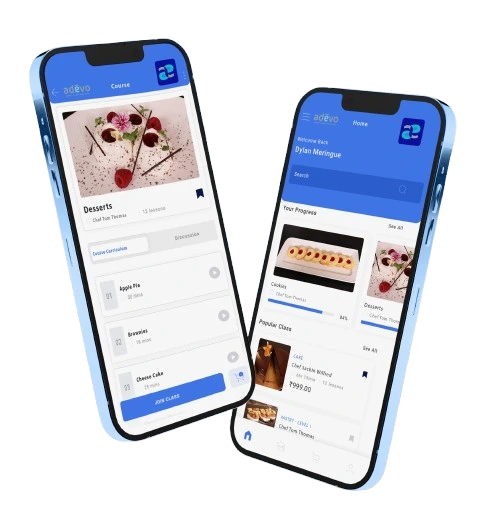
Q: Can an LMS replace in-person soft skills training for hotel staff? A: An LMS supports soft skills training but doesn’t replace the in-person practice component. Learning management systems work well for delivering theory, scheduling modules, tracking completion, and providing self-study resources. But the role-play, live feedback, and scenario-based practice that build real soft skills need human interaction. The strongest approach uses an LMS for content delivery and scheduling while keeping the practice sessions face-to-face.