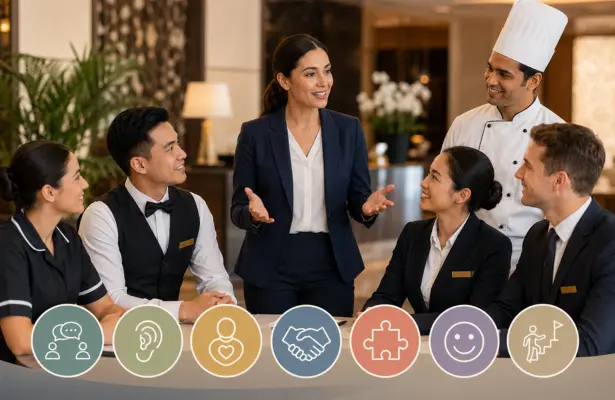
Your front desk executive might know the PMS inside out. But if they can’t read a frustrated guest’s body language or de-escalate a complaint with the right tone, that technical knowledge won’t save the review.
A 2025 survey of Indian hoteliers found that 41% of accommodations plan to increase investment in staff development, with managerial soft skills being the hardest to hire for — seven properties report difficulty for every one that fills the role easily (HospitalityNet, 2025). With this kind of hiring pressure, the industry can’t afford staff who bring only technical ability. It needs people with strong interpersonal skills. If you’re building these capabilities across your team, structured soft skills training courses make the difference between hoping staff improve and watching them actually do it.
This article breaks down 15 specific soft skills examples that Indian hospitality professionals need, grouped by the real situations where they matter most. Use these soft skills examples to assess your current team, guide your next hiring round, and focus your training budget where it counts.
Key Takeaways
- 41% of Indian accommodations plan to increase staff development spend, with managerial soft skills the hardest to hire (HospitalityNet, 2025).
- The 15 soft skills examples fall into five areas: communication, emotional intelligence, teamwork, leadership, and professional habits.
- Indian hotels hire and promote on these soft skills examples, so train them deliberately and measure the results in guest feedback.
Why Do Soft Skills Examples Matter More Than Technical Ability in Indian Hotels?
Soft skills determine guest experience more than any operational system or room upgrade. A guest forgives a slow elevator. They rarely forgive a dismissive front desk interaction.
In Indian hospitality, where warmth is a cultural expectation, soft skills aren’t optional additions. They directly shape online ratings, repeat bookings, and word-of-mouth referrals. Properties like Taj and Oberoi stand apart not because of thread count alone but because every staff interaction feels intentional.
Technical skills get someone hired. Soft skills decide whether they survive probation, earn promotions, and contribute to the property’s reputation over years. For hotel owners and HR heads, studying real soft skills examples from top-performing properties is the first step toward building a team guests remember for the right reasons.
Here are 15 soft skills examples, grouped into five categories that map to daily hospitality operations. Each of these soft skills examples includes what the skill looks like in practice so you can spot gaps on your own floor.
| Category | Soft Skills Examples | Where It Shows Up |
|---|---|---|
| Communication | Active listening, verbal clarity, body language | Check-in, complaints, handovers |
| Emotional Intelligence | Empathy, patience, emotional regulation | Peak service, complaint recovery |
| Teamwork | Cross-department collaboration, conflict resolution, adaptability | Kitchen-to-service, shift changes |
| Leadership | Problem-solving, time management, decision-making | Promotions, crisis moments |
| Professional Habits | Cultural sensitivity, attention to detail, work ethic | Reviews, repeat bookings |
Which Communication Skills Do Hotels Notice Within 30 Seconds?
Communication is the most visible soft skill in hospitality. Guests form their first impression of your property within seconds, and that impression rests almost entirely on how your team communicates.
Active Listening
Active listening means hearing what the guest actually needs, not just the words they say. When a guest mentions “the room is fine,” their tone and expression might tell a different story. Staff trained in active listening catch these signals early and resolve problems before they reach the feedback form.
In practice, this looks like a server at a Bangalore restaurant confirming a dietary restriction twice before placing the order. It looks like a front desk associate repeating a room preference back to the guest before entering it into the system. Small actions, but they prevent big complaints.
Clear Verbal Communication
Indian hospitality means serving guests who speak different languages and carry different expectations of formality. Clear verbal communication isn’t about perfect English. It’s about choosing the right words, pacing delivery appropriately, and confirming that the guest understood.
A housekeeping supervisor who explains a new SOP using simple, direct sentences gets faster compliance than one who reads from a policy manual. Clarity beats vocabulary every time, especially when staff work across multiple regional languages.
Professional Body Language
Staff who slouch at the reception, avoid eye contact, or cross their arms during a guest interaction send signals that polite words can’t undo. Professional body language includes an open posture, appropriate eye contact, and gestures that signal attentiveness rather than impatience.
Hotels like Lemon Tree train staff to smile before they speak. It sounds basic, but that single habit shifts the tone of every interaction from transactional to welcoming.
What Does Emotional Intelligence Look Like During Peak Service?
Of all the soft skills examples in this guide, emotional intelligence separates staff who survive the shift from those who elevate the entire guest experience. During wedding season banquets or fully booked Friday night restaurants, emotional control keeps operations smooth when everything else is chaotic.
Empathy
Empathy means understanding a guest’s emotional state and responding appropriately. A family arriving after a six-hour delayed flight doesn’t want a scripted welcome. They want someone who acknowledges their exhaustion and fast-tracks the check-in without making them repeat information.
In practice, empathy extends beyond guest-facing roles. Staff trained in emotional intelligence in hospitality understand how their own behaviour affects colleagues. A kitchen team member who recognises when the service staff is overwhelmed and adjusts plating speed accordingly shows empathy that improves the entire operation.
Patience Under Pressure
Indian hotels routinely handle festivals, large family groups, and last-minute corporate events. Each scenario tests patience differently. The staff member who stays composed when a guest changes their banquet order three hours before the event is the one who prevents a crisis from spreading.
Patience isn’t passive waiting. It’s controlled responsiveness. Patient staff don’t rush guests, don’t show irritation, and don’t cut corners when time is tight. They make everyone around them calmer.
Emotional Regulation
Everyone has a bad day. The question is whether your team can manage their frustration without letting it touch the guest experience. Emotional regulation means feeling stress, acknowledging it internally, and still delivering a professional response.
This matters more in India’s hospitality context because attrition rates run high and shifts stretch long. Staff who regulate their emotions consistently perform better, take fewer sick days, and stay with properties longer. It’s a retention skill as much as a service skill.
How Do Teamwork Soft Skills Prevent Operational Breakdowns?
No department in a hotel works in isolation. The front desk depends on housekeeping. The kitchen depends on service. Banquets depend on everyone. Teamwork soft skills turn a group of individuals into an operation that actually functions under pressure.
Cross-Department Collaboration
A common problem in Indian hotels is the gap between kitchen and service teams. Orders get delayed, timing slips, and guests wait longer than they should. Collaboration skills bridge this gap. Staff who actively share updates across departments, anticipate each other’s needs, and communicate without being prompted reduce friction that guests can feel.
The best-run properties treat cross-department collaboration as a daily habit, not something that only happens during a crisis.
Conflict Resolution
Disagreements between team members are normal. What matters is whether they get resolved quickly or fester into grudges that affect service quality. Conflict resolution means addressing issues directly, focusing on the situation rather than the person, and finding solutions both sides accept.
In Indian workplaces, where hierarchy and seniority carry weight, teaching junior staff to voice concerns respectfully is a specific training challenge. So is teaching senior staff to listen without treating feedback as disrespect. Adevo’s hospitality management soft skills courses in Bangalore build these exact capabilities through role-play exercises that mirror real team dynamics on the hotel floor.
Adaptability
A guest switches rooms at midnight. A VIP walks in unannounced. The POS system crashes during the lunch rush. Adaptability handles all of these without panic.
Indian hospitality is unpredictable by design. Staff who adapt quickly don’t just cope with change; they stabilise the team around them. This skill is especially valuable in standalone restaurants and smaller properties where every team member wears multiple hats.
Which Leadership Soft Skills Fast-Track Hospitality Promotions?
You don’t need a manager’s title to demonstrate leadership. The staff member who notices a problem and fixes it before anyone asks is already leading. The following soft skills examples in the leadership category are what Indian hotel chains evaluate when deciding who earns the next promotion.
Problem-Solving
Problem-solving in hospitality is rarely about big strategic decisions. It’s about quick, practical responses to immediate issues. The housekeeper who figures out a workaround when the laundry machine breaks down shows more initiative than someone who reports the issue and waits.
Good problem solvers ask “what can I do right now?” before asking “whose job is this?” Indian hotels need this mindset at every level, from stewards to duty managers.
Time Management
A restaurant manager who can’t stagger prep schedules during peak season will burn out the team before the month ends. Time management in hospitality means prioritising tasks that affect guests first, delegating what can be delegated, and knowing when “good enough now” beats “perfect later.”
This skill becomes critical during Diwali and New Year, when most Indian properties run at full capacity with zero margin for scheduling mistakes. Staff who manage their time well protect both the guest experience and their own team’s energy.
Decision-Making Under Pressure
When a guest complains about food quality during a packed service, someone needs to make a call. Replace the dish? Comp it? Involve the manager? Staff who make sound decisions under pressure save time, reduce escalation, and keep the service moving.
The key is giving your team the confidence and authority to decide within defined boundaries. Properties that empower staff to act see fewer complaints reaching the duty manager and faster resolution at the table.
Which Soft Skills Examples in Professional Habits Do Top-Rated Properties Hire For?
These three soft skills examples don’t appear in most training manuals, but they consistently show up in staff who earn guest compliments and management recognition.
Cultural Sensitivity
India’s hotel guests come from across the country and around the world. A staff member in Goa might serve a guest from Punjab and a guest from Japan within the same hour. Cultural sensitivity means adjusting communication style, respecting dietary requirements without question, and never making assumptions based on appearance or accent.
Properties that train for cultural sensitivity see fewer guest complaints related to miscommunication and more positive mentions in online reviews.
Attention to Detail
The difference between a good hotel and a memorable one often comes down to small things. A correctly folded napkin, a welcome note with the guest’s name spelled right, a room that smells fresh rather than of cleaning chemicals. Staff with strong attention to detail catch the things that create experiences worth talking about.
This skill can be trained. It starts with checklists and grows into instinct through consistent practice and honest feedback.
Strong Work Ethic
Work ethic in hospitality means showing up on time, completing tasks without being reminded, and taking pride in your role regardless of where it sits in the hierarchy. In Indian hotels, where the staffing structure spans stewards to general managers, a visible work ethic at every level sets the property’s culture.
Staff who demonstrate consistent effort inspire the people around them. It’s one of the few soft skills that spreads through a team without formal training, though recognition and clear expectations accelerate it.
How Can You Build These 15 Soft Skills Examples Across Your Team?
Knowing which soft skills matter is the first step. Building them systematically across a team of 20 or 200 is the harder part.
A single workshop doesn’t change behaviour. Soft skills develop through repeated practice, role-play scenarios that mirror real guest situations, and consistent feedback from supervisors who know what to look for.
Start with the two or three skills your property struggles with most. If guest complaints frequently mention attitude, begin with empathy and emotional regulation. If operational delays are the pattern, focus on cross-department collaboration and time management.
Track progress through guest review scores, internal feedback surveys, and direct observation during service. Staff respond better when they see that soft skills aren’t abstract concepts but measurable parts of their performance review.
For properties in Bangalore looking for the best soft skills training, structured programs that combine classroom learning with on-floor practice deliver the strongest results. The goal isn’t a certificate on the wall. It’s a visible change in how your team handles the next difficult guest.
Conclusion
These 15 soft skills examples aren’t abstract theory. They’re the specific behaviours Indian hotels and restaurants evaluate during hiring, training reviews, and promotion decisions. Whether your team works at a 200-room business hotel in Mumbai or a 30-cover restaurant in Bangalore, these skills shape how guests experience your property every single day.
Building soft skills across a team takes more than a printed manual or a one-day seminar. It requires structured programs that combine realistic practice with ongoing feedback. From communication workshops to specialised hospitality training like bakery and confectionery courses, Adevo’s programs are designed to create visible, measurable improvement in how your team operates and how your guests respond.
Identify the skills your team needs most. Train deliberately. Measure the results in guest feedback and staff retention. That’s how soft skills examples stop being a buzzword and start being your competitive advantage.
Frequently Asked Questions: Soft Skills Examples in Hospitality
Q: What are the most important soft skills examples for hotel staff? A: The five most critical soft skills examples for hotel staff are active listening, empathy, clear communication, adaptability, and problem-solving. These directly affect guest satisfaction scores and day-to-day operational flow. Hotels that train staff in these specific areas see measurable improvements in online reviews and repeat bookings within months.
Q: Can soft skills be taught, or are they only natural abilities? A: Soft skills can absolutely be developed through structured training. While some people have a natural inclination toward empathy or patience, every one of these soft skills examples improves with deliberate practice, scenario-based role-play, and consistent feedback. Indian hospitality brands like Taj and Oberoi invest heavily in ongoing soft skill development for exactly this reason.
Q: Why do Indian hotels prioritise soft skills over technical skills during hiring? A: Technical abilities like PMS operation or billing procedures can be taught on the job within weeks. Soft skills take longer to build and have a larger impact on guest perception. A technically skilled but dismissive staff member costs more in lost revenue and negative reviews than a warm, trainable new hire who learns the systems over time.
Q: How do you assess soft skills during a hospitality interview? A: Most Indian hotel chains use situational questions and role-play scenarios. Candidates face a simulated guest complaint, a team conflict, or a time-pressure situation, and interviewers evaluate their response quality, composure, and communication clarity. Some properties add trial shifts where candidates interact with real guests under observation.
Q: What is the difference between soft skills and hard skills in hospitality? A: Hard skills are measurable, technical abilities: food preparation techniques, reservation system management, housekeeping procedures. The soft skills examples covered in this guide — communication, teamwork, emotional intelligence, adaptability — are interpersonal capabilities. In hospitality, hard skills get the operational work done. Soft skills examples like empathy and active listening determine how guests feel about the entire experience.