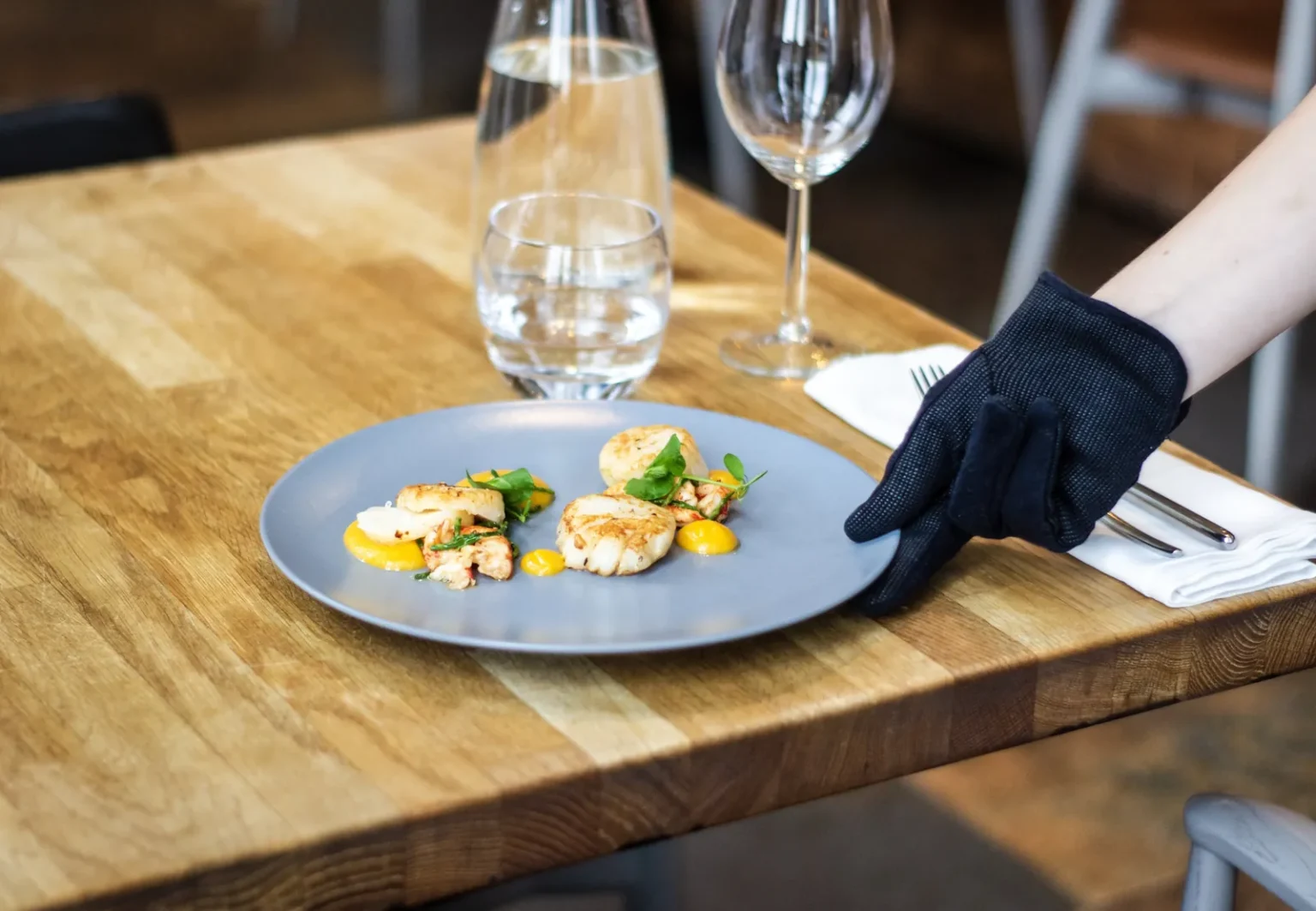
American service is a plated style of restaurant service: the kitchen portions and plates every dish, and the waiter carries it to the guest and sets it down. It is the simplest and fastest of the table-service styles, which is why most busy Indian outlets run on it. If your team is new to service styles, start here, and explore our food and beverage training courses to see how Adevo builds on this foundation.
Consider Ritu, a trainee at a 70-cover family restaurant in Nagpur. In her first week she watched the senior captain clear a full lunch rush without a single mixed-up plate. She asked how. His answer was short: “The kitchen does the thinking, you do the timing.” That sentence is the whole style in a nutshell.
Key Takeaways
- American service means the kitchen plates the food and the waiter delivers it, with no tableside portioning.
- It needs fewer skilled staff per cover than French, English or Russian service, which keeps labour cost lower.
- The waiter serves and clears in a fixed pattern, so guests get a predictable, tidy meal.
- It suits cafes, coffee shops and busy restaurants, but it offers less ceremony for formal occasions.
What Is American Service in F&B?
American service is a simplified table-service style in which food is fully plated in the kitchen and carried to the guest by the waiter. It is also called plate service or plated service. Because the portion is fixed before it leaves the pass, the waiter has no carving, serving or finishing to do at the table.
Indian hotel management textbooks usually describe it as the simple, informal end of the service spectrum. That is a feature, not a flaw. A style that any trained waiter can deliver consistently is exactly what a high-volume outlet needs.
How Does American Service Work Step by Step?
This style follows the same short routine on every table. Learn the order and you can run it in any outlet.
- Set the cover: lay the tables with the cutlery, glassware and napkin the menu requires before guests arrive.
- Take the order: note each guest’s choice and the course timing, and send it to the kitchen.
- Collect the plated dish: pick up each plate from the pass, checking the plating and temperature before it leaves.
- Carry it on a tray: use a tray and tray stand beside the table so plates stay steady and out of the guest’s way.
- Serve from the right: place each plate in front of the guest from the right-hand side, with the main item facing the guest.
- Serve beverages and clear: pour and clear from the right as well, moving around the table in one direction.
- Check back: ask once, briefly, whether the guest needs anything else, then step away.
The sequence repeats course after course. What changes between a coffee shop and a banquet is the speed, not the steps. New trainees can build this base through our online skill development courses before their first live shift.
How Is the Table Set for American Service?
The table is set for the whole meal in advance, so the waiter only adds or removes items as courses change. A typical cover has a napkin on or beside the plate, forks on the left, knives and spoons on the right, and a water glass above the knife. Sauces, salt and pepper sit within reach on the table.
Because the plate arrives finished, there is no need for service platters, a sideboard or trolley. That keeps the setup quick, and it is one reason plated service works well for short turnaround meals such as lunch.
What Are the Advantages and Limits of American Service?
The main advantage is cost and speed. Study material from CSJMU notes that plate service cuts the cost of labour because the kitchen does the finishing work. One waiter can look after more tables, and every guest gets the same portion.
The limits are just as clear:
- Less ceremony: nothing happens at the table, so there is little theatre for a formal occasion.
- Plate temperature: a delay at the pass or a slow floor lets food cool before it is served.
- Kitchen dependence: the quality of the plating decides the quality of the meal.
Meera, a restaurant owner in Hyderabad, added two plating checks at the pass: one for temperature and one for presentation. Returned dishes dropped within a month. She trained the waiters to call out any plate that looked wrong before it left the kitchen.
How Does American Service Differ From Other Styles?
It differs from the other classic styles mainly in where the food is finished. Other styles move the portioning or finishing to the table, which needs more skill and more time.
| Style | Where food is finished | Skill needed |
|---|---|---|
| American | Kitchen | Low |
| English | Table, from a platter | Medium |
| French | Beside the table, on a trolley | High |
| Russian | Table, platter to plate | High |
For the full set of classic styles, our guide to restaurant staff training shows how outlets schedule practice for each one.
Where Is American Service Used in India?
It is the default in cafes, QSRs, hotel coffee shops and most casual and mid-range restaurants across India. Hotels also use it for all-day dining and in-house breakfast service, where speed matters more than ceremony.
It also works for set-menu events. When every guest gets the same plated dish, the kitchen can plate in batches and the floor can serve a whole table at once. That is why it appears at many corporate lunches and conference dinners.
What Mistakes Do Trainees Make in American Service?
Most mistakes come from rushing the carry. A waiter who stacks too many plates on one arm risks a drop, and a drop costs the guest’s trust as well as the dish. Use the tray, and make a second trip when the load is heavy.
Three other slips show up again and again:
- Wrong side: serving or clearing from the left breaks the pattern and can bump the guest.
- Wrong order: serving hosts or elders last instead of following the outlet’s rule leaves some tables confused.
- Clearing too early: lifting a plate while a guest is still eating feels pushy.
A short end-of-shift huddle fixes most of these. Name one slip, show the fix and move on.
How Do You Train Staff in American Service?
Train this style in short, repeatable drills. Start with tray carrying, then plate placement from the right, then clearing. Run each drill for ten minutes before a shift and have a senior waiter watch.
Add a timing check as the team improves. A good waiter knows when to hold a plate for a late guest and when to serve it. Our guide to the types of restaurant service shows where plated service sits among the other styles and which one to learn next.
Want every new waiter serving plated food with confidence? Ask Adevo about F&B service training for new waiters built around your outlet.
Conclusion
Plated service is the backbone of everyday restaurant work in India. It is fast, consistent and easy to teach, and it gives every trainee a base to build on before they learn English, French or Russian service.
Master the seven steps, set the table correctly and keep plates moving hot. Then add the formal styles one at a time. Adevo’s F&B programmes are built to take your team from plated basics to formal service.
Frequently Asked Questions: American Service
Q: What is American service in F&B?
A: American service is plated service. The kitchen portions and plates the dish, and the waiter carries it to the guest and places it down. No portioning or finishing happens at the table.
Q: From which side is food served in American service?
A: Food is served from the guest’s right-hand side, and plates are cleared from the right as well. This keeps the pattern consistent for the whole table.
Q: What are the advantages of American service?
A: It is fast, consistent and needs fewer skilled staff, which lowers labour cost. One waiter can cover more tables because the kitchen does the finishing.
Q: How is American service different from French service?
A: In American service, food is finished in the kitchen. In French service, it is finished beside the table on a trolley. French service is slower and needs more skill.
Q: Where is American service used in Indian restaurants?
A: It is used in cafes, QSRs, hotel coffee shops and casual restaurants, as well as set-menu events where every guest gets the same plated dish.