
F&B service training topics fall into four groups: hygiene and safety, technical service skills, menu and selling knowledge, and guest relations. Most Indian restaurants do not lack training; they lack a syllabus that tells a new steward what to learn first and how the captain will check it. This guide sets out each module, what to teach and how to test it. If you would rather have a trainer run the modules on your floor, see Adevo’s F&B training programmes for service teams.
Take Farhan, a captain at a busy family restaurant in Hyderabad. He trained every new steward on the menu and nothing else. Within a month, one steward cleared plates before the whole table had finished, and another could not explain why the bill carried no compulsory service charge. The menu training had worked, but the rest of the syllabus simply did not exist.
Farhan wrote down every topic a steward needs, put them in order and signed each one off on the floor. Table complaints fell within weeks. New stewards stopped asking him the same question at every table.
You already know that new hires copy whoever trains them. This guide gives you a fixed order instead. By the end you will have the F&B service training topics for every floor role, a way to assess each one and a clear view of where Indian rules shape the content.
Key Takeaways
- F&B service training topics work best as four modules: hygiene and safety, technical service, product knowledge and selling, and guest relations.
- Teach hygiene, allergens and menu knowledge before a new hire carries a plate, because those errors reach the guest fastest.
- Every topic needs a floor assessment, not only a classroom session, or the training fades by the next busy weekend.
- Alcohol age rules differ by state and service charge cannot be forced, so teach the principle and point staff to the current rule.
What Are the Core F&B Service Training Topics for Floor Staff?
The core F&B service training topics cover four areas: hygiene and safety, technical service, product knowledge and selling, and guest relations. Every outlet needs all four, from a standalone café in Pune to a hotel coffee shop in Delhi. Only the depth changes by role.
- Hygiene and safety starts with grooming, food safety, allergens and the FSSAI rules your licence brings.
- Table setup, the sequence of service, service styles, order taking and billing make up technical service.
- Staff also need the menu and beverage list by heart, plus a way to suggest a dish without pushing it.
- Last comes guest relations: speaking well to guests, handling complaints and serving alcohol responsibly.
Order matters. Hygiene, allergens and menu knowledge come first. Table setup and sequence of service follow, then selling and complaint handling once the basics are steady. Teach one module a week if shifts allow, and have the captain sign each one off on the floor.
Each topic below gets a short section. Adevo’s blog already carries deep dives on sequence of service, allergen training, guest recovery, POS training and FSSAI food safety, so use those when a topic needs more room than a syllabus can give.
Whoever delivers these sessions needs coaching skills as much as product knowledge. Many outlets add soft skills training courses for captains and team leads before asking them to teach the syllabus.
Which F&B Service Training Topics Keep Guests and Staff Safe?
The safety block of F&B service training topics has two parts: personal hygiene with food safety, and allergen awareness. Teach both before a new hire serves a live table.
Hygiene, grooming and food safety
Cover hand washing, clean uniforms, short nails, tied-back hair, reporting illness and handling cutlery and glassware by the stem or handle. Add the licence rules as well. FICSI notes that licensed food businesses must have at least one Food Safety Supervisor certified for every 25 food handlers or part thereof. Count handlers across the kitchen and the floor, then check your certified supervisors against that number.
Of all the F&B service training topics, this is the easiest to assess: run a grooming check at the start of every shift and observe hand washing in the first week.
Allergen and dietary awareness
Staff must know the common allergens, which dishes on your menu contain them and why an allergy question always goes to the kitchen, never answered from memory. They should also handle vegetarian, Jain and vegan requests, which are common in Indian dining rooms.
Anjali supervises the coffee shop at a business hotel in Chennai, where a guest once told a steward that her child could not eat peanuts. The steward knew the dish used a peanut sauce because Anjali had made allergen cards part of onboarding. He checked with the kitchen, swapped the sauce and told the guest exactly what he had changed. The family returned the next week and asked for him by name.
Assess it with a menu quiz where the trainee names the allergens in dishes the captain picks at random.
Which F&B Service Training Topics Build Technical Service Skills?
The technical block of F&B service training topics turns a willing hire into a reliable server. It covers four skills that every shift uses: setup, sequence, service style and order taking.
Table setup and mise-en-place
Teach cover layout, cutlery order, glass placement, napkin folds and side-station stocking, since each one shapes how the table looks to an arriving guest. Mise-en-place means everything in its place before the first guest arrives. Assess it by timing one table setup against a photo standard, and note every missing item.
Sequence of service
Teach the guest’s path in order: greeting, seating, water and menus, order, service, clearing, bill and farewell. Treat this as the backbone of your F&B service training topics, because every later topic hangs on it. The sequence changes by outlet, so train it on your own floor, and assess it with a mock table where the captain plays the guest.
Service styles
Staff also need to know which style your outlet runs. The types of food and beverage service differ in how food reaches the table, who carries it and how much the server does at the guest’s side. Cover plated, buffet, family style and gueridon service at minimum. Add French, Russian, English and American service if your hotel uses them, since these styles tend to appear in banquet and fine-dining service.
Assess with a walk-through where the trainee explains the style and demonstrates one clearing and one serving move.
Order taking and POS
Teach staff to repeat the order back, note changes, mark courses and key everything into the POS without errors. A wrong order costs food, time and goodwill. Assess with a mock order that includes a modifier, a late addition and a split bill.
Which F&B Service Training Topics Cover Selling and Guest Relations?
The last block of F&B service training topics decides how the guest remembers the meal. It covers what staff know, what they suggest and how they speak when something goes wrong.
Menu and beverage knowledge
Menu knowledge is the most visible of the F&B service training topics, because guests test it at every table. Staff should describe every dish in one breath: main ingredients, cooking method, spice level and whether it is vegetarian. The same goes for the beverage list, from mocktails to wine. Run a tasting before launch so the team speaks from experience, then assess with a short oral quiz at the pass.
Suggestive selling
Teach staff to suggest by asking a question: a side with the main, a starter for the table, a dessert to share. Done well, it helps the guest decide. Done badly, it feels like pressure. Observe a live service and note whether the suggestion matched what the guest wanted.
Communication and complaint handling
Teach greeting, eye contact, clear speech in the languages your guests use and calm body language. For complaints, use a simple order: listen, apologise, fix, then tell the supervisor. Teams that practise this stop taking complaints personally. Captains who need a structured way to teach it can use modular food and beverage courses, which are progressive and give anytime access through a mobile app.
Responsible alcohol service
The legal drinking age and licence conditions for serving alcohol are set state by state, so this is a principle topic. Teach staff to check age when in doubt, to stop serving a guest who has had enough and to follow the excise rules of your state. Ask your licence holder for the current rule instead of teaching a figure from memory.
Billing and service charge
Staff must read a bill, explain taxes and handle payment methods. They must also know the service charge position, one of the F&B service training topics where Indian law shapes the answer. The Delhi High Court held that service charge is a voluntary payment by the customer and cannot be compulsory, as SCC Online reports in its coverage of the ruling on the CCPA guidelines. Teach stewards never to describe it as compulsory.
How Do You Assess F&B Service Training Topics and Match Them to Roles?
Assess every one of the F&B service training topics on the floor, with a checker who is not the person who taught it. A topic is only learned when the trainee does it correctly during a live or mock service.
| Topic | What staff show | How you check |
|---|---|---|
| Hygiene and grooming | Clean uniform, hand washing, illness reporting | Shift-start check |
| Allergens | Name allergens in menu dishes | Random dish quiz |
| Table setup | Correct cover, glass and cutlery layout | Timed setup against photo |
| Sequence of service | Every step in order | Mock table with captain |
| POS and billing | Accurate order, split bill | Mock order |
| Complaints | Listen, apologise, fix, escalate | Role-play with supervisor |
| Alcohol service | Age check and refusal | Scenario questions |
Depth then changes by role:
- Stewards need setup, sequence, menu knowledge and hygiene to a tested standard.
- Captains take over order control, selling and complaints, and they coach new stewards.
- At supervisor level, the syllabus adds roster planning, licence rules, billing disputes and the sign-off itself.
For a national benchmark, NQR lists Guest Service Associate (Food and Beverage Service) as an NSQF Level 4 qualification in the Tourism and Hospitality sector, with the Tourism and Hospitality Skill Council as the awarding body. Compare your syllabus against it to spot gaps. A role-wise restaurant staff training checklist then lets supervisors tick off each module per person.
Vikram manages a standalone restaurant in Pune and used to train by shadowing. New stewards learned fast but differently, and guests noticed. He moved to a written syllabus, taught hygiene and menu first, and tested each topic with a mock table. Two months later his weekend captain said the team handled a full house without calling him once, though the work itself had not changed.
How Does Adevo Help With F&B Service Training Topics?
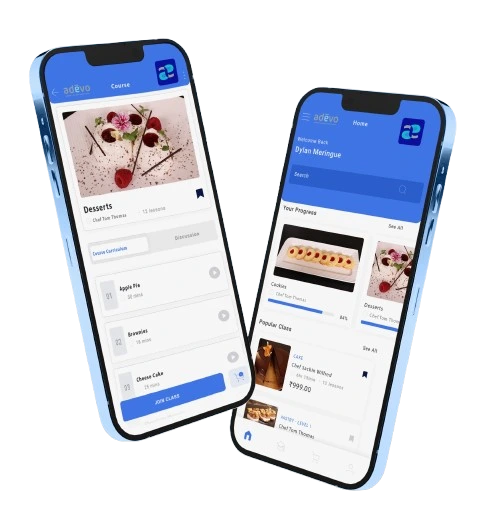
The F&B course at Adevo, an integrated skill development platform for hospitality named from Atithi Devo Bhava, already organises these topics into fundamentals, the service cycle, menu knowledge and supervisory skills. Chains of hotels, restaurant groups, caterers and clubs use it to upskill teams across many outlets, mixing online learning on the platform with on-site sessions and SOP consulting. Individual learners, from students and freshers to staff changing roles, take the courses and certifications to prove they are job-ready. Behind it are co-founders with more than 80 years of combined experience, including years at the Taj and Oberoi hotel groups, in running F&B outlets and in teaching hotel management. Lessons come in Hindi, Kannada, Tamil, Telugu and English.
Conclusion
The F&B service training topics that matter most are the ones you teach in order and test on the floor: safety first, then technical service, then selling and guest relations. Start with hygiene, allergens and menu knowledge, add one module a week and sign off each person before the next module begins. Print the F&B service training topics list and pin it in the staff room. Adjust the depth for stewards, captains and supervisors, review the list every quarter, and keep the legal topics at principle level so they stay correct when rules change.
Want this F&B service training syllabus running in your outlet? Ask Adevo about food and beverage training courses built around your outlet.
Frequently Asked Questions: F&B Service Training Topics
Q: What are some good F&B service training topics for new staff?
A: Start with hygiene and grooming, allergen awareness, menu knowledge, table setup and sequence of service. These F&B service training topics protect the guest first. Add selling, complaint handling and billing once the basics are steady.
Q: Which F&B service training topics are required by law in India?
A: Food safety is the clearest legal topic. Licensed food businesses must have certified Food Safety Supervisors in proportion to their food handlers. Alcohol age rules vary by state, and service charge cannot be made compulsory, so confirm the current position for your outlet.
Q: Which course is best for food and beverage staff?
A: Pick a course that covers hygiene, service skills, menu knowledge and guest relations, and that assesses staff on the floor. National qualifications such as Guest Service Associate (Food and Beverage Service) give a useful benchmark for content.
Q: Are there free F&B training topics in PDF or PPT format?
A: Yes, many slide decks and PDFs list F&B training topics, but they rarely say how to assess each one. The syllabus on this page gives the topics, the order and a floor check for each, so you can copy it into your own training plan.
Q: What is the menu in F&B?
A: The menu is the list of dishes and drinks an outlet offers, with descriptions and prices. Service staff must know it well enough to describe each item, name its main ingredients and flag allergens.
Q: How long should F&B service training take?
A: It depends on the role and the outlet, so set the length by sign-off rather than by days. A steward is ready for a live section once they pass a floor assessment on every module of the F&B service training topics.