
An F&B associate is an entry-level service professional in a hotel, restaurant or bar who sets up the outlet, serves guests and keeps the floor running through a shift. It is a floor job with a low barrier to entry, which makes it a practical first step into hospitality. This guide covers the shift, the skills, the entry route and where the job leads, with context from Adevo’s F&B training courses for service teams.
Job boards list openings. They rarely explain the work, and most people picture a pressed uniform, a tray and a polite greeting, when the real shift is busier and far more varied.
Key Takeaways
- An F&B associate prepares the outlet, serves guests and resets the floor, and the mix of tasks changes with the type of outlet.
- Communication, grooming, hygiene, teamwork and time management carry a service shift, and a fresher can practise each one before becoming an F&B associate.
- The diploma route in food and beverage service asks for a 12th pass in any stream, while each employer sets its own bar for the job, so read every posting closely.
- The service ladder runs from waiter or steward to captain, restaurant manager and beyond, so the first job is a base, not a ceiling.
What Does an F&B Associate Do During a Shift?
An F&B associate prepares the outlet before service, serves guests during service and resets the floor after it. The exact mix depends on the outlet: a hotel coffee shop, a standalone restaurant, a bar and a banquet hall each lean on different tasks.
- Before service: Set tables, polish cutlery and glassware, stock the side station, check menus and attend the briefing on specials and shortages.
- During service: Greet and seat guests, take orders, coordinate with the kitchen, serve food and drinks, and refill water and clear plates without being asked.
- After service: Clear and reset tables, restock the station, report breakages or guest feedback to the captain and leave the area clean for the next shift.
Consider Rohan, who joined a hotel coffee shop in Pune as an F&B associate. By his third day he had learned what no job post mentions: the first half hour decides the shift. He set the station early. With the right cutlery and a stocked side table in place, he stopped running back and forth during the breakfast rush, and his captain stopped re-checking his work.
Want to practise this before your first shift? Ask the outlet you are applying to about Adevo’s modular service training, so the sequence of service and hygiene standards feel familiar on day one.
Which Skills Does an F&B Associate Need?
Five skills carry most of a service shift: communication, grooming and hygiene, teamwork, time management and accuracy. A fresher aiming to be an F&B associate can build every one of them before the first day.
- Communication: Clear spoken English plus the local language of the city, delivered with a calm tone even when the floor is busy.
- Grooming and hygiene: Clean uniform, tidy hair and nails, and hand washing at the right moments.
- Teamwork: Passing information to the kitchen, the bar and the captain without friction.
- Time management: Knowing which table needs attention next and which task can wait.
- Accuracy: Remembering the order, the allergy note and the table number.
Skills grow faster with structure. Many associates add hospitality management courses alongside floor work and test what they study on the next shift.
A new F&B associate does not need to be fast on day one. Clean stations, honest answers when you do not know the menu and a habit of asking before guessing are enough to start. Guests forgive a slow table sooner than a wrong dish with an allergy attached. Practise one line until it feels natural: “let me check with the kitchen.” Then come back within a minute with the answer.
Who Can Become a Food and Beverage Associate?
There is no single national entry rule for the job, because each employer sets its own bar for an F&B associate. Read the qualification, language and shift requirements in every posting before you apply.
For a formal route, IHM Guwahati runs a Diploma in Food and Beverage Service of 1.5 years, including an internship in a five-star hotel in the last semester, and it asks for a 12th pass in any stream. Other hotel management institutes may run similar programmes, so compare the internship, the fees and the placement record before you pay.
Meenakshi, a Class 12 graduate from Mysuru, had no hotel contacts. She practised table setting and order taking at home with her family, learned the basic guest phrases in English and applied to three restaurants. The one that shortlisted her asked her to set a table and greet a guest in front of the manager, and she could do both.
A first interview for floor work is practical, so prepare for it the same way. Have a clear answer on why you want floor work, how you would handle a rude guest and whether you can work split shifts, weekends and festival rush. Stand straight, greet the person at the gate politely and look a guest in the eye. All of this comes from practice, and none of it needs a classroom.
Employers can also bring in Adevo’s food and beverage training, modular service training delivered at the restaurant. It covers sequence of service, grooming and hygiene, the basics a captain will expect an F&B associate to know in the first week.
What Does an F&B Associate Earn?
F&B associate pay in India depends on the employer, the city and the outlet, so a single figure for the whole country would mislead you. A luxury hotel, a standalone restaurant and a quick-service chain can each structure pay differently, so compare like with like.
Look at the whole offer, not only the monthly number:
- Meals on duty, uniform and laundry
- Staff accommodation or a transport allowance
- Whether a share of the service charge reaches the floor team
- Training budget and a written path to captain
Read several current postings from your city before an interview. Treat any salary website as a rough guide, and check its figure against those live postings.
In the interview, ask what the pay includes, what probation involves and when the first review happens. Confirm whether shifts rotate or stay fixed and how weekly offs work. An F&B associate who knows these answers before signing can plan travel, rest and study around the roster.
Travel time matters as much as the pay slip. An F&B associate who saves two hours of commuting a day may learn faster than one who earns slightly more on a longer route, because the energy goes into the work instead of the road.
Where Does the F&B Associate Role Lead?
The Wings Institute career guide lays out the service ladder from waiter or steward to captain, then restaurant manager, F&B manager and F&B director. The guide has no separate associate step, so this article’s own reading is that an associate sits at the waiter or steward end of the ladder, where you learn the floor before you run it. Because the work overlaps so much with a waiter’s, reading about waiter duties and responsibilities is a good way to see the standards a captain will expect from you, such as order accuracy, correct table sequence and a calm tone when the floor is full.
Each step adds a different skill:
- Captain: Leads a section of the floor.
- Restaurant manager: Runs the outlet.
- F&B manager: Oversees food and beverage service more widely.
- F&B director: Leads the whole department.
Titles differ between outlets, and a small restaurant may use fewer levels. Ask in the interview what the next step is called and what it asks of you.
Then watch how the captain briefs the team and checks a table before the guest sits, and aim to run a section calmly, train the person beside you and spot a problem early. The habit that gets associates noticed is small and repeatable: arrive ten minutes early, walk the section once, and fix what is out of place before the first guest sits down. Captains remember that habit when a vacancy opens.
Farah began as an associate in a hotel restaurant in Hyderabad. Each week she wrote down a difficult table, a new starter she had helped or a mistake she had caught early, and how each one ended. When the captain’s post opened, she had a record of judgement calls to show, not only a willingness to work hard. Her manager read the notebook before the interview and asked what she would do differently next time.
How Do You Start as an F&B Associate?
Start by choosing an outlet type, building the basics at home and then applying to several employers at once. A short, steady plan works better than waiting for a perfect opening.
- Pick the outlet type: Hotel coffee shop, standalone restaurant, bar, banquet or a cloud kitchen with dine-in. Each teaches a different pace, and our guide to food and beverage jobs shows where each role sits.
- Practise the basics: Table setting, a polite greeting, taking an order and carrying a tray safely.
- Fix grooming and hygiene habits: Make them automatic before day one, so the captain sees them every day after.
- Prepare a one-page CV: For an F&B associate opening, list your education, languages and any service or event experience, even from college fests.
- Apply widely and ask for a trial shift: Watching you work shows an outlet more than a CV can.
- Treat the first months as training: Ask the captain for feedback every week and watch how the senior team handles a full table.
In the first week, write down every menu item a guest asked about and you could not answer, then learn those items that night. Learn the layout of the station and the point-of-sale system early too. Small gaps like these are easy to close when you notice them on day two, and harder when they pile up by day twenty.
Do not wait for the perfect posting. A trial shift at a small restaurant still teaches order taking, table turnover and how a team talks during a rush. Afterwards, note what you would change. Bring those notes to the next interview.
How Does Adevo Help With the F&B Associate Role?
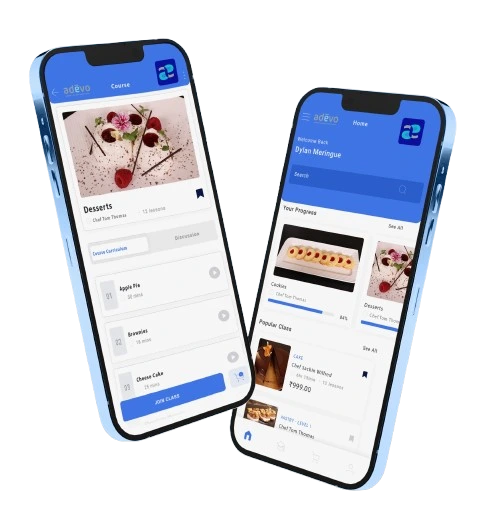
A new F&B associate needs grooming, service and communication basics before the first shift, and Adevo, named after Atithi Devo Bhava, teaches them as an integrated skill development platform for hospitality. Students, freshers and working staff take its online courses and certifications to become job-ready for roles like this one. Hotel groups, restaurants, caterers, clubs and corporate teams use the same platform to upskill new joiners at scale, with on-site training at the outlet and consulting on SOPs and learning plans. The co-founders bring more than 80 years of combined experience, including years at the Taj and Oberoi hotel groups, in running F&B outlets and in teaching hotel management. Courses run on the learning platform in Hindi, Kannada, Tamil, Telugu and English.
Conclusion
Treat the F&B associate role as a practical first job. It asks for attitude, grooming and a willingness to learn, and it gives you a view of every part of a hotel or restaurant. Build the basics before day one, read pay as a package and plan your first step up from the first week.
Ready to start your service career? Ask Adevo about food and beverage training courses built around the floor.
Frequently Asked Questions: F&B Associate
Q: What are the duties and responsibilities of a food and beverage associate?
A: A food and beverage associate prepares the outlet, serves guests and resets the floor. That means setting tables, taking orders, serving food and drinks, coordinating with the kitchen and keeping the area clean and safe for the next shift.
Q: What is the difference between an F&B associate and a waiter?
A: The work overlaps, and employers use the titles in different ways, so compare the listed duties rather than the title. Waiter or steward is the first step on the service ladder in the Wings Institute career guide, but it does not list an associate step, so reading the associate role as close to waiter or steward is this article’s own inference from the duties.
Q: Can a 12th pass student become an F&B associate?
A: A 12th pass in any stream is the entry requirement for the Diploma in Food and Beverage Service at IHM Guwahati. For the job itself, each employer sets its own bar, so check the posting. Good communication, grooming and a willingness to work shifts are worth building in either case.
Q: Which course is best for a career in food and beverage service?
A: A diploma in food and beverage service from a hotel management institute is the most formal route, and employer-delivered modular training is the quicker one. Choose the one with a real internship, clear fees and a visible placement record.
Q: What comes after working as an F&B associate?
A: The next step on the ladder is captain, followed by restaurant manager and F&B manager. A written record of the complaints, new starters and judgement calls you handled makes the case for your promotion.