Food presentation is the way a dish is arranged, plated and finished so that it looks appealing and signals care before the first bite. Guests judge a plate in seconds, and a well-cooked dish served carelessly loses value on its way to the table. This guide teaches F&B and culinary trainees the core principles, the step-by-step plating method and the habits that keep presentation consistent across a busy shift, with context from Adevo’s F&B training programmes for kitchen and service teams.
Key Takeaways
- Good food presentation rests on colour, texture, shape, height, balance and a clean plate.
- Presentation must be repeatable: a plating card and practice make every cook plate the same dish the same way.
- Hygiene is part of presentation, because fingerprints, spills and messy rims signal poor standards.
- Indian dishes plate best when you respect their colour, gravy and traditional vessels instead of copying Western styles.
What Is Food Presentation and Why Does It Matter?
Food presentation is the visual and sensory arrangement of a dish on the plate or in its vessel. It includes the choice of plate, the placement of each component, the sauce, the garnish and the cleanliness of the rim.
It matters because guests eat with their eyes first. A tidy plate tells the guest that the kitchen cares, which sets expectations for taste and for service. A messy plate does the opposite, even if the food is excellent.
The effect reaches beyond the table. Guests who feel a dish was made with care are often more willing to accept its price, to order a second course and to describe the meal kindly afterwards. That is why many hotel kitchens treat food presentation as part of quality control, with the same attention they give to temperature and seasoning.
A plate that leaves the pass should look the way the menu promises, every time, on every shift. Strong food presentation is therefore a habit of the whole team, not a talent of one chef, and trainees who learn that early move faster.
For trainees, presentation is also a career skill. Chefs who plate well and consistently are trusted with more important stations, which is one reason structured culinary paths place so much weight on it. If you are mapping your own route, read the guide to chef jobs in India to see where plating fits among the skills employers look for.
Which Principles Guide Good Food Presentation?
A few principles explain most good plating. Learn them once and apply them to every dish.
- Colour: use contrast and variety so the plate looks lively, not flat.
- Texture: combine soft, crisp and creamy elements for visual and eating interest.
- Shape and cut: keep cuts uniform and shapes deliberate.
- Height: build gentle height in the centre so the plate does not look flat.
- Balance and space: leave clean space on the plate, because crowding hides the food.
- Portion: serve a portion that suits the plate and the menu price.
- Temperature: hot food on warm plates and cold food on cool plates.
Restaurant India makes a similar point for Indian kitchens: colour matters greatly in Indian food, because the yellow and red of turmeric, chilli and saffron add appeal, while texture adds depth to the plate.
Treat these principles as a checklist. When a plate feels wrong, ask which principle is missing.
How Do You Plate a Dish Step by Step?
Plating follows a repeatable sequence. Practise the order until it is automatic.
- Choose the plate: pick the right size, shape and colour for the dish.
- Warm or chill it: match the plate temperature to the food.
- Place the main item first: put the hero component slightly off-centre.
- Add the starch or base: arrange it so it supports, not hides, the main item.
- Add vegetables or sides: place them with purpose, in odd numbers where it looks natural.
- Apply sauce: spoon or pool it neatly, and keep it away from the rim.
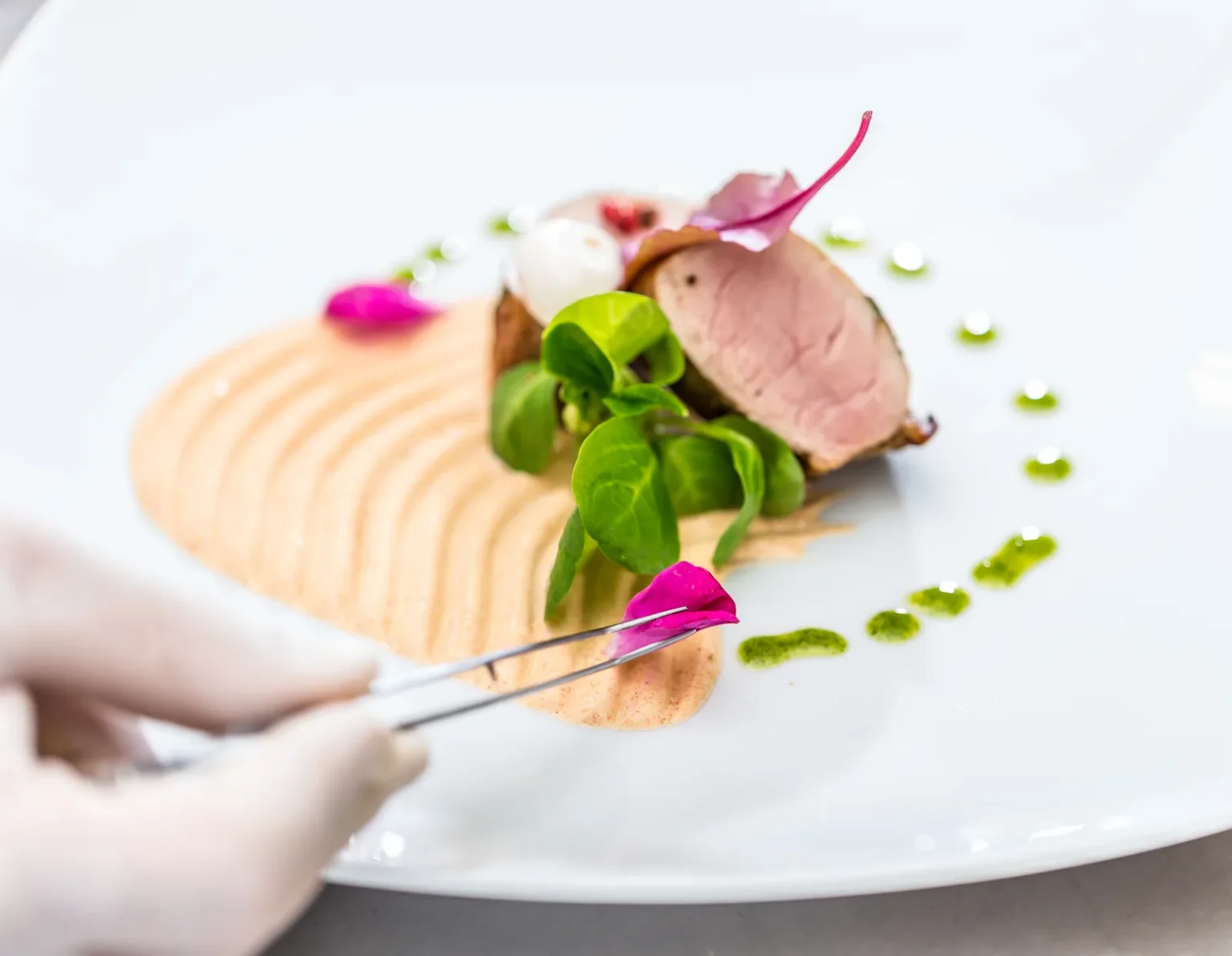
- Garnish last: add one or two items that belong with the dish.
- Wipe the rim and check: clean the edge, then look at the plate from the guest’s side.
Ritu, a chef de partie at a hotel in Mumbai, noticed that the same dish looked different on every plate during rush. She wrote a one-page plating card with a photo and the steps above, and pinned it at the pass. Within a week the plates matched, and the sous chef spent less time sending dishes back.
How Should Indian Dishes Be Presented?
Indian dishes need their own approach. Gravies, rice, breads and thalis behave differently from Western plates.
Practical ideas for Indian service:
- Show the colour of the gravy: keep it glossy and clean, and use it as a base, not a flood.
- Layer rice and curry carefully: avoid mixing them on the plate before service.
- Place breads so they stay warm and visible: fold or stack neatly.
- Use fresh herbs, sliced onion, lemon or a dot of cream: small touches that match the dish.
- Match the vessel to the dish: traditional brass, copper or clay can add story and warmth.
Restaurant India notes that traditional vessels, such as an earthen pot for biryani or a copper bowl for butter chicken, connect the dish to culture and make a strong first impression. Use them where they suit the outlet and are safe and easy to clean.
Trainees also need the confidence to explain what they plate, which is why many pair kitchen practice with online skill development courses that build communication and teamwork.
What Garnishing Techniques Work for Trainees?
Garnish should add flavour, colour or texture. It should never be decoration for its own sake.
Keep garnishing simple:
- Use items that belong: coriander on a curry, mint on a chaat, lemon on grilled fish.
- Keep it fresh: wilted garnish is worse than none.
- Cut cleanly: sharp knives and steady hands make neat shapes.
- Use odd numbers: three slices usually look better than four.
- Place with tweezers or a clean spoon: avoid handling with fingers.
If a garnish does not add taste or visual lift, leave it off. A clean plate with confident placement beats a busy plate with five garnishes.
Good food presentation also depends on timing. Garnish at the last moment so that herbs stay crisp, sauces do not spread and fried items stay dry.
Plate only as many dishes as the server can carry away at once, because a plate that waits on the pass loses temperature, shine and shape. If the pass is crowded, tell the captain. Ask for runners to clear it instead of letting finished plates queue, and practise this rhythm until it is automatic, because speed without a clean finish only sends out poor plates faster.
Why Is Hygiene Part of Food Presentation?
Hygiene is built into presentation. A beautiful plate that is handled badly is a risk and a failure.
Plating hygiene rules include:
- Wash hands before plating and after touching anything unclean.
- Use clean tongs, spoons and tweezers, not bare fingers.
- Wipe rims with a clean cloth reserved for plates only.
- Keep the pass clear of raw items and dirty tools.
- Hold hot plates with a clean cloth, never with a wet one.
These routines connect directly to the standards in commercial kitchens, as explained in the personal hygiene checklist for the food industry. A plate that looks clean but was handled carelessly can still harm a guest.
Want your kitchen team plating to one standard? Talk to us about a programme built around your own menu and pass.
How Can Trainees Practise Food Presentation Every Day?
Practise food presentation on a small set of dishes repeatedly. Repetition builds the muscle memory that busy service demands.
- Pick three dishes: one simple, one saucy and one with a base.
- Plate each one five times: compare the plates and note the differences.
- Take photos: review them against your plating card.
- Ask for feedback: from your chef, a colleague or a trainer.
- Time yourself: speed comes after accuracy.
- Repeat weekly: add new dishes only when the first set is consistent.
Imran, a commis trainee in Hyderabad, took photos of his biryani plates for two weeks and noticed that the rim was often smudged. He added a rim check to his routine, and his chef began trusting him with the pass at lunch.
What Common Mistakes Spoil Food Presentation?
Most plates fail for a few reasons.
- Overcrowding the plate: leave space around each component.
- Sauce on the rim: wipe it clean every time.
- Cold food on a hot plate, or the opposite: match temperatures.
- Too many garnishes: keep it to one or two that belong.
- Inconsistent portions: use measures, scoops and cards.
Fix these first and most plates improve at once.
Conclusion
Food presentation is a skill built from simple principles: colour, texture, shape, height, balance and cleanliness. Plate in a fixed order, respect the character of Indian dishes, keep hygiene tight and practise with photos and feedback. Consistent plating is what turns a good cook into a trusted chef.
Ready to train your kitchen team on plating and standards? Ask Adevo about F&B and culinary training for your outlet built around your menu and your pass.
Frequently Asked Questions: Food Presentation
Q: What is food presentation?
A: Food presentation is how a dish is arranged and finished on the plate or vessel. It covers plate choice, component placement, sauce, garnish and a clean rim. Good presentation signals care and shapes the guest’s first impression.
Q: What are the basic principles of food presentation?
A: The basic principles are colour, texture, shape, height, balance and portion, with the right plate temperature. Use them as a checklist when a plate looks wrong. Clean space on the plate matters as much as the food.
Q: How do you present Indian food well?
A: Respect the colour and gravy, keep rice and curry neat, show breads clearly and use garnishes that belong with the dish. Traditional vessels can add warmth where they suit the outlet. Keep everything clean and hygienic.
Q: How can a trainee improve plating skills quickly?
A: Practise a few dishes repeatedly, take photos, compare them with a plating card and ask for feedback. Accuracy comes before speed. Add new dishes only when the first set is consistent.
Q: Why does hygiene matter in food presentation?
A: Because plating involves handling food at the last step before the guest. Clean hands, tools and rims protect safety and show standards. A messy or touched plate signals poor practice.