A single lapse in personal hygiene in food industry work — dirty hands, no head covering, a sick cook who came in anyway — can shut down a hotel kitchen faster than any equipment failure. FSSAI’s rules exist on paper under Schedule 4, but daily compliance depends on habits, not documents. This guide covers the standards, a ready-to-use checklist, and how hospitality management courses turn hygiene from a rule staff forget into a routine they follow. For the wider compliance picture, see Food Safety Standards in India.
Key Takeaways
– FSSAI requires food handlers to undergo a medical checkup at least once a year and be excluded from food-prep areas if ill.
– Personal hygiene is the individual-level layer; GMP is the facility-level layer — both are required, neither substitutes for the other.
– Staff with diarrhea, jaundice, vomiting, or fever must be kept out of food-handling areas until medically cleared.
– A hygiene checklist only works if it’s trained into staff, not just posted on a kitchen wall.
What Does Personal Hygiene Mean in the Food Industry?
Personal hygiene in food industry work refers to the individual practices — handwashing, grooming, protective clothing, and health self-reporting — that food handlers follow to prevent contaminating the food they prepare. It’s the layer of food safety that depends entirely on individual behavior, shift after shift.
Personal Hygiene vs. GMP: How They Work Together
GMP governs the facility: premises, equipment, and process flow. Personal hygiene in food industry work governs the individual: hands, uniform, health status. A kitchen can meet every GMP standard on paper and still fail an inspection because one staff member skipped handwashing between tasks — the two layers are both required, and neither substitutes for the other.
What Are FSSAI’s Personal Hygiene Standards Under Schedule 4?
Hand Washing and Hand Care Rules
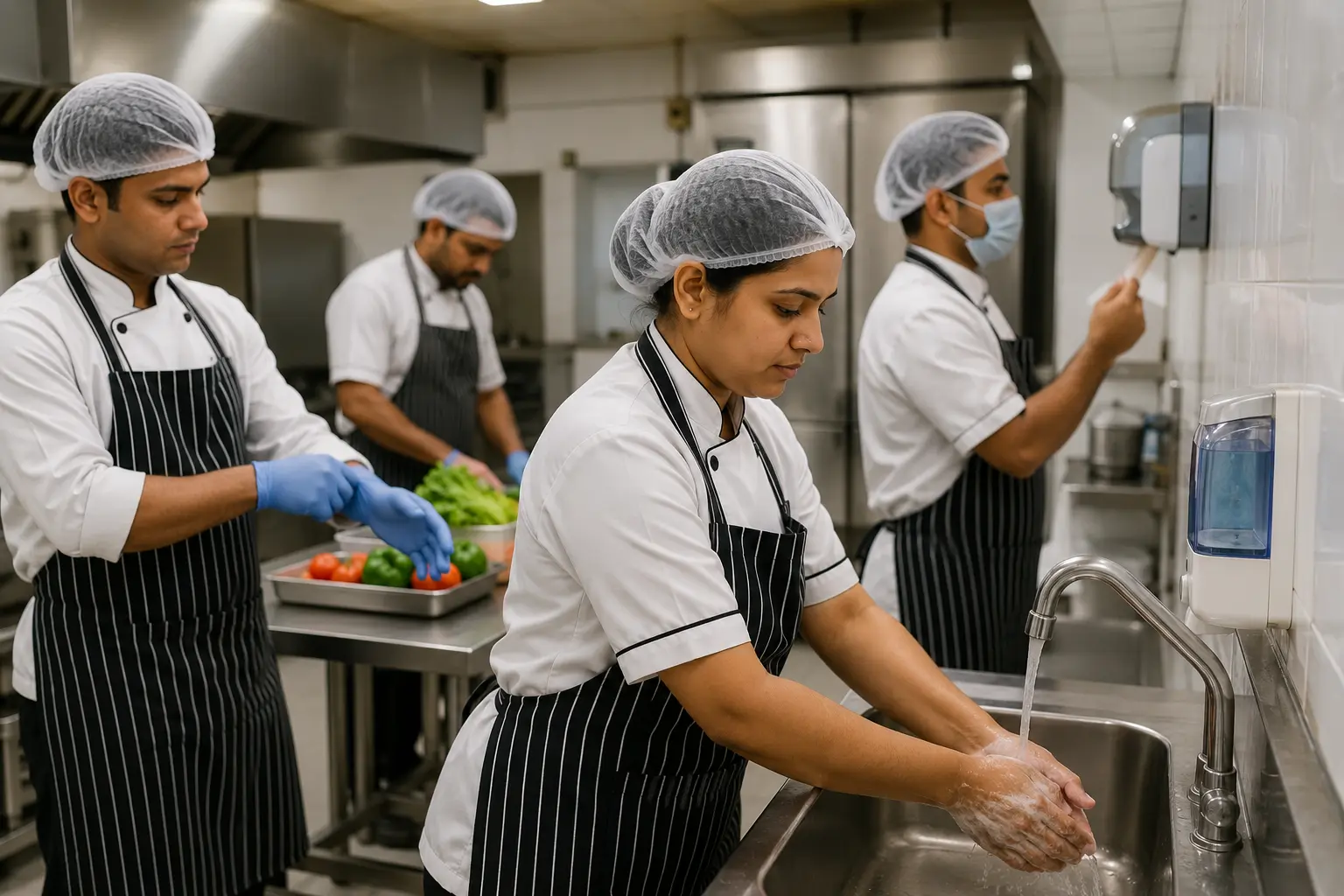
Under FSSAI’s personal hygiene in food industry rules, hands must be washed at defined trigger points — before starting work, after using the restroom, after handling raw food, and after any break — with nails kept short and clean and no exposed cuts left uncovered.
Uniforms, Protective Clothing, and Grooming Rules
Clean uniforms, hair covering, and no loose jewelry are standard requirements, not optional presentation choices — jewelry and loose hair are both direct contamination risks in a working kitchen.
Health Checks and Restrictions for Sick Staff
Food handlers must undergo a medical checkup at least once a year to confirm they’re free of infectious or communicable disease, per FSSAI guidelines. Staff showing diarrhea, sore throat, jaundice, vomiting, fever, or discharge from eyes, nose, or ears must be kept out of food-handling areas until medically cleared.
Prohibited Habits in the Food Prep Area
Eating, chewing gum, smoking, spitting, or touching the face and hair while handling food are all explicitly prohibited — small habits that are easy to overlook until an inspector or a guest notices.
Why Personal Hygiene Standards Matter for Indian Food Businesses
Every one of these standards exists because lapses in personal hygiene in food industry work are one of the most direct, preventable paths to a foodborne illness incident — and unlike a supply-chain contamination issue, a hygiene lapse is entirely within a business’s control through training and daily habit.
The Personal Hygiene Checklist Every Food Handler Should Follow
- Wash hands before starting work, after the restroom, and after handling raw food
- Wear a clean uniform and hair covering; remove loose jewelry before starting a shift
- Keep nails short and cover any cuts or wounds
- Report any illness — fever, diarrhea, vomiting, jaundice — to a supervisor before starting work
- No eating, smoking, or spitting in food prep areas
How to Build a Personal Hygiene Training Program for Your Team
Onboarding: What New Hires Must Learn in Week One
Personal hygiene in food industry standards should be part of day-one onboarding, demonstrated and practiced, not just handed over as a printed policy to sign.
Daily Reinforcement: Pre-Shift Briefings and Visual Reminders
A 60-second pre-shift hygiene check, paired with visual reminders at handwashing stations, keeps the standard active in daily routine rather than something staff only think about during onboarding.
Manager Audits: A Monthly Hygiene Compliance Checklist
A manager-run monthly audit of personal hygiene in food industry practice, separate from the daily self-check, catches drift before it becomes a pattern an FSSAI inspector finds first.
Making Training Stick Across Multilingual, High-Turnover Teams
Hospitality’s high staff turnover and multilingual teams make one-time training especially fragile — visual checklists, short repeat sessions, and demonstration-based training carry standards across language gaps better than a policy document ever will. NSDC, India’s national skilling body, backs exactly this kind of structured, recurring workforce training as the mechanism that makes standards stick at scale.
How Hotels Should Manage Personal Hygiene for Contract and Seasonal Staff
Permanent kitchen staff can be inducted into hygiene standards during onboarding and refreshed annually. The harder problem for most Indian hotels is the large number of contract and seasonal staff who rotate through the kitchen during banquet season, Diwali rushes, and wedding blocks — staff who may join mid-week and be on the line by the following shift.
The minimum viable approach for short-tenure staff: a 30-minute induction covering the five non-negotiables (handwashing steps, no-bare-hand contact with ready-to-eat food, PPE use, illness reporting, no jewellery near food), signed acknowledgment on file, and a supervisor spot-check on the first working day. It doesn’t replace full training, but it closes the highest-risk gap for staff who are not yet fully integrated into the regular hygiene programme.
Common Personal Hygiene Mistakes in Indian Kitchens and Restaurants
The most common failures aren’t dramatic — a chef who wipes hands on an apron instead of washing them mid-service, a server who comes in with a cold because the shift was short-staffed, or a new hire who was shown the handwashing station once and never checked on again. None of these require malice, just the absence of a system that keeps personal hygiene in food industry work a daily habit instead of a once-a-year policy read.
FAQ
Q: What does personal hygiene mean in the food industry?
A: The individual practices — handwashing, grooming, protective clothing, and health self-reporting — that food handlers follow to prevent contaminating food, distinct from facility-level GMP standards.
Q: How often must food handlers get a medical checkup under FSSAI rules?
A: At least once a year, to confirm they’re free of infectious or communicable disease.
Q: Can a sick employee work in a food prep area?
A: No — staff with diarrhea, jaundice, vomiting, or fever must be excluded from food-handling areas until medically cleared.
Q: What’s the difference between personal hygiene and GMP?
A: Personal hygiene covers individual behavior (hands, uniform, health); GMP covers facility-level standards (premises, equipment, process flow). Both are required.
Q: How do you train hygiene standards into a high-turnover kitchen team?
A: Demonstration-based onboarding, daily pre-shift reinforcement, and visual reminders work better than a one-time policy document, especially across multilingual teams.
Adevo’s Food and Beverage training courses provide structured, India-specific training for F&B and hospitality teams.
Conclusion
FSSAI’s personal hygiene rules are simple to read and easy to let slip under service pressure. The fix isn’t a stricter policy — it’s training that makes the checklist a habit every staff member runs without being told.
Explore Adevo’s Kitchen Operations & Culinary training to build hygiene discipline that holds up on a busy shift.