The method of making cocktail drinks comes down to six core techniques: build, stir, shake, blend, muddle and layer. Each one controls dilution, temperature and texture in a different way, and a bartender who picks the wrong one ruins a good recipe. This guide explains what each technique does, which drinks suit it, and how to practise until it becomes automatic, with context from Adevo’s F&B training programmes for beverage and service teams.
Key Takeaways
- The method of making cocktail drinks rests on six basic techniques: build, stir, shake, blend, muddle and layer.
- Pick the method from the ingredients: spirit-only drinks are usually stirred, drinks with juice, cream or egg are usually shaken.
- Ice, glass temperature and clean tools matter as much as the recipe itself.
- Consistent technique, not fancy flair, is what makes guests return and bar managers trust you with a station.
What Is the Method of Making Cocktail Drinks?
The method of making cocktail drinks is the technique used to combine, chill and dilute ingredients. Each method changes how the drink tastes, looks and feels in the glass.
Dilution and temperature are the two things every method controls. Ice melts as you mix, adding water that softens the alcohol and opens the flavour. Too little mixing leaves a harsh drink. Too much leaves a watery one.
The International Bartenders Association (IBA) publishes its Official 101 Cocktails as an international reference of standard recipes and techniques, which is why bartenders worldwide start from the same small set of methods. Learn those six, and most menus in India will make sense to you.
Which Method of Making Cocktail Fits Which Drink?
The right method depends on what is in the glass. A simple rule guides most choices.
| Method | Best for | Typical example |
|---|---|---|
| Build | Simple drinks with few ingredients | Gin and tonic |
| Stir | Spirit-forward drinks, clear and silky | Martini, Negroni |
| Shake | Juice, cream, egg or syrup drinks | Daiquiri, Margarita |
| Blend | Frozen or creamy drinks | Piña colada |
| Muddle | Fresh herbs, fruit, sugar | Mojito |
| Layer | Visual, separated liquids | B-52 |
Read the table as a starting rule. If every ingredient is a clear spirit or liqueur, stir; if there is citrus juice, cream or egg, shake. That single question settles most decisions about the method of making cocktail drinks behind a bar.
To see how daily opening and closing checks keep a station consistent, read the daily operations checklist for hotel F&B and housekeeping, which a trained bartender can adapt for the bar.
How Does Each Method of Making Cocktail Work Step by Step?
Each method follows a short sequence. Practise the sequence until you can do it without thinking.
Build
Build means making the drink in the serving glass. It is the simplest method and the easiest to get right.
- Fill the glass with ice.
- Pour the base spirit first, then the other ingredients.
- Top with the mixer, such as soda or tonic.
- Give one gentle stir so the layers combine without losing fizz.
- Garnish and serve.
Stir
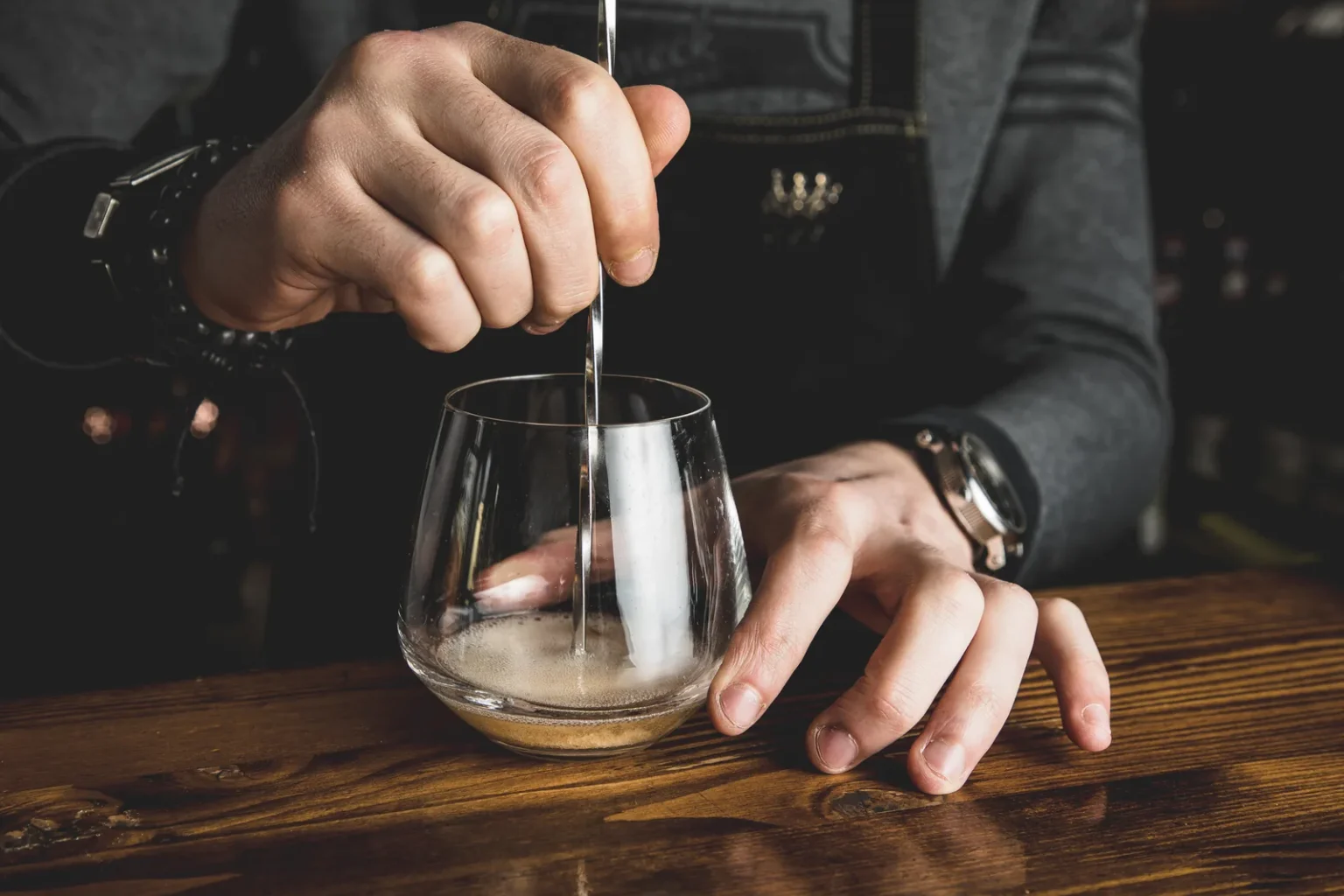
Stirring chills and dilutes a drink gently while keeping it clear. Use it for spirit-only cocktails.
- Fill a mixing glass with fresh ice.
- Add the ingredients and stir with a long bar spoon until the glass feels cold.
- Strain into a chilled glass.
- Garnish.
Shake
Shaking chills quickly and mixes ingredients that do not blend by stirring, such as juice and syrup.
- Add ingredients to the shaker, then fill it with ice.
- Seal it firmly and shake hard until the outside of the shaker is very cold.
- Strain into a chilled glass, and use a fine strainer if you want to catch small ice or pulp.
- Garnish and serve at once.
Blend
Blending suits frozen and creamy drinks. Add the liquids first, then the ice, so the blades do not jam. Blend until smooth and pour straight away, because a blended drink melts fast in India’s heat.
Muddle
Muddling presses fresh herbs, fruit or sugar to release flavour. Press gently. If you crush mint too hard, it turns bitter. Add the spirit and ice after muddling and finish by stirring or shaking according to the recipe.
Layer
Layering floats one liquid over another by pouring slowly over the back of a spoon. Heavier liquids go in first. The skill is a steady hand and the right order.
Divya, a new bartender at a hotel bar in Jaipur, was shaking everything because it looked impressive. Her senior reminded her that every method of making cocktail drinks has a purpose, and that her Martini came out cloudy and over-diluted. Once she switched to a proper stir, guests started asking for her drinks, and her station speed improved because she stopped over-working the shaker.
What Tools and Ice Do You Need for Each Method of Making Cocktail?
Any method of making cocktail drinks depends on good basics. Poor ice and dirty tools undo the best recipe.
- Shaker and strainers: a firm, leak-free shaker and a fine strainer for clean pours.
- Mixing glass and bar spoon: for stirred drinks.
- Jigger: for accurate measures, because guesswork gives uneven drinks.
- Muddler: for herbs and fruit.
- Fresh, clean ice: old, wet or cloudy ice melts fast and waters the drink.
- Chilled glassware: a cold glass keeps the drink at the right temperature.
India’s heat and humidity make ice management even more important. Keep ice covered, scoop with a clean scoop and never use the glass itself to scoop. Standards like this are also why trained teams earn guest trust and why many bartenders pair technical practice with online skill development courses that build communication and guest handling.
What Cocktail Making Techniques Come After the Basics?
Once the six core methods feel natural, bartenders add finer cocktail making techniques. These include double straining, dry shaking for foam, infusing spirits, and smoking or flaming garnishes.
Advanced work builds on the same method of making cocktail drinks, so do not skip ahead. Advanced cocktail making techniques depend on the basics. A bartender who cannot stir a clean Martini will not improve it with smoke. Master the six, then add one new technique at a time and test it with real guests.
Sandeep, who owns a small lounge in Pune, asks every new hire to make the same three drinks for a week: one built, one stirred, one shaken. He judges them on consistency, speed and a clean station. Only after that do they touch the specials menu, and his guest complaints about uneven drinks have fallen.
Want your bar team trained to one standard? Talk to us about a programme built around your own menu and station.
How Should You Practise the Method of Making Cocktail Skills?
Practise a small set of drinks every day, because a method of making cocktail drinks only becomes automatic through repetition. Repetition builds muscle memory faster than variety.
- Pick three drinks: one built, one stirred and one shaken.
- Measure every pour: use a jigger until the volumes feel natural.
- Time yourself: speed comes after accuracy, never before.
- Taste each drink: ask a trainer or colleague to taste and give feedback.
- Keep the station clean: wipe, rinse and reset between drinks.
Record yourself, or ask a colleague to film your pour, then watch for wasted movement, spills and uneven measures. Aim to fix one flaw each week instead of everything at once, and write down what changed.
Training also helps. A structured course gives you supervised bar time and feedback, and the guide to bartender course fees in India shows how to compare programmes by practical hours before you commit.
Finally, remember the responsibility that comes with the craft. State excise rules and your outlet’s licence govern how alcohol is sold where you work, so learn what applies to you and never serve a guest who is underage or already intoxicated.
Conclusion
The method of making cocktail drinks starts with six techniques: build, stir, shake, blend, muddle and layer. Choose the method from the ingredients, keep ice and tools clean, and practise a few drinks until the technique is automatic. Consistent basics make a bartender trusted, and trust leads to a bigger station.
Ready to train your bar team? Ask Adevo about beverage and F&B training for your outlet built around your menu and your guests.
Frequently Asked Questions: Method of Making Cocktail
Q: What are the basic methods of making cocktails?
A: The six basic methods are build, stir, shake, blend, muddle and layer. Each controls dilution, temperature and texture. Most classic drinks use one or two of them.
Q: When should you stir and when should you shake a cocktail?
A: Stir spirit-only drinks such as a Martini or Negroni, so they stay clear and silky. Shake drinks with citrus juice, cream, egg or syrup, because shaking blends and chills them quickly.
Q: What is the easiest method of making cocktail drinks for beginners?
A: Building is the easiest. You make the drink in the serving glass, over ice, and give it a gentle stir. It teaches measuring and ice handling without the extra tools.
Q: Why does ice matter so much in cocktail making?
A: Ice controls chilling and dilution. Fresh, clean, hard ice melts slowly and keeps a drink balanced, while old or wet ice waters it down quickly. In India’s heat, covered ice storage is essential.
Q: What cocktail making techniques should I learn after the basics?
A: Learn double straining, dry shaking for foam and simple infusions once you are consistent with the six core methods. Add one new technique at a time and test it with real guests.