Indroduction
Arjun joined a Bengaluru restaurant as a new server three weeks ago. He sat through two days of induction. He watched the service standards video. He passed the floor test with his trainer watching. On his first solo Saturday shift, a guest sent back the same dish for the third time. Arjun apologised, took the plate, and stood behind the service station for ninety seconds not knowing what to do next.
He knew the apology script. He did not know what came after it.
This is the gap that classroom training cannot close. Information transferred in a briefing room does not automatically become judgment under pressure. The only way to build service judgment is to practise making decisions in situations that feel real enough to matter.
That is what scenario-based learning does. And in Indian hospitality, where staff face language barriers, diverse guest profiles, operational pressure, and high-stakes service moments daily, it may be the most practical training investment available.
If you are responsible for training at a hotel, restaurant, or F&B group, this article gives you a complete framework for designing and delivering scenario-based training without a large budget or a dedicated L&D team. For properties looking to build the digital infrastructure that supports scenario-based modules at scale, exploring online skill development courses is a useful starting point.
Why Scenario-Based Learning Works in Hospitality
The science behind scenario-based learning is straightforward. When people learn in a context that resembles the situation in which they will need to perform, they retain and apply that learning more effectively than when they learn in an abstract environment.
For hospitality specifically, this matters enormously. A hotel SOP manual can describe exactly how to handle a complaint escalation. But reading that description and practising the escalation in front of a colleague who is playing an angry guest are entirely different experiences. The second version activates the emotional and decision-making systems that the real situation will engage. The first does not.
Scenario-based learning in hospitality covers a range of formats. Role play in a briefing room. Branching scenarios delivered through a mobile learning platform. Supervised shadow shifts where a new joiner watches a senior handle a live situation and then attempts the same with supervision. Video-based scenarios in regional languages. Each format has its place, and the choice depends on the skill being trained, the team’s literacy level, and the resources available.
The Three Failures of Traditional Hotel and Restaurant Training
Understanding why scenarios work requires understanding why standard training often does not.
Failure one: Forgetting is fast. Research on memory retention consistently shows that most information from a single training session is forgotten within 48 to 72 hours without reinforcement. A two-day induction, however well designed, delivers knowledge that fades quickly unless it is practised and reinforced in context.
Failure two: SOPs do not survive contact with a frustrated guest. Standard operating procedures are written for predictable situations. Service failures are, by definition, unpredictable. A front desk agent who has memorised the check-in SOP is not automatically equipped to handle the guest who arrives with an invalid ID, two conflicting reservation numbers, and an urgent need to get to a meeting.
Failure three: Watching is not doing. Shadowing an experienced colleague is valuable, but it is passive. A new F&B server who watches twenty successful upselling interactions has not yet practised upselling. They have observed it. The transfer from observation to performance requires the new staff member to attempt the behaviour themselves, make mistakes, receive feedback, and try again.
Scenario-based learning addresses all three failures. It forces active participation. It creates memorable practice events rather than forgettable information transfers. And it builds the decision-making reflex that real service situations demand.
Five Hospitality Scenario Categories Every Property Should Train
Not all scenarios are equally valuable. Focus your scenario library on the situations that are most common, most high-stakes, and most likely to result in a guest experience failure if handled poorly.
Category 1: Guest Complaint and Recovery
This is the highest-priority scenario category for most Indian hotels and restaurants. Complaint scenarios should cover the full range from mild dissatisfaction to genuine anger, from straightforward resolution to situations where the guest’s expectation cannot be met.
A restaurant scenario in this category might run as follows: a regular guest is dining with three new business associates. The dish he ordered and recommended to his guests is not available. He is visibly embarrassed. The server must handle the unavailability, offer an alternative, and manage the social dynamics of the table, all without making the guest feel worse.
This scenario is not in any SOP. But it happens. Training it in advance means the server has a response rehearsed rather than an improvised one.
Category 2: Operational Pressure and System Failure
Overbookings, system outages, kitchen delays, payment terminal failures, and room allocation errors fall into this category. These scenarios are particularly important because they create pressure that amplifies every other skill gap.
A useful front desk scenario: it is 6 PM check-in on a Friday. The property management system is showing the wrong room availability. Three guests are in the lobby waiting for rooms that are not yet ready. A fourth guest is complaining loudly about the wait. The front desk agent must manage all four while calling housekeeping, updating the duty manager, and keeping the remaining guests from escalating.
Train this scenario before it happens on a real Friday evening.
Category 3: Compliance and Regulatory Moments
This includes FSSAI food safety checks, MHA ID verification requirements, fire safety procedures, and alcohol service regulations. Compliance training is often purely information-based. Scenario practice changes this.
A kitchen scenario in this category might cover: a supervisor notices that a prep cook has stored raw meat above ready-to-eat items in the refrigerator. The supervisor must address this in the moment, correct the storage, and document the corrective action without disrupting service preparation. The scenario tests both the knowledge of FSSAI cross-contamination requirements and the supervisory communication skill needed to correct a team member constructively.
Category 4: VIP, Sensitive, and Accessibility-Need Guests
Guests with physical accessibility needs, guests with severe dietary allergies, VIP guests whose preferences have not been communicated correctly, and guests in emotional distress all fall into this category. These situations require a combination of knowledge, empathy, and judgment that generic training cannot build.
A front desk scenario: a guest checks in using a wheelchair and finds that the accessible room booked is on a floor where the lift is temporarily out of service for maintenance. The guest is arriving from a long flight and is visibly fatigued. The front desk agent must solve the room problem, communicate the situation honestly, and manage the guest’s experience without adding to her frustration.
Category 5: Difficult Guest Behaviour
Intoxicated guests, guests who are verbally abusive, guests who have a dispute about their bill, and guests who are distressed or unwell require trained responses, not improvised ones. This category is often avoided in training programmes because it feels uncomfortable to practise. That discomfort is exactly why it must be practised.
Staff who have role-played de-escalating an intoxicated guest in a training session are meaningfully better prepared for the real situation than those who encounter it for the first time in service.
How to Design a Scenario-Based Training Module
Effective scenario design follows a consistent structure. The quality of the scenario determines the quality of the learning, so this step is worth doing carefully.
Step 1: Start with a real failure. The best scenarios are based on incidents that have actually occurred at your property or in Indian hospitality broadly. Speak to your supervisors. Review your guest complaint logs. Ask your longest-serving staff what situations have caught new joiners off guard. These are your scenarios.
Step 2: Build the scene with specific detail. The scenario should have a clear setting (which department, which time of day, which type of guest), specific pressure (what has gone wrong, what the stakes are), and a defined starting point for the staff member. Vague scenarios produce vague learning.
Step 3: Define the decision points. A scenario is not a story. It is a decision exercise. Identify two or three moments in the scenario where the staff member must choose between responses. Each choice should have a consequence that is played out in the scenario.
Step 4: Script the consequences. This is where branching scenarios earn their name. If the staff member makes choice A, what happens next? If they make choice B? For role play, the trainer plays the guest and responds differently based on the staff member’s choices. For digital scenarios, branching is built into the module.
Step 5: Build in the debrief. The debrief is the most important part of scenario-based training. It is where the learning is consolidated. A good debrief asks three questions: What did you notice? What would you do differently? What does this tell you about the standard? Allow more time for the debrief than for the scenario itself.
Step 6: Pilot, observe, and refine. Run the scenario with a small group before deploying it more broadly. Watch where the scenario breaks down or produces unrealistic responses. Adjust the setup or the script accordingly.
Delivery Formats: Which One for Your Property
Not every property has the same training infrastructure. Match the delivery format to what your team and property can sustain.
Role play in the briefing room or academy is the most accessible format. It requires no technology and produces immediate feedback. It is particularly effective for guest interaction scenarios and soft-skill development. The limitation is scale: you can only train a small group at a time.
Branching scenarios in a mobile LMS work well for individual self-paced learning and are effective for compliance and process scenarios where the decision tree is clear. For Indian hospitality teams with mixed literacy levels, choose an LMS platform that supports regional language delivery and audio-visual content rather than text-heavy modules.
Live-floor shadow scenarios involve a senior staff member or trainer deliberately staging a scenario during service for a new joiner to observe and then attempt. This is high-impact but resource-intensive and works best for the first thirty days of a new joiner’s tenure.
Video-based scenarios are effective for reach: a video showing a service interaction, paused at a decision point, is accessible to teams with limited time and mixed literacy. Regional language audio tracks significantly improve engagement for multilingual teams.
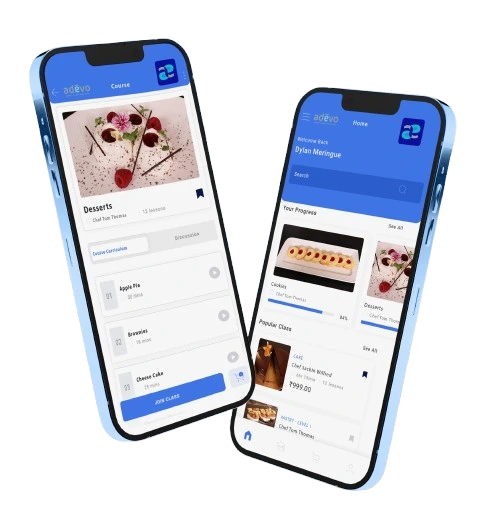
For properties already using an LMS, Adevo’s Bakery and Confectionery Training programmes demonstrate how competency-based scenario modules can be built for highly specialised roles, using the same design principles applied to any department.
As detailed in the guide on guest recovery and complaint training, the scenarios with the highest ROI are almost always in the complaint and recovery category, because these are the moments most directly linked to guest review scores, repeat bookings, and word-of-mouth.
Measuring Whether Scenario-Based Training Worked
Training without measurement is an assumption that improvement has occurred. Measure scenario-based training outcomes through four lenses:
On-floor observation: A supervisor watches a staff member handle a real version of a trained scenario and scores against the standard practised in training. This is the most direct measure.
Time to resolution: For complaint scenarios specifically, track the average time from complaint to resolution before and after training. Improvement here is a training outcome.
Repeat incident rate: If staff are trained on a specific failure mode, the frequency of that failure in service should decrease. Track it by department over a 60-day window.
Guest feedback themes: Review guest comments and ratings for references to the specific service moments targeted by scenario training. A reduction in negative comments about complaint handling, for example, signals that the training is translating to performance.
Common Mistakes Hotels Make with Scenario Training
Stopping at role play without a debrief. Role play without a structured debrief is performance without learning. The debrief is where insight is created. Never skip it.
Using generic scripts instead of real incidents. Scenarios that feel artificial produce artificial learning. Staff disengage when the situation does not resemble anything they have actually encountered. Ground every scenario in a real or realistic incident.
Delivering only in English. For a housekeeping team that works primarily in Hindi or Kannada, a role play conducted in English is a language exercise, not a service training. Match the delivery language to the working language of the team.
One scenario, one time. A single scenario run once does not build a reflex. The same core scenario should be run multiple times, with variations, over the first 90 days of a new joiner’s tenure. Repetition with variation is how judgment becomes instinctive.
Conclusion
The gap between knowing a service standard and applying it under pressure is a training gap. It is not a talent gap, a motivation gap, or a character gap. It is a practice gap.
Scenario-based learning closes that gap. It is not expensive. It does not require a training department or a technology platform. It requires well-designed situations, active participation, and a consistent debrief practice.
Start with one scenario this week. Pick the service failure that has cost you the most in guest satisfaction over the last quarter. Build the setup. Run it in your next briefing. Debrief for five minutes. Watch what changes.
If you want support building a scenario library for your property, designing department-specific training modules, or delivering scenario-based training programmes on-site or through a multilingual LMS, Adevo’s L&D consulting team works with Indian hotel and restaurant operators across the full training spectrum. Book a free consultation at adevo.in to get started.
Frequently Asked Questions
What is scenario-based learning in hotel training? Scenario-based learning is a training method that places staff in realistic, high-pressure service situations and requires them to make decisions, practise responses, and receive feedback. Unlike classroom instruction or SOP reading, scenario-based learning builds judgment and behavioural reflexes through active practice rather than passive information transfer.
How do I design scenario-based training without a training department? Start with your real incident logs. Take the three or four service failures that have occurred most often at your property in the last six months. Build one scenario around each. Run them as ten-minute role plays in the shift briefing room, with a supervisor playing the guest. Debrief for five minutes after each run. This is scenario-based training. No specialist tools or training department required.
Which hospitality scenarios have the highest training value? Guest complaint and recovery scenarios consistently produce the highest observable improvement in service quality. After these, operational pressure scenarios (overbooking, system failure, kitchen delays) and compliance moment scenarios (FSSAI, MHA ID verification, fire safety) are the most valuable. Train these three categories before expanding to others.
How do scenario-based modules work in a mobile LMS? A mobile LMS scenario presents a service situation through video or text, pauses at a decision point, and offers two or three response options. Each option leads to a different outcome. The learner works through the decision tree until they reach a resolution, receiving feedback at each branching point. Effective LMS scenarios for Indian hospitality teams are short (five to eight minutes), delivered in regional languages, and require active choices rather than passive reading.
How many scenarios does a new joiner need in their first 30 days? A realistic and effective target is six to eight scenarios across the first 30 days, covering the most common and highest-stakes situations the staff member will encounter in their role. This is approximately two scenarios per week, run in briefing sessions. Supplement these with at least two live-floor shadow opportunities where the new joiner observes a senior handling a real situation.
Can scenario-based training replace SOP training? No. SOPs and scenario-based training serve different purposes. SOPs document the standard. Scenarios practise the application of that standard under realistic conditions. Both are necessary. The most effective training programmes use SOPs as the reference point and scenarios as the practice mechanism.