Multi-Lingual Training: Building Workplace Communication Across Diverse Teams
Introduction
Your breakfast server speaks Odia. Your sous chef thinks in Tamil. Your housekeeping supervisor’s first language is Malayalam. And your front desk associate just arrived from Uttar Pradesh with conversational English but fluent Hindi. Welcome to the reality of running a hotel or restaurant in India. If your team struggles to communicate clearly with each other — and with your guests — soft skills training courses that include multilingual communication modules are not optional. They are essential.
India recognises 22 scheduled languages in its Constitution, and your hotel floor probably has four or five of them represented on any given shift. This linguistic diversity is a genuine strength — it helps you serve guests from across the country. But without structured multilingual training, it becomes the root cause of service inconsistencies, safety lapses, and the kind of daily friction that pushes good staff out the door.
This guide walks you through why multilingual training matters for Indian hospitality operators, how to implement it without overcomplicating your operations, and which training approaches actually deliver results.
Why Language Gaps Cost Indian Hotels and Restaurants Real Money
Language barriers between team members are not a minor inconvenience. They create real, measurable problems that hit your bottom line.
Guest Experience Suffers First
When a guest at your Bangalore property asks a server from Jharkhand about allergen ingredients, and that server doesn’t fully understand the question in English — the risk isn’t just embarrassment. It’s a potential health incident and a guaranteed negative review. Miscommunication between front-of-house staff and guests is one of the fastest ways to lose repeat business. In an industry where online reviews drive bookings, one language-related service failure can cost you far more than a training programme ever would.
Safety and Compliance Risks
FSSAI food safety protocols, fire evacuation procedures, chemical handling in housekeeping — all of these require every staff member to understand instructions precisely. When your kitchen team includes people who speak Kannada, Hindi, and Bengali, and your safety briefing is delivered only in English, you have a compliance gap. Staff who don’t fully grasp safety procedures aren’t being careless — they’re being underserved by your training system.
Staff Turnover Accelerates
India’s hospitality sector is indeed one of the country’s largest employment generators, supporting over 42 million jobs, but it also suffers from very high attrition. One of the quieter but powerful drivers of this churn is communication breakdown, especially for frontline staff such as housekeeping attendants, room attendants, and F&B employees. If you’re looking to reduce staff turnover in hospitality, addressing language barriers is one of the highest-impact starting points.
Team Friction Slows Everything Down
A busy Saturday dinner service is no time for miscommunication. When your kitchen calls out orders and the runner doesn’t catch the table number, when a supervisor gives instructions that a new hire only partly understands, service slows down. Even the best kitchen operations and culinary training falls short if the team can’t understand each other on the line.
Understanding Your Team’s Language Landscape
Before you design any training, you need an honest picture of your team’s language reality.
Map Who Speaks What — and at What Level
Don’t assume you know. Conduct a simple language assessment across your staff. You will likely find:
- Employees fluent in the local state language (Kannada in Bangalore, Tamil in Chennai, Marathi in Mumbai) who struggle with English or Hindi
- Staff from northern states comfortable in Hindi but unable to read English signage or documentation
- Supervisors who speak English well but can’t give clear instructions in the mother tongue of half their team
- New recruits from hospitality institutes with textbook English but no exposure to regional languages spoken by colleagues
Identify Where Breakdowns Actually Happen
Walk your floor for a week and note where language causes friction. Common hotspots in Indian hotels and restaurants:
- Handover between shifts — critical information gets lost when outgoing and incoming staff don’t share a strong common language
- Kitchen-to-service communication — order accuracy drops when the kitchen speaks one language and servers speak another
- Guest interaction — especially with domestic travellers who prefer communicating in Hindi or a regional language
- Safety briefings and SOP training — delivered in English to staff who process better in their mother tongue
- Performance feedback — managers default to English, and team members nod along without fully understanding
Recognise the Hidden Language Layer
Language in Indian hospitality isn’t just about words. It includes body language norms that differ across cultures, varying levels of comfort with speaking up to authority, and regional communication styles. A team member from Kerala may communicate concerns differently than someone from Rajasthan. Understanding these patterns helps you design training that works across your entire team.
What Effective Multilingual Training Looks Like in Indian Hospitality
Generic English classes don’t solve the problem. Your training needs to be built for the way Indian hospitality teams actually work.
Workplace-Specific Language Modules
Teach your staff the exact vocabulary they need for their role — not general conversational English. A housekeeping attendant needs to understand room status codes, chemical safety labels, and guest request terminology. A server needs menu vocabulary, allergen communication, and service phrases in English plus at least one regional language your guests commonly speak. Hospitality management courses that focus on role-specific communication outperform generic language programmes every time.
Visual SOPs and Multilingual Job Aids
Not every communication challenge requires a classroom. Some of the most effective tools are the simplest:
- Bilingual SOP cards — laminated, visual step-by-step guides placed at workstations in English plus the dominant team language
- Pictorial safety signage — reduces reliance on written language for critical safety instructions
- Multilingual checklists — for opening and closing procedures, cleaning protocols, and mise en place standards
- QR-code linked video demonstrations — short clips showing procedures, narrated in multiple languages
These tools work because they meet your team where they are. They don’t require scheduling a training session — they provide support in real time, on the floor.
Peer Buddy Systems
Pair new hires with experienced staff who share their language background. This buddy system does three things simultaneously: it accelerates learning, provides emotional support during the stressful first weeks, and creates informal language exchange. The experienced team member picks up phrases in the new hire’s language; the new hire absorbs workplace terminology faster through daily interaction. This costs nothing to implement and produces measurable results within weeks.
Blended Learning: Digital Plus On-Floor
The most effective training combines structured learning with daily practice. Online skill development courses allow your staff to learn at their own pace — a server can complete a module on guest communication between shifts, or a housekeeping attendant can review chemical safety training in their mother tongue on their phone. Combine this with on-floor coaching from supervisors, and you have a training model that scales without requiring everyone to be in a classroom at the same time.
How to Implement Multilingual Training in Your Property
You don’t need to overhaul your entire training operation overnight. Start practical, start focused.
Start With Your Biggest Pain Point
If kitchen-to-service miscommunication is causing the most errors, start there. If guest complaints about communication are your main issue, prioritise front-of-house language training first. Trying to fix everything at once guarantees you fix nothing well.
Build Multilingual Onboarding From Day One
Your new hire’s first week sets the tone for their entire tenure. If onboarding materials are only in English and your new recruit from Odisha is still building English proficiency, they’ll feel lost before they’ve started. Create onboarding kits in at least two languages — English plus the most common mother tongue among your staff. Include visual guides, translated SOPs for their specific role, and assign a language buddy from their first shift.
Use Technology to Scale
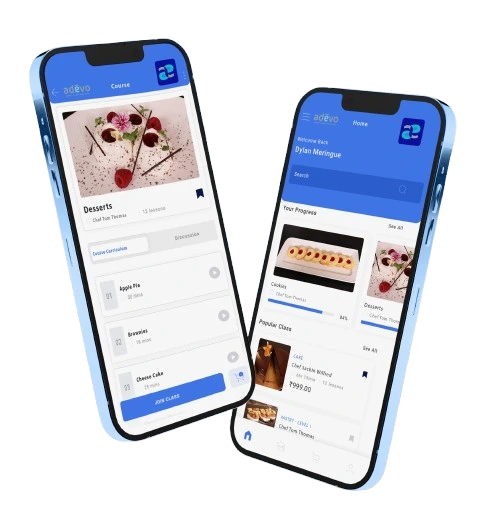
A multilingual LMS lets you deliver training in multiple languages without multiplying your training team. Staff access modules on their phones. Content can be delivered in Hindi, Tamil, Kannada, Telugu, or any language your team needs. Platforms like Adevo’s multilingual LMS make this practical even for mid-scale operators who don’t have a dedicated L&D department. When you need support designing and managing the entire training lifecycle, L&D outsourcing services can bridge that gap.
Create Psychological Safety Around Language
This is non-negotiable. If your staff feel embarrassed about their language skills, they won’t participate in training, won’t ask questions when confused, and won’t flag problems they’ve noticed. Build a culture where:
- Language mistakes are treated as learning moments, never as failures
- Managers model vulnerability by learning basic phrases in their team’s languages
- Team meetings include translation support when needed
- Feedback is delivered in the language the employee understands best, not the language that’s most convenient for the manager
Measuring Whether Your Multilingual Training Is Working
Training without measurement is just activity. Track these indicators to know if your investment is delivering results.
Operational Metrics
- Order accuracy rates — are kitchen-to-service errors decreasing?
- Guest complaint frequency — specifically complaints related to communication or misunderstanding
- Safety incident rates — are near-misses and incidents declining after training?
- SOP compliance scores — are staff following procedures more consistently?
People Metrics
- Staff retention rates — especially among employees from different linguistic backgrounds
- Time to productivity for new hires — are multilingual onboarding kits speeding up the ramp-up period?
- Internal promotion rates — are language-trained employees advancing into supervisory roles?
Qualitative Signals
- Managers report smoother shift handovers
- Team meetings have broader participation — people who were previously quiet are contributing
- Guest feedback mentions improved communication and attentiveness
- Staff voluntarily help colleagues with language support
If these indicators are moving in the right direction, your training is working. If they’re flat, adjust your approach — change the format, the language mix, or the delivery method until you find what resonates with your specific team.
Conclusion
Your hotel or restaurant team’s linguistic diversity is not a problem to manage — it’s a competitive advantage waiting to be unlocked. A server who speaks fluent Telugu can connect with guests from Hyderabad in a way no English-only trained employee can. A housekeeper who understands safety protocols in her mother tongue follows them more reliably than one who half-understood an English briefing.
But this advantage only materialises when you invest in structured multilingual training. Not generic language classes — targeted, role-specific, culturally aware training designed for how Indian hospitality teams actually operate.
Start with an honest language assessment of your team. Identify your biggest communication pain points. Then implement practical solutions: multilingual SOPs, peer buddy systems, digital learning modules in regional languages, and a culture where every team member feels safe to learn and grow.
Your diverse team deserves the tools to communicate, contribute, and deliver exceptional service. Explore soft skills training courses that combine multilingual communication development with the service excellence skills your hospitality team needs — designed specifically for the Indian market, delivered in the languages your staff actually speak.
If you’re ready to build a multilingual training programme for your property, Adevo’s LMS and L&D solutions are tailored specifically for Indian hospitality operators.