
Hotel training academies in India, built by the country’s major groups from the 1960s onwards, are now the blueprint the global industry is trying to replicate. Hotel Talk’s recent feature examines why branded groups are building their own training institutions rather than relying on conventional hospitality colleges — and how Adevo delivers the same outcomes for mid-scale and independent operators without the institution-building investment.
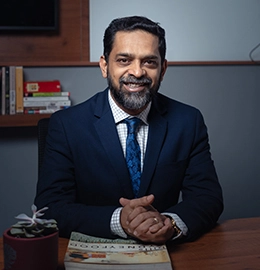
Adevo’s Rashmi Koppar, with 27 years in hospitality academia, contributed to this feature. The build vs. buy decision in hospitality training is essential context for any operator reading it — because the shift has been running for longer than most realise.
Key Takeaways
– India’s Taj, ITC, and Oberoi groups established degree-granting hotel training academies from the 1960s — a hybrid model combining accreditation with operational control that the global industry is only now replicating.
– In-house programmes solve a core operational problem: hotel systems update continuously while university curricula update on a yearly or multi-year cycle.
– Adevo delivers the same outcomes — speed, brand specificity, and turnover resilience — through specialist training partnerships, without requiring mid-scale operators to build institutional infrastructure.
Why Hotel Training Academies in India Outperform Traditional Colleges
The Hotel Talk feature opens with a fundamental operational reality: hotels update their systems constantly. A new property management platform, an AI-assisted guest service tool, updated food safety compliance requirements, revised brand standards — these changes happen on a timeline measured in weeks. University curricula are revised on a cycle measured in years.
The result is a persistent capability gap. Conventional institutions produce graduates who understand theory but have not trained on the systems, brand standards, or service protocols they will actually use. The onboarding burden falls entirely on the property — and for high-turnover roles, that burden recurs constantly.
This is the structural problem the in-house model has spent decades solving. Internal training teams deploy new modules in days rather than semesters. Training is specific to the brand’s own systems. Mobile-first, short-module delivery fits shift-based work. And when candidates are hired for attitude with technical skills built through training, the candidate pool expands significantly.
Read the full Hotel Talk feature here.
India’s 35-Year Advantage in Hotel Training
The Hotel Talk article highlights something India’s hospitality sector has been doing since the 1960s that the rest of the industry is only now replicating. India’s major groups did not choose between university accreditation and operational control — they built hotel training academies that delivered both.
IHCL (Taj Hotels) co-founded the Institute of Hotel Management in Aurangabad in 1989. ITC co-established the Welcomgroup Graduate School of Hotel Administration with Manipal University in 1986. The Oberoi Centre of Learning and Development has operated since 1966. These are not corporate training departments — they are degree-granting institutions with operational training embedded from year one.
The trade-off is portability. Deep brand knowledge does not transfer to the next employer the way a degree does — which, for the brands investing in these institutions, functions as a retention mechanism as much as a training programme.
How Adevo Delivers the Academy Standard Without Building an Institution
This is where Adevo’s model becomes directly relevant to the Hotel Talk article’s broader argument.
Replicating the IHCL or Oberoi model requires capital, institutional infrastructure, and a long-term commitment that mid-scale chains and independent properties do not have. But the operational outcomes these institutions produce — speed of skill-building, brand-specific consistency, training that survives turnover cycles — are not exclusive to operators who can build them.
Adevo operates two physical training academies: a primary centre in Bengaluru equipped with a functional restaurant environment and housekeeping laboratory, and a second academy in Toranagallu, Karnataka, established in partnership with JSW Foundation. Candidates train in conditions that replicate live hotel and F&B operations before they step into a client property.
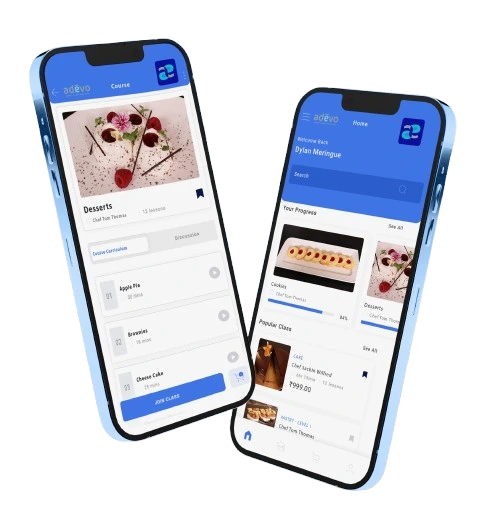
The soft skills training courses in Bangalore and on-site programmes Adevo delivers are built around the same principle as the in-house model: training specific to the operator’s own brand standards, service protocols, and systems — not a generic curriculum adapted to hospitality language.
For kitchen teams, bakery and confectionery training courses illustrate this clearly. The competencies a kitchen team needs — mise en place discipline, station management, food safety compliance, communication under service pressure — are built through applied, repetition-based training in conditions that mirror actual service, not through a semester of theory.
Adevo’s Three-Part Test for Academy-Standard Training
Adevo’s Rashmi Koppar frames the practical question for any operator without an in-house academy: how do you assess whether a training partner actually meets the academy standard? Three tests are useful.
Configurability: Does the provider deliver a fixed curriculum, or do they build against your brand standards, your systems, and your service protocols? A generic programme reproduces the same capability gap that conventional colleges create.
Delivery model: Does training happen only in a classroom, or does it include on-site deployment where learning converts into operational habit? Academy-based cohort work and on-property reinforcement do different jobs — most operators need both. Adevo’s model combines both: cohort training at its Bengaluru or Toranagallu academies, followed by on-site deployment at the client property.
Durability: Does the engagement end when the workshop ends, or does it include refresher cycles timed to attrition patterns? In-house institutions work partly because they are continuous. Adevo builds refresher structures into its ongoing client engagements for exactly this reason.
What Adevo’s Clients Have Achieved
The outcomes from Adevo’s training partnerships reflect what the academy model produces at scale, without the capital cost.
General Mills India: Adevo trained staff across 6,000 bakeries nationally — a programme that worked at scale, across geographies, and for operators at varying levels of prior training maturity.
Kempegowda International Airport: Adevo developed passenger services SOPs, translating hospitality service standards into a high-volume airport operations context.
Kling Brewery and Kitchen: Following Adevo’s service training intervention, the property holds 4.8+ Google ratings consistently — not a post-launch lift, but a sustained operational standard.
Conclusion
The Hotel Talk feature captures an industry in transition: moving from credential-based to competency-based workforce development, from standardised curricula to brand-specific operational training. The hotel training academies India’s major groups built decades ago are the model. The question now is how mid-scale and independent operators access the same outcomes without building an institution.
Adevo was designed to answer exactly that question. If you are reviewing your current training model, get in touch with the team.
Frequently Asked Questions: Hotel Training Academies in India
Q: Why did India’s major hotel groups build their own training academies?
A: Hotel operations update continuously — new platforms, brand standards, service protocols — while university curricula are revised on a yearly or multi-year cycle. In-house academies allow hotels to train on their own systems with speed and specificity that external institutions cannot match.
Q: How have India’s major hotel groups structured their in-house training academies?
A: India’s major groups pioneered a hybrid model decades ahead of global peers. IHCL, ITC, and The Oberoi Group each established or co-founded degree-granting institutions from the 1960s onwards that combined academic accreditation with operational training in live hotel environments.
Q: How does Adevo deliver academy-standard training without building an institution?
A: Adevo operates two physical academies — in Bengaluru and Toranagallu — where candidates train in functional restaurant and housekeeping environments before deployment. On-site training at the client property then converts academy learning into operational habit, configured to the brand’s own standards.
Q: What options do mid-scale and independent operators have for structured training?
A: Mid-scale and independent operators can access the same operational outcomes — speed, brand specificity, and turnover resilience — through specialist training partners like Adevo, who design and deliver programmes at the property level without requiring the operator to build institutional infrastructure.
Q: What is the trade-off of brand-specific in-house training?
A: Deep brand-specific training is largely non-portable. A team member trained in one brand’s systems has to relearn for a different operator — which, for hotels investing in in-house academies, functions as a retention mechanism rather than a limitation.