Hospitality skilling in India is drawing national attention — and Mid-Day’s 2026 editorial on entrepreneurs creating real impact places Adevo among them. For a company built on the premise that training from operational experience performs differently from training adapted from textbooks, this recognition reflects exactly what the industry is beginning to acknowledge: structured, practitioner-led workforce development is no longer optional for businesses that want to scale.
Key Takeaways
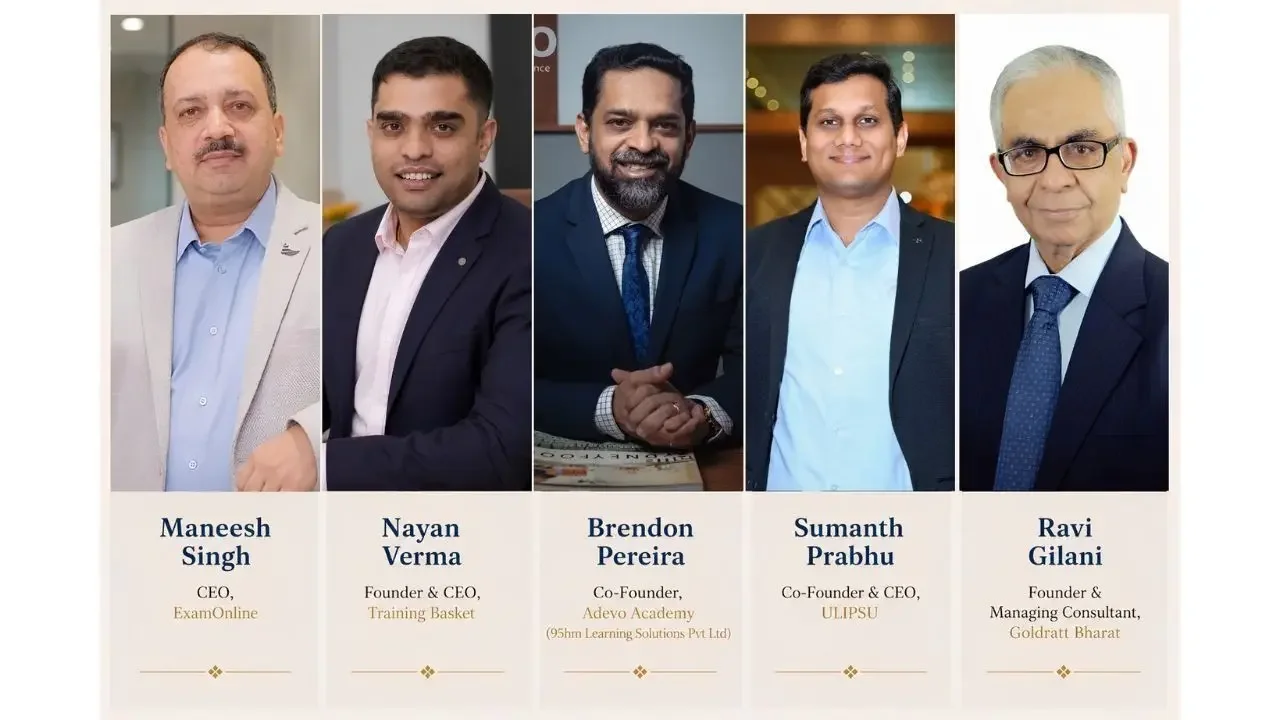
– Mid-Day’s 2026 feature names Adevo alongside founders across assessment, workforce development, education, and consulting for measurable impact on India’s service economy.
– Adevo was founded in 2021 by three practitioners with 75+ combined years in hotel F&B, restaurant management, and hospitality academia.
– Adevo’s clients include General Mills India (6,000 bakeries trained), Kempegowda International Airport, and multiple hotel and restaurant groups holding sustained 4.8+ Google ratings post-training.
Why Adevo Was Named in Mid-Day’s Hospitality Skilling in India Feature
Mid-Day’s editorial brings together founders driving innovation across sectors central to India’s service economy: assessment and credentialling, workforce development, hospitality education, and business consulting. The thread connecting them is not scale for its own sake — it is measurable impact on a real operational problem with verifiable consequences for the businesses they serve.
For Adevo, that problem has always been the same: India’s hospitality businesses invest heavily in premises, menus, and technology, but rarely in the people who deliver the experience. The gap between a well-designed property and a consistently well-run one almost always comes down to training.
Read the full Mid-Day feature here.
What Adevo Does Differently in Hospitality Skilling
Adevo was founded in January 2021 by three practitioners who collectively bring what hospitality training actually requires: operations, culture, and adult learning methodology.
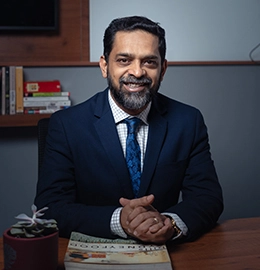
Brendon Pereira spent two decades in hospitality operations, progressing from F&B manager roles at Le Meridien and The Orchid Ecotel to CFO positions at NSE-listed companies. He holds an MBA from SPJIMR and an MDP from IIM Ahmedabad.
Krishna Shantakumar spent 30 years building some of Bangalore’s best-known restaurants — The 13th Floor, ASEAN On The Edge — while writing about food and hospitality for major Indian publications.
Rashmi Koppar contributed 27 years in academia at Ramaiah University, reaching Deputy Registrar level, with a Master’s in Tourism Management and a postgraduate degree in HR.
This foundation is why Adevo’s training produces different results. The scenarios, the service recovery sequences, the kitchen communication frameworks — all come from real hotel floors, not from textbooks adapted to a hospitality context. The hospitality management courses Adevo builds are grounded in the operational dynamics its founders lived, which is precisely what makes the outcomes different from conventional providers.
Adevo’s Four-Pillar Training Model
Adevo delivers hospitality skilling across four integrated channels, each designed to meet operators at different stages of maturity.
Physical academy training in Bengaluru and Toranagallu (established in partnership with JSW Foundation) provides functional restaurant environments and housekeeping labs where candidates train in conditions that mirror live hotel and F&B operations before stepping into a property.
On-site training deploys directly at client locations, configured to the brand’s own standards, service protocols, and operational realities. This is how hotel groups achieve the outcome of an in-house training programme without building one.
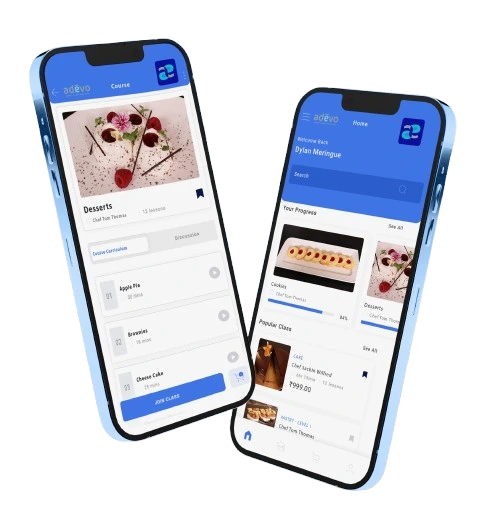
Digital LMS at lms.adevo.in carries over 100 modular courses available in multiple languages — designed for shift-based hospitality work and accessible between shifts or during pre-service briefings.
Consulting covering SOP development and L&D outsourcing allows operators to build the operational systems that produce consistent performance over time, not just training events that fade by week four.
The leadership and management skills training Adevo delivers, for instance, is built from real hotel floor dynamics — how heads of department actually lead teams under service pressure, not management theory from a business school curriculum.
What Adevo’s Client Results Look Like
Mid-Day’s recognition reflects a track record rather than a claim.
General Mills India: Adevo trained staff across 6,000 bakeries nationally using seven specialised content modules. The programme had to work at scale, across geographies, and for operators with varying levels of prior training exposure.
Kempegowda International Airport: Adevo developed passenger services SOPs for one of India’s busiest international airports — translating hospitality service standards into a high-volume, public-facing airport context.
Kling Brewery and Kitchen: Following a full-service training intervention by Adevo, the property holds 4.8+ Google ratings consistently — a sustained baseline, not a launch spike. That number reflects operational consistency across shift changes and staff turnover cycles.
The Difference Between a Training Event and a Training System
One pattern worth understanding, because it explains why most training investments in hospitality fail to hold: the difference between a training event and a training system.
A training event — a workshop, a two-day intensive — generates a measurable lift in the week that follows. Then the operation reasserts itself, old habits return, and by week four the behaviour has reverted.
Adevo builds training systems that embed learning into how the operation already runs: pre-service briefings, supervisor observation, structured feedback, refresher modules timed to attrition cycles. The content matters, but the delivery architecture is what determines whether behaviour survives the third month. That is the principle behind every programme Adevo designs.
Conclusion
Adevo’s inclusion in Mid-Day’s 2026 list is a marker of where hospitality skilling in India now sits — no longer a niche HR concern, but a board-level business priority for hotel owners, restaurant groups, and F&B operators with ambitions beyond a single city.
If your property or restaurant group is at the point where ad hoc training has stopped delivering consistent results, speak to the Adevo team about what a structured programme built for your operational context looks like.
Frequently Asked Questions: Hospitality Skilling in India
Q: What made Adevo stand out for Mid-Day’s 2026 recognition?
A: Adevo’s recognition reflects its founding by three operational practitioners with 75+ combined years in hotel F&B, restaurant management, and hospitality academia — and the measurable client outcomes this produces: sustained Google ratings, reduced turnover, and consistent service standards across multiple properties and locations.
Q: How is Adevo’s approach to hospitality skilling different from conventional training?
A: Conventional training adapts academic curricula to a hospitality context. Adevo builds programmes from operational experience — the founders have managed kitchens, run restaurants, and taught hospitality at postgraduate level. The scenarios, recovery sequences, and service frameworks come from real operational floors, not theory.
Q: What industries beyond hotels use Adevo’s programmes?
A: Adevo has trained staff for airports (Kempegowda International), food industry clients at scale (General Mills India across 6,000 bakeries), and independent restaurants across India. The service competencies Adevo builds — communication under pressure, service recovery, consistency of standard — apply across any customer-facing operation.
Q: Why is structured hospitality skilling increasingly important in India in 2026?
A: India’s service sector is expanding faster than its formal training infrastructure can produce qualified staff. Properties and restaurants that invest in structured, operationally grounded programmes are building a competitive advantage in guest satisfaction and staff retention that recruitment alone cannot replicate.