
Introduction
If you have ever watched a new front office team struggle through a busy morning — forgotten reservations, confused guests, dropped calls — you know why structured training matters. The front office largely shapes how guests perceive your entire property, often within the first few minutes. Getting it right is not optional. It is the difference between repeat bookings and one-star reviews. Investing in soft skills training courses designed for hospitality teams is the most direct way to close this gap.
In this guide, we walk through a complete framework for front office manager training. You will learn how to define service standards, build SOPs, structure training programs, and measure results. If you run a hotel, resort, or multi-property operation in India, this is your blueprint.
What Front Office Excellence Actually Looks Like
Front office excellence is the consistent delivery of seamless, professional guest service. It is backed by documented procedures and supported by trained staff. It is not perfection. It is reliability.
A guest arriving at 6 AM or midnight should experience the same smooth check-in. A manager should be confident that every team member handles complaints professionally and finds reservations quickly.
Excellence happens when three elements align:
- People: Skilled, motivated staff who understand their role
- Processes: Clear, written standard operating procedures
- Systems: Technology platforms that enable consistent execution
Most Indian hospitality operations focus heavily on hiring friendly people. But without clear processes and supporting systems, even the friendliest team will be inconsistent.
People and Skill Development
Your front office team needs defined competencies tied to your operational model. A front office executive at a luxury property needs different skills than one at a business hotel. But the framework remains the same:
- Guest communication and service recovery
- Reservation systems and booking accuracy
- Conflict resolution under pressure
- Technology proficiency (PMS, email, CRM)
- Team coordination and handover protocols
Processes and Standard Operating Procedures
An SOP is not bureaucracy. It is your accumulated best practice written down so every team member executes the same way. For the front office, this includes check-in and check-out protocols, reservation management, guest complaint procedures, emergency protocols, shift handover checklists, and guest preference capture.
Systems and Technology
A good Property Management System is the central nervous system of front office operations. It ensures a single source of truth for reservations, real-time availability, guest history accessible instantly, and integration with housekeeping and F&B.
Why Most Front Office Training Fails
Most Indian hospitality operations train their front office staff the same way. A new hire arrives, shadows someone for two or three days, receives a generic manual, and is told they will pick it up as they go. Three months later, they are still making the same mistakes.
This approach assumes hospitality skills are intuitive. They are not. Guest service execution is a craft that requires structured practice.
What Works Instead
Front office training that sticks combines five elements:
- Pre-role knowledge transfer before the first guest interaction
- Hands-on role-playing of common scenarios in a safe environment
- Ongoing reinforcement through weekly huddles and monthly skill checks
- Measurement and feedback using real guest interactions
- Career progression with clear pathways from executive to supervisor to manager
When these elements are present, staff retention improves significantly and guest satisfaction scores rise measurably.
Building Your Front Office Excellence System: 5 Steps
Step 1: Define Your Service Standards
Before you train anyone, get clarity on what excellence looks like at your property. This means specific, measurable, observable behaviour.
Vague standard: “Always provide exceptional luggage service.”
Clear standard: “Guest luggage is transported to the room within 5 minutes of check-in. Staff greet the guest by name, use polite language, and confirm the room number before departing.”
For every key guest interaction — check-in, phone answering, complaint handling, departure — you need this level of detail. Map out your top 10 guest interactions and write a two to three sentence standard for each.
Step 2: Develop Clear SOPs
Effective SOPs for front office cover daily operations, problem handling, and system-related processes.
Daily Operations SOPs
- Morning shift briefing template
- Guest arrival and check-in workflow
- Reservation modification requests
- Message taking and guest communication
Problem-Handling SOPs
- Guest complaint escalation matrix
- Overbooking recovery procedure
- Lost property protocol
- Emergency and security procedures
System-Related SOPs
- PMS data entry standards
- Guest history capture and preferences update
- Integration with housekeeping
- End-of-shift checklist
An SOP should be one page maximum, written in simple language, and include a flowchart where relevant. Most importantly, SOPs are living documents. When something does not work, you update it.
Select your top 5 most critical processes. Write a one-page SOP for each, test it with your team for one week, and refine based on feedback.
Step 3: Implement the Right Technology
A Property Management System should provide centralised reservations, guest profiles and history, automated alerts for VIP arrivals, integration with housekeeping, and revenue dashboards.
For Indian hospitality operations, look for platforms that offer multilingual interfaces, offline functionality for properties with intermittent internet, and mobile-first design so staff can access procedures from their phones.
Step 4: Create a Structured Training Program
Training transforms knowledge into skill. A structured program includes four phases:
Phase 1: Pre-role Onboarding (Days 1-2) Property tour, system introductions, SOP walkthrough, and shadowing experienced staff.
Phase 2: Supervised Practice (Weeks 1-2) Role-playing common scenarios, first guest interactions under supervision, and daily feedback.
Phase 3: Monitored Independence (Weeks 3-8) Independent guest interactions with manager observation, weekly skill assessments, and ongoing coaching.
Phase 4: Competency Validation (Weeks 8-12) Final assessment across all competency areas, guest feedback collection, and manager sign-off.
If your staff speak Hindi, Tamil, Telugu, Kannada, or other regional languages, create training materials in those languages. A team member who understands the SOP in their native language executes it faster. Platforms offering hospitality management courses with multilingual, hospitality-specific content can accelerate this process.
Step 5: Establish Performance Metrics
You cannot improve what you do not measure. Track these categories:
Guest Experience Metrics
- Guest satisfaction scores for front office interactions
- Online review mentions of check-in and check-out experience
- Complaint frequency and resolution time
Operational Metrics
- Check-in time (target: 5-7 minutes)
- Reservation accuracy (target: 98%+)
- Phone answer rate within 3 rings (target: 90%+)
- SOP adherence through manager spot-checks
Business Metrics
- Staff retention rate (target: 85%+ after first 6 months)
- Upsell success rate during check-in
- Revenue per available room correlation with training investment
Review metrics monthly. When performance dips, coach the individual. When a metric consistently misses, revisit your SOP or training approach.
Essential Skills Every Front Office Manager Needs
A front office manager is not just an experienced executive who got promoted. They need a distinct skill set.
Leadership and Team Management
This means leading a diverse team, motivating them, and holding them accountable. It looks like conducting daily briefings tied to guest experience goals, coaching staff through regular one-on-ones, and managing scheduling without coverage gaps. Train it through supervisory workshops and peer mentoring programs.
Service Recovery and Complaint Resolution
This goes beyond handling complaints. It means recovering guests so they remain loyal. Listen without interrupting. Offer a solution quickly. Take ownership instead of blaming systems. Follow up 24 hours later. Build this skill through role-playing exercises and guest recovery case studies.
Communication Skills
Clear, professional communication across face-to-face, phone, and email formats. Use polite but efficient language. Listen more than you speak. Explain procedures clearly. Communicate between departments without blame. Enrol team leads in online skill development courses that focus on professional communication for hospitality settings.
Technology Proficiency
Not just using the PMS, but understanding data flow and using it to solve problems. Navigate the system quickly, understand revenue impact of overbooking and cancellations, and use reports to identify trends.
Problem-Solving and Decision-Making
Using judgment to solve problems within company guidelines while knowing when to escalate. Empower staff to handle small decisions like room upgrades or late checkout without seeking approval.
The Business Case: ROI of Front Office Training
The front office is not a cost centre. It is a revenue driver.
Reduced Attrition Saves Real Money
According to FHRAI, replacing a front office executive costs 50-100% of their annual salary when you account for recruitment, onboarding, and ramp-up time. When a property is losing most of its front office staff within the first year, the accumulated recruitment and onboarding costs add up quickly.
Structured training that reduces first-year attrition translates directly into significant savings on replacement costs alone.
Guest Satisfaction Drives Revenue
A smooth check-in makes guests significantly more likely to book again. Repeat guests book at higher rates and spend more on F&B and services. Even a modest improvement in repeat guest rate generates meaningful incremental revenue over the course of a year.
Operational Efficiency Improves Occupancy
When check-in is fast and accurate, housekeeping cycles rooms quicker. Fewer booking errors mean higher occupancy rates. The cumulative effect on occupancy and revenue is substantial, particularly for properties that currently struggle with front office inconsistency.
The Bottom Line
The cost of a structured training program is modest relative to the returns it generates. Most properties see measurable improvements in attrition, guest satisfaction, and operational efficiency within the first year — making training one of the highest-return investments a hotel can make.
Common Mistakes to Avoid
Assuming hospitality skills are intuitive. Hiring friendly people and hoping for the best does not work. Guest service has procedures and standards that require structured training.
Writing SOPs but not enforcing them. Different shifts executing differently means guests get inconsistent experiences. Make SOPs a requirement. Conduct manager spot-checks weekly.
Investing in a PMS without training staff. Staff revert to workarounds like writing notes or using Excel spreadsheets, defeating the system’s purpose. Include PMS training in onboarding and make proficiency a performance expectation.
Training once and forgetting. Training happens but then nothing follows. Monthly guest satisfaction scores, operational metrics, and staff feedback should drive ongoing coaching.
Never updating your materials. SOPs written years ago do not account for new services or shifted guest expectations. Review and update training materials annually.
Frequently Asked Questions
How long does it take to train someone to competency? Eight to twelve weeks for a new hire to work independently with structured training. Without structure, people stay dependent on others for six months or more.
Should we invest in an LMS or train in-house? For a single property, in-house training works. For multiple locations, a digital platform with multilingual, hospitality-specific content saves time and ensures consistency across properties.
Can we train everyone the same way? No. A luxury hotel and a budget business hotel need different service standards. Customise training to your market position and guest expectations.
How do we measure training success beyond the classroom? Track behavioural change on the job. Check-in times, guest satisfaction scores, and SOP adherence through mystery shops or manager observation are your true measures.
How often should we refresh training? Annually for everyone. Add quarterly refreshers of 15-30 minutes on key procedures or whenever processes change.
We have high turnover. Is training worth it? High turnover is partly a symptom of poor training. Structured training improves retention, which reduces turnover, which makes training investment pay for itself faster.
Your Next Steps
- Audit your current state. Map existing training, SOPs, and systems. Identify your biggest gap.
- Start with SOPs. Write your top 5 critical front office processes. Test them with your team and refine.
- Design your training program. Define learning objectives for each role. Select methods that match each skill type.
- Run your first cohort. Train your next group of hires using the structured program. Measure performance at 4, 8, and 12 weeks.
- Measure and adjust. Track guest satisfaction, operational metrics, and retention. Use data to improve.
Front office excellence is not achieved through a one-time event. It is built through clear standards, documented SOPs, supporting technology, and continuous coaching. In a competitive Indian hospitality market where labour challenges are real, training systems are your competitive advantage.
Start with one process. Document it. Train it. Measure it. Then repeat. Within 6-12 months, you will have a front office that operates consistently and drives measurable business results.
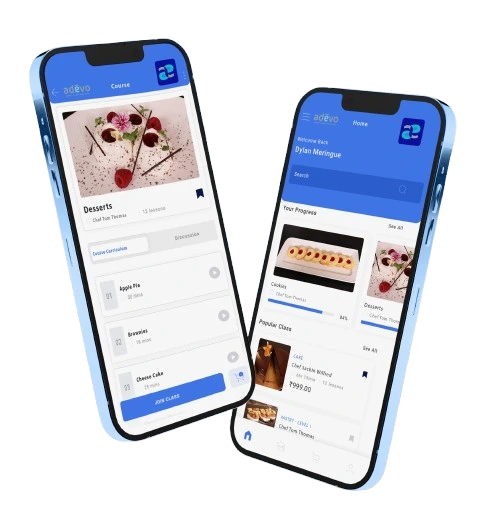
Ready to build a structured training system for your hotel team? Explore Adevo’s hospitality training programs to get started.