Introduction
It is 8:30 PM on a Saturday. Your restaurant is at 90% capacity. A new server asks your F&B supervisor where the SOP for handling a split bill is. The supervisor reaches for the binder on the bottom shelf. It is not there. Someone borrowed it three weeks ago and never returned it. The server improvises. He splits the bill unevenly, charges the wrong table for a round of drinks, and your front desk spends 20 minutes resolving the confusion. By Monday, you have a two-star Google review: “Billing was confusing.”
That one missing binder was not a billing problem. It was a systems problem.
Paper SOPs are where good intentions go to die in Indian hospitality. They get lost, outdated, and ignored — not because your staff are careless, but because paper is simply not how your team operates anymore. If you are already investing in hospitality management courses or any form of structured staff development, paper SOPs are quietly undermining that investment at every handoff.
This guide gives you a practical, India-first roadmap for moving your hotel or restaurant SOPs from paper binders to mobile-accessible formats your team will actually use.
What Are Digital SOPs, and Why Does Paper No Longer Work?
A Standard Operating Procedure is a documented set of instructions that tells your team exactly how to perform a task — from how to fold napkins correctly to how to handle a guest complaint without escalating it. Digital SOPs are the same concept delivered electronically: via a platform, an app, or even a WhatsApp-shared video.
The problem with paper is not that it fails in theory. In theory, a laminated SOP card in every section sounds perfectly reasonable. In practice, it breaks down fast.
Why paper SOPs stop working in Indian operations:
- Version control chaos: When you update a process, how do you guarantee every copy in every section reflects that change? Most properties cannot.
- Physical loss: Binders walk. Pages get torn. Laminated cards fade and peel after a few months in a humid kitchen.
- Language barriers: Most Indian operations print SOPs in English. A significant share of ground staff — stewards, housekeeping attendants, kitchen helpers — are not confident English readers. A procedure they cannot read is a procedure they will not follow.
- Accessibility during service: A server on the floor during a busy shift cannot stop and find a binder. A mobile SOP is one tap away on the phone already in their pocket.
- High-attrition reality: When you are replacing 60-70% of your floor staff annually — as many Indian F&B operations do — paper SOPs create an onboarding bottleneck every single cycle,across every department including Bakery & Confectionery where hygiene and recipe SOPs are especially critical.”
Digital SOPs solve each of these problems. They can be updated instantly across every device, delivered in multiple languages, and accessed from any smartphone.
If you are building a training programme alongside your SOP library, Adevo’s online skill development courses integrate directly with structured SOP delivery — so your team learns the skill and the standard in the same place.
Why Indian Hotels and Restaurants Are Moving to Mobile SOPs
The shift to mobile-first SOPs is not a technology trend for its own sake. It is a practical response to how Indian hospitality operations actually function.
Your staff are already on their phones. Before their shift, during breaks, between service rounds. Meeting your team where they already are removes the single biggest barrier to SOP compliance: the effort of going to find a document.
Instant updates, zero reprinting. When your process changes — new FSSAI food safety documentation requirements, a revised beverage menu, updated check-in procedures after a renovation — a digital SOP updates everywhere simultaneously. No printing batch, no redistribution, no version gaps between shifts.
Multimedia formats work better than text for mixed-literacy teams. A short video walkthrough of a room-turnover sequence communicates more clearly to a housekeeping attendant than three pages of written instructions. Visual and video SOPs work across literacy levels and language backgrounds.
FSSAI compliance and audit readiness. Food safety regulations require documented processes for licensed food businesses in India. Digital SOPs create an audit trail that paper cannot: who accessed what, when it was last updated, and what version was in force during any given period. When an inspector visits, you are ready.
Multi-property consistency. If you run two outlets in the same city, or properties in different states, digital SOPs ensure both locations follow the same standard. Without that, “our SOP” becomes “whatever the local supervisor remembers from their last property.”
The Real Cost of Sticking with Paper SOPs
Consider what happened at a 25-room heritage property in Coimbatore. Their F&B SOP binder had not been updated since early 2022. New joiners were trained against old procedures. When a food safety inspector visited in late 2024, the team could not produce documented proof that their food handling practices met current standards. The property was asked to provide updated documentation within 30 days — triggering a frantic exercise of rewriting, printing, and distributing revised SOPs under operational pressure, mid-season.
None of it was inevitable. A digital SOP library, updated in real time, would have made compliance the default, not a crisis.
The real cost of paper SOPs is not the paper itself. It is:
- Training rework: New joiners trained on outdated procedures who then need corrective retraining when the right version surfaces.
- Service inconsistency: Different staff following different versions of the same process — visible to guests as unprofessionalism.
- Audit exposure: No documented proof of SOP compliance when FSSAI or fire safety checks occur.
- Supervisor time drain: Managers answering the same basic procedural questions on repeat because staff cannot access the reference independently.
Every time a supervisor stops to answer “how do we do this again?”, that is time pulled away from floor management, guest interaction, and team development.
How to Transition: A 7-Step Approach for Indian Hotel and Restaurant Teams
Moving from paper to digital does not require a technology overhaul or a large budget. It requires a structured approach that respects your team’s digital literacy and operational constraints.
Step 1: Audit Your Existing SOPs
Before digitising anything, know what you have. Collect every written SOP, checklist, laminated card, and informal instruction sheet across all departments. Sort them by department and mark each one as current, outdated, or missing entirely. You will likely find that some critical SOPs exist only in a senior supervisor’s head.
Step 2: Prioritise by Department
Do not attempt to digitise everything at once. Start with the department where SOP gaps cause the most visible operational problems. For most Indian hospitality operations, this is F&B service or housekeeping — high-attrition departments with direct guest impact. Get one department right, then scale.
Step 3: Choose the Right Format for Each SOP
Not every SOP works as a text document. Match the format to the task:
- Text with images: Step-by-step processes (table setting, mise en place, room turnover sequence)
- Short video (2-5 minutes): Complex techniques with visual nuance (plating standards, front desk check-in flow, complaint handling)
- Visual cue cards: Quick-reference prompts for language-diverse teams at the point of work
Step 4: Make Them Multilingual
This is the step most Indian operators skip, and the one that makes the greatest practical difference. If your housekeeping team speaks Kannada and Tamil, your SOPs must be in Kannada and Tamil.
You do not need professional translators for every document. Start with your five most-used SOPs and record short video walkthroughs in your team’s primary languages. One five-minute video recorded once is reused every time you onboard a new joiner. The investment is a single afternoon; the return is every subsequent induction cycle.
Step 5: Choose a Platform Your Staff Can Actually Use on Their Phones
Your staff will not log into a desktop portal during a shift. The platform must work on a basic Android smartphone, load on a moderate data connection, and navigate without a separate training session just to access the content.
Look specifically for offline access capability. Many tier-2 and tier-3 properties have inconsistent Wi-Fi on certain floors. If staff cannot load the SOP during a power cut or connectivity gap, compliance falls apart immediately. When choosing and structuring your SOP content, Adevo’s guide on how to develop hotel SOPs covers the foundational structure your documents need before you move them to any digital format.
Step 6: Train Your Trainers First
Your floor supervisors and section heads are the gatekeepers of SOP compliance. Before rolling digital SOPs out to your full team, run a 30-minute briefing with every supervisor: how to find the SOPs, how to share an update link via WhatsApp, and how to confirm whether a new joiner has accessed the relevant module. When supervisors champion the system, staff follow. When supervisors ignore it, staff ignore it.
Step 7: Build in a Quarterly Review Cycle
SOPs are not a set-and-forget exercise. Schedule a quarterly review of your 10 most-used SOPs — especially after menu changes, equipment upgrades, staffing structure changes, or regulatory updates. The advantage of digital is that you edit once and update everywhere. But only if someone is accountable for that review.
What to Look for in a Digital SOP Platform for Indian Hotels
Not all platforms are suited to Indian hospitality operations. When evaluating your options, prioritise these criteria:
- Mobile-first design: If it does not work cleanly on a budget Android phone with a 4G connection, it will not get used by your floor staff.
- Multilingual content support: Hindi, Kannada, Tamil, and Telugu at a minimum, depending on your workforce.
- Offline access: Non-negotiable for tier-2 and tier-3 properties with variable connectivity.
- Integration with training delivery: The most effective setup is one where your SOPs and training modules live in the same system. Accessing an SOP can prompt a linked microlearning module; completing a module can require SOP sign-off.
- Simplicity for non-tech-savvy managers: If your HR manager needs IT support to update a document, the system has already failed.
Avoid platforms designed primarily for Western hotel chains — they often assume desktop use, English-only content, and connectivity standards that do not match Indian operational reality.
Making Digital SOPs Stick: Staff Adoption in Indian Operations
The biggest risk in any SOP transition is that staff ignore the new system as thoroughly as they ignored the old one. Here is how to prevent that.
Run a short, practical onboarding session. Not a two-hour classroom lecture. Show your team exactly where to find the SOPs they will use in their first week. A 20-minute floor walkthrough on a tablet or phone is more effective than any slide deck.
Record video walkthroughs in your team’s language. Ranjit, a housekeeping supervisor at a mid-scale property in Mysuru, recorded 12 short videos on his phone after his property moved to a digital SOP platform — one for each core housekeeping task, in Kannada. His team’s onboarding time dropped from three weeks to nine days. The same questions stopped repeating. He spent one afternoon creating the videos and has not needed to redo them since.
Use WhatsApp to distribute SOP updates. Your staff are already on WhatsApp. When a procedure changes, share the updated SOP link or a brief summary in your team WhatsApp group. This normalises digital SOPs as a live operational reference, not just an onboarding document.
Position supervisors as champions, not enforcers. When a supervisor says “let me show you where this is on the platform,” instead of “go and read the binder,” the culture around SOP compliance changes. Staff who see supervisors using the system use it themselves.
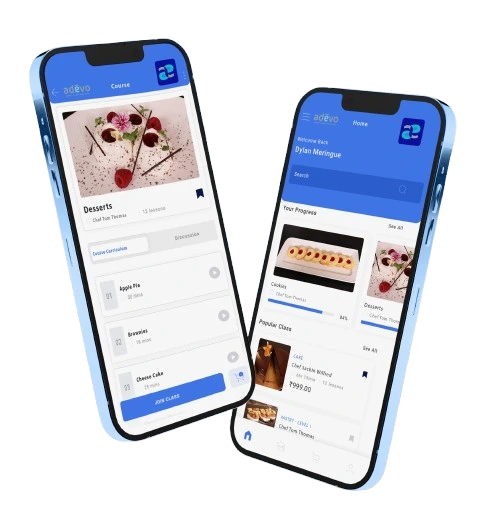
Platforms like Adevo’s multilingual LMS deliver SOPs as learning modules directly to staff phones — so the SOP and the skill that supports it are accessible in the same place, in the same language your team actually speaks.
Frequently Asked Questions About Digital SOPs for Hotels
What Are Digital SOPs for Hotels?
Digital SOPs are standard operating procedures stored and delivered electronically — via a platform, app, or mobile-friendly format — rather than printed in binders. They allow hotel and restaurant staff to access procedures from any smartphone, receive instant updates when processes change, and review content in video or visual formats suited to mixed-literacy teams.
How Do I Start Transitioning from Paper to Digital SOPs?
Start with one department, not the whole property. Audit your existing SOPs, identify the five most-used procedures in F&B service or housekeeping, and convert them into mobile-accessible formats first. Brief your supervisors before rolling out to the full team. Once one department is running consistently on digital SOPs, scale to the rest of the property.
Do Digital SOPs Need to Be in Multiple Languages for Indian Hotels?
Yes — for most Indian hotel and restaurant operations, multilingual SOPs make a material difference in compliance. Ground staff across housekeeping, F&B, and kitchen departments often work in Hindi, Kannada, Tamil, Telugu, or other regional languages. SOPs printed only in English are frequently ignored simply because they cannot be read with confidence. Short video walkthroughs recorded in your team’s primary language are the most effective solution.
How Do Digital SOPs Help with FSSAI Compliance?
FSSAI requires licensed food businesses to maintain documented food safety management practices. Digital SOPs create an automatic audit trail — recording when each SOP was last updated, who accessed it, and what version was in force at any given time. Paper binders cannot produce this evidence under inspection. Digital systems make compliance documentation a default outcome of normal operations, not a last-minute exercise.
What Should I Look for in a Digital SOP Platform for an Indian Hotel?
Prioritise mobile-first design that works on budget Android devices, multilingual content support, offline access for properties with inconsistent connectivity, and simplicity that allows non-technical managers to update content without IT support. Integration with your training delivery system is a significant advantage — platforms that link SOPs and training modules reduce duplication and make it easier to keep both current and consistent.
Conclusion: Start Small, Start Now
You do not need a perfect digital SOP library by next month. You need one department, done well, within the next 30 days.
Pick F&B service or housekeeping. Audit what you have. Digitise the five SOPs your team references most often. Translate them into your team’s primary language. Brief your supervisors. Then scale.
The operators who get this right — whether they manage a 20-room property in Coimbatore or a 200-cover restaurant in Hyderabad — are the ones who stop solving the same operational problems on repeat. Every hour invested in accessible, current SOPs pays back in fewer service errors, faster onboarding for every new joiner, and cleaner audit outcomes when inspectors arrive.
If you are building your SOP library from scratch and want your training content running on the same platform, explore Adevo’s Kitchen Operations & Culinary Training — where structured SOPs and practical skill development work together in one system.