Introduction
Last month, a housekeeping supervisor in a 4-star Bangalore hotel spent three days in a hospital due to chemical fume exposure while cleaning guest bathrooms. It was completely preventable. A simple lack of proper chemical safety training had put both her health and the hotel’s reputation at risk.
Here’s what you need to know: chemical safety training for housekeeping staff isn’t optional—it’s essential. In India’s hospitality sector, housekeeping teams handle hazardous chemicals daily, yet many hotels skip structured training. This creates risks to staff, guests, and your business.
In this guide, we’ll walk you through everything you need to implement comprehensive chemical safety training for your housekeeping team. We’ll cover FSSAI compliance, practical SOPs, training methods, and how to ensure your staff actually follows safety protocols.
Why Chemical Safety Matters in Hotel Housekeeping
Housekeeping is one of the highest-risk departments in hospitality. According to FSSAI guidelines, housekeeping and maintenance are identified as the most accident-prone areas in hotels and restaurants.
The real costs of poor chemical safety:
Accidents don’t just happen—they cascade. When a housekeeping staff member gets injured due to chemical exposure, you face medical costs, lost productivity, potential legal liability, and damaged reputation. A guest who hears about a safety incident may leave a negative review that costs you bookings for months.
Consider this: Ajay, a 28-year-old housekeeper at a mid-sized Mumbai hotel, mixed two different cleaning chemicals without knowing they created toxic fumes. He spent a week in the hospital. The hotel faced ₹1.5 lakh in medical bills, lost productivity while finding a replacement, and a guest complaint after the incident was discussed. A structured safety training program would have cost ₹10,000—less than 1% of the actual cost.
Beyond accidents, there are compliance risks. FSSAI and local labor regulations mandate proper chemical handling and staff training. Hotels without documented training face penalties and license suspension.
Understanding Common Housekeeping Chemicals & Their Hazards
Before training staff, housekeeping supervisors must understand what chemicals are used and why they’re dangerous.
Common hotel housekeeping chemicals include:
- Disinfectants (bleach-based, phenolic): Kill bacteria but can cause respiratory irritation, skin burns
- Degreasers (citric or petroleum-based): Remove grease but are flammable and toxic if ingested
- Glass and surface cleaners (alcohol-based): Can cause dizziness, headaches with prolonged exposure
- Toilet bowl cleaners (acid-based): Highly corrosive; can cause severe chemical burns
- Floor strippers & waxes: Contain solvents that cause neurological damage with long-term exposure
- Carpet shampoos: Can trigger allergic reactions, respiratory issues in sensitive staff
Key hazard categories:
Each chemical falls into one of these risk categories:
- Respiratory hazards (fumes, vapors): Cause coughing, shortness of breath, asthma triggers
- Skin/eye hazards (corrosive, irritant): Cause burns, rashes, temporary blindness
- Ingestion hazards (toxic if swallowed): Rare in typical use but critical if staff eat near chemicals
- Flammability hazards (some cleaners are flammable): Fire risk if near heat or open flames
- Reactive hazards (mix-ability): Some chemicals create toxic gases when mixed (bleach + ammonia = poisonous chlorine gas)
FSSAI Standards for Chemical Storage & Handling
The Food Safety and Standards Authority of India (FSSAI) sets mandatory standards for chemical safety in food-related establishments. Hotels and restaurants must comply.
FSSAI requirements for chemicals:
- Containers must be: Specifically identifiable (clear labels), closable, impervious (won’t absorb chemicals), easy to clean
- Storage location: Separate from food storage, guest areas, and rest rooms
- Labeling: All chemicals must have clear, legible labels with product name, hazards, and safe use instructions
- Documentation: Hotels must maintain records of chemicals purchased, stored, and used
- Staff training: Mandatory training records showing all staff understand proper handling
Real-world example: Priya manages housekeeping at a Bangalore hotel. When inspectors visited, she showed documented FSSAI-compliant chemical storage (separate locked cabinet, clear labels, training records). The hotel passed. At a nearby competitor without documentation, the inspector found unlabeled bottles under sinks and no training records—resulting in a warning and re-inspection required.
Step-by-Step Chemical Safety Training Process
Effective training isn’t a one-time lecture. It requires hands-on demonstration, practice, and reinforcement.
Week 1: Pre-Training Assessment
Before training, assess current knowledge:
- Quiz staff: “What happens if you mix bleach and ammonia?”
- Observe current practices: Are staff wearing gloves? Ventilating?
- Identify knowledge gaps by role (senior housekeeper vs. new hire)
Week 2: Classroom Training (4-6 hours)
- Module 1 (1 hour): Hazard identification
- Show chemical bottles; discuss hazards
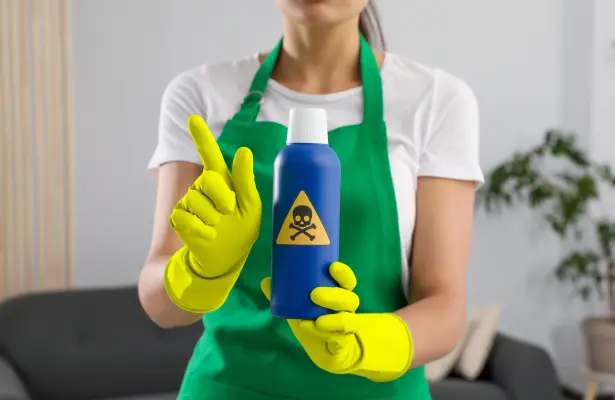
- Explain safety symbols on bottles
- Discuss what NOT to do (mixing chemicals, skin contact, etc.)
- Module 2 (1 hour): Safe handling procedures
- Proper PPE (gloves, apron, eye protection)
- Ventilation requirements
- Storage protocols
- Spill response
- Module 3 (1.5 hours): Practical demonstration
- Trainer demonstrates proper chemical dilution
- Shows correct PPE usage
- Demonstrates bathroom cleaning with proper safety
- Module 4 (1.5 hours): Practice & Q&A
- Staff practice handling (with dummy chemicals)
- Role-play scenarios (spill, accidental splash)
- Answer questions, address concerns
Week 3-4: On-the-Job Training (2-3 shifts)
- Pair new staff with experienced, trained housekeeper
- Supervised practice using actual chemicals
- Feedback and correction in real-time
- Observation checklist completion
Month 2: Certification & Documentation
- Written quiz (80% pass required)
- Practical assessment (supervisor observes and scores)
- Issue training certificate
- Document in training records
Ongoing: Monthly Refreshers
- Monthly 15-minute safety briefing
- Quarterly retraining for staff with compliance issues
- Annual re-certification for all staff
Creating Chemical Safety SOPs for Your Housekeeping Team
Standard Operating Procedures (SOPs) turn training into daily practice. Here’s how to create them.
Core sections for chemical safety SOP:
Section 1: Chemical Inventory & Storage
- List all chemicals used (with hazard info)
- Storage location (must be separate, locked, ventilated)
- Temperature & light requirements
- Check-off checklist for daily inventory
- Example: “Bleach stored in locked cabinet under sink, away from food. Cabinet clearly labeled. Checked daily at 7 a.m.”
Section 2: Personal Protective Equipment (PPE)
- Required PPE by chemical (gloves, apron, eye protection, respiratory if needed)
- How to don/doff PPE correctly
- Inspection of PPE before use (torn gloves? damaged apron?)
- Example: “For bleach-based disinfectants: nitrile gloves, long-sleeve apron, safety glasses. Inspect gloves for tears before use.”
Section 3: Chemical Dilution & Preparation
- Correct dilution ratios (many cleaners require dilution with water)
- Step-by-step mixing procedure
- Containers & labeling
- Temperature considerations
- Example: “Floor cleaner diluted 1:10 (one part cleaner to ten parts water). Mix in labeled bucket only. Never exceed dilution ratio.”
Section 4: Safe Handling During Cleaning
- Ventilation requirements (open windows, exhaust fans)
- Contact precautions (no skin contact)
- Eye/respiratory precautions
- Avoiding inhalation of fumes
- Example: “When cleaning bathrooms with bleach: open window, run exhaust fan. Wear gloves, apron, safety glasses. Avoid breathing fumes directly.”
Section 5: Spill & Accident Response
- Immediate action (stop work, evacuate area if needed)
- Cleanup procedure (absorbent material, disposal)
- First aid response (rinse skin, seek medical help for severe)
- Incident reporting
- Example: “If chemical splashes eyes: immediately rinse with water for 15 minutes. If irritation persists, go to medical center. Notify supervisor.”
Section 6: Disposal & Waste Management
- How to dispose of used chemicals
- Proper container disposal
- Environmental safety
- Example: “Empty chemical bottles placed in designated waste bin. Never pour down drain. Disposed by licensed waste management service monthly.”
Common Mistakes & How to Avoid Them
The biggest mistakes happen when training is overlooked. Here are the most dangerous:
Mistake 1: Mixing chemicals carelessly
- Why it happens: Staff rush, don’t realize danger
- Consequence: Toxic gas production (bleach + ammonia = poisonous chlorine)
- How to prevent: Mandatory written rule: “Never mix different chemicals.” Post signs in all bathrooms.
Mistake 2: Improper PPE usage
- Why it happens: “It slows me down” or “I’ve done this for years”
- Consequence: Skin burns, eye damage, respiratory problems
- How to prevent: Supervisor spot-checks (are staff wearing gloves?). Reward compliance. Replace torn PPE immediately.
Mistake 3: Poor ventilation
- Why it happens: Staff want to finish faster, forget to open windows
- Consequence: Inhalation of fumes causes dizziness, headaches, long-term respiratory damage
- How to prevent: Install exhaust fans in all bathrooms. Train: “Always ventilate before and during chemical use.”
Mistake 4: Storage in wrong locations
- Why it happens: “It’s convenient” or convenience cupboard is closest
- Consequence: Guest exposure, cross-contamination, chemical theft
- How to prevent: Locked cabinet in staff area only. Monthly audits.
Mistake 5: Not reporting incidents
- Why it happens: Fear of blame, not realizing it’s serious
- Consequence: Pattern of incidents goes undetected and unaddressed
- How to prevent: Anonymous incident reporting option. Zero-blame culture for honest mistakes.
Training Solutions for Indian Hospitality Teams
For hotels with diverse, multilingual teams, training must be accessible to all.
Digital learning advantage:
Adevo’s multilingual LMS provides chemical safety modules in English, Hindi, Tamil, Telugu, and Marathi. Staff can learn on breaks, at their own pace, reducing operational disruption. Completion tracking gives management audit trails for compliance.
On-site academy training:
For foundational chemical safety, hands-on academy training (2-3 days) teaches practical skills that digital alone can’t replicate. Staff practice with actual chemicals under supervision, building confidence and muscle memory.
Hybrid approach (recommended for most hotels):
- Week 1: Digital module (multilingual) covers hazard identification and theoretical knowledge
- Week 2: On-site academy training provides hands-on practice
- Week 3-4: On-property mentorship with supervisor ensures real-world application
This combination reduces training time (no long academy stays), ensures compliance documentation, and adapts to staff language preferences.
Measuring Training Effectiveness
Training is only valuable if staff actually comply. Here’s how to measure success.
Key metrics:
- Compliance audits: Weekly spot-checks (staff wearing PPE? Chemicals properly stored? Ventilation on?)
- Incident rate: Track chemical-related accidents. Target: zero incidents after training.
- Training completion rate: % of staff certified. Target: 100%.
- Post-training knowledge: Quiz scores. Target: 80%+ pass rate.
- Guest satisfaction: Room cleanliness feedback. Should improve post-training.
- Staff retention: Do trained staff stay longer? (Yes typically—they feel safer).
Tracking system:
Use a simple spreadsheet to track:
- Staff name & training date
- Quiz score
- Practical assessment score
- Compliance spot-checks (weekly)
- Any incidents
- Refresher training dates
Conclusion: Make Chemical Safety Non-Negotiable
Chemical safety training isn’t a compliance checkbox. It’s an investment in staff health, guest safety, and your business reputation.
Here’s what you need to do:
- Audit current practices: Observe how chemicals are stored, handled, and labeled right now.
- Create a training plan: Decide: digital first, academy first, or hybrid?
- Implement SOPs: Document procedures in simple, multilingual format.
- Train and certify: Get 100% of housekeeping staff trained within 3 months.
- Monitor and reinforce: Weekly spot-checks, monthly refreshers, annual re-certification.
The cost is minimal. The peace of mind—knowing your team is safe, your guests are protected, and you’re FSSAI-compliant—is invaluable.
Ready to implement structured chemical safety training? Adevo’s soft skills training courses include comprehensive chemical safety and housekeeping safety modules. Our online skill development courses are multilingual and accessible to your entire team. Or explore our L&D outsourcing services to build a complete safety training program tailored to your property.
Start with a free consultation. We’ll assess your current training gaps and design a program that works for your hotel’s size, language diversity, and regulatory needs.