The classification of beverages sorts drinks by what they contain and how they are made. This guide uses a five-row working scheme: fermented, distilled and compound alcoholic drinks, then aromatised wines, then non-alcoholic drinks. Each row has its own method, its own glass and its own rules.
You have seen the moment. A guest at a hotel bar asks whether vermouth is a spirit or a wine, and the new trainee freezes. The answer sits inside the classification of beverages, and this guide lays it out in one chart first, then row by row, with examples from Indian bars, banquets and coffee shops. If you train floor teams, see how Adevo’s F&B training programmes build this product knowledge before a trainee reaches the bar.
Key Takeaways
- The classification of beverages in this guide has five rows: three kinds of alcoholic drink, aromatised wines and non-alcoholic drinks, and each row changes how you store, pour and sell a drink.
- Alcoholic drinks split by how they are made: fermented, distilled or compound.
- Aromatised wines such as vermouth start as wine but behave like neither wine nor spirit, so they get their own row on the chart.
- A trainee who can place any bottle on the chart can answer most guest questions without calling a supervisor.
What Is the Classification of Beverages in Hospitality?
Hospitality teams sort drinks by what they contain and how makers produce them, and that sorting is the classification of beverages. A beverage here means any prepared drink served for the guest to enjoy, from filter coffee to single malt.
This guide splits alcoholic drinks three ways, into fermented, distilled and compound, because that version maps cleanly onto a back bar. Treat it as a working scheme for the floor, not the only way to cut the list.
A Trainee’s First Shift
Consider Farhan, a trainee captain at a hotel coffee shop in Hyderabad. In his second week a guest wanted something light before dinner, and not beer. Farhan offered a whisky soda. Whisky was the only bottle he could name with confidence.
His supervisor Nandini stepped in and suggested a dry vermouth over ice. The guest was happy. That evening Nandini walked Farhan through the chart branch by branch, and within a month he was making those suggestions himself.
What Changes With Every Branch
Why does the sorting matter on a shift? Four things change with every branch:
- Storage: wine, spirits, beer and soft drinks each want their own temperature and shelf.
- Glass and measure: a spirit pour and a wine pour are different sizes, and a wrong guess costs you stock.
- Law: state excise rules cover alcoholic drinks only, so the branch decides who you may serve, and when.
- Selling: the branch tells you whether a drink opens the meal, sits alongside it or closes it.
Product knowledge is only half of floor skill. The other half is explaining a drink to a guest in plain words, and that is where good soft skills training courses turn a recited label into a confident recommendation.
Classification of Beverages Chart: Where Does Every Drink Sit?
Here is the classification of beverages chart in one table. Treat it as the master reference; the sections after it explain each row.
| Branch | What defines it | Examples |
|---|---|---|
| Alcoholic: fermented | Yeast turns sugar into alcohol; the drink is not concentrated | Beer, wine, cider, toddy |
| Alcoholic: distilled | A fermented liquid is concentrated in a still | Whisky, rum, gin, vodka, brandy, feni |
| Alcoholic: compound | A spirit or wine is blended with flavours or other drinks | Liqueurs, cocktails |
| Aromatised | Wine flavoured with herbs and spices, then fortified | Vermouth, Dubonnet |
| Non-alcoholic | Drinks served to nourish, stimulate or refresh | Tea, coffee, juices, soft drinks, mocktails |
Reading the Chart as a Decision Path
Read the chart as a short decision path. Ask first whether the drink contains alcohol. If it does, ask how the maker produced that alcohol, and whether anyone added flavourings to a wine base. A classification of beverages chart only helps if a trainee can run that path in a few seconds at the pass.
Try it on two drinks. A glass of kokum sherbet has no alcohol, so it goes straight to the non-alcoholic row, in the refreshing group. A vodka and cranberry cocktail has alcohol, and the maker built it from a distilled spirit and a juice, so it lands in the compound row. Once a trainee has run the path on a dozen drinks from your own menu, the sorting stops feeling like a quiz and starts feeling like habit, and the guest never sees the thinking.
Two Traps When Sorting Drinks
Strength is the usual trap. Trainees assume a stronger drink must sit in a different branch from a lighter one, yet a fortified wine and a table wine start from the same grape. A sound classification of beverages looks at process and ingredients, and treats strength as a detail that follows from them.
A second trap is the brand name. Guests ask for drinks by label, and a label hides the class. Teach trainees to look past the bottle to the process behind it, because that habit lets them handle a brand they have never stocked before.
Want to build this into your team? Talk to us about a modular programme for your outlet, and see how Adevo’s food and beverage training courses build floor skills around your own menu.
How Does the Classification of Beverages Treat Alcoholic Drinks?
Alcoholic drinks divide by process: fermented, distilled or compound. The way the alcohol was made decides the class, not the colour of the liquid or the price on the menu. Every distilled drink begins as a fermented one, which is why this part of the classification of beverages cares about process rather than ingredient.
Fermented Drinks: Beer, Wine and Toddy
Yeast feeds on sugar and gives off alcohol and carbon dioxide. The finished drink keeps roughly the strength fermentation gave it, which is why fermented drinks are lighter than spirits.
Wine comes from grape juice, beer from malted grain, and cider from apples. Toddy, tapped from palm sap in coastal states such as Kerala, belongs here too, so a regional drink fits the same chart as an imported one.
Fermented drinks reward care over speed at the table. Present the wine, let the guest taste it, then pour at their pace and top up only when asked. Beer asks for less ceremony, but a clean glass and a steady pour matter just as much.
Distilled Drinks: Spirits and Feni
Distilled drinks start as a fermented liquid, then pass through a still that concentrates the alcohol. The base decides the spirit. Whisky comes from grain, rum from sugarcane, gin from a neutral spirit flavoured with juniper, brandy from wine and tequila from agave.
Indian bar menus carry imported labels beside Indian-made foreign liquor, usually shortened to IMFL. Goa’s feni, distilled from cashew apple or coconut sap, has its own place on regional menus.
Priya, a bar supervisor at a resort in Goa, noticed her new hires pouring feni and a cream liqueur with the same measure and the same glass. The feni is a distilled spirit, and the liqueur is a compound drink with sugar and flavour added. She taped a small card inside the service-station door, split into the three alcoholic branches, and asked each trainee to place three bottles on it before every shift. Pour errors dropped, because the team began asking which class a bottle belonged to before reaching for a measure.
Compound Drinks: Liqueurs and Cocktails
Bartenders build compound drinks rather than simply make them. A base spirit or wine is combined with fruit, herbs, nuts, sugar or other drinks until the flavour is right.
Liqueurs are the clearest example. Cocktails are the mixed form: every cocktail draws on drinks that already sit elsewhere on the chart, so on the floor you file it as compound. Technique is a separate skill, and our guide on how cocktails are made covers the basic methods bartenders learn first.
Where Do Aromatised Drinks Fit in the Classification of Beverages?
Aromatised wines contain alcohol too, but they get their own row because they start as wine, then makers flavour and fortify them until they act like neither wine nor spirit. This is the branch most trainees have never met before their first bar shift.
Vermouth is the standard example. Hotel-management study material from AISSMS CHMCT describes it as an aromatised wine that has been fortified, flavoured with herbs and spices. The same notes list dry, sweet, bianco, rosé and red styles, and Dubonnet, a wine-based aperitif with spices and a hint of quinine, sits beside it.
Where does this branch show up in an Indian outlet? Mostly in two places:
- Before the meal, served as an aperitif in a short-stemmed wine glass or a narrow tumbler.
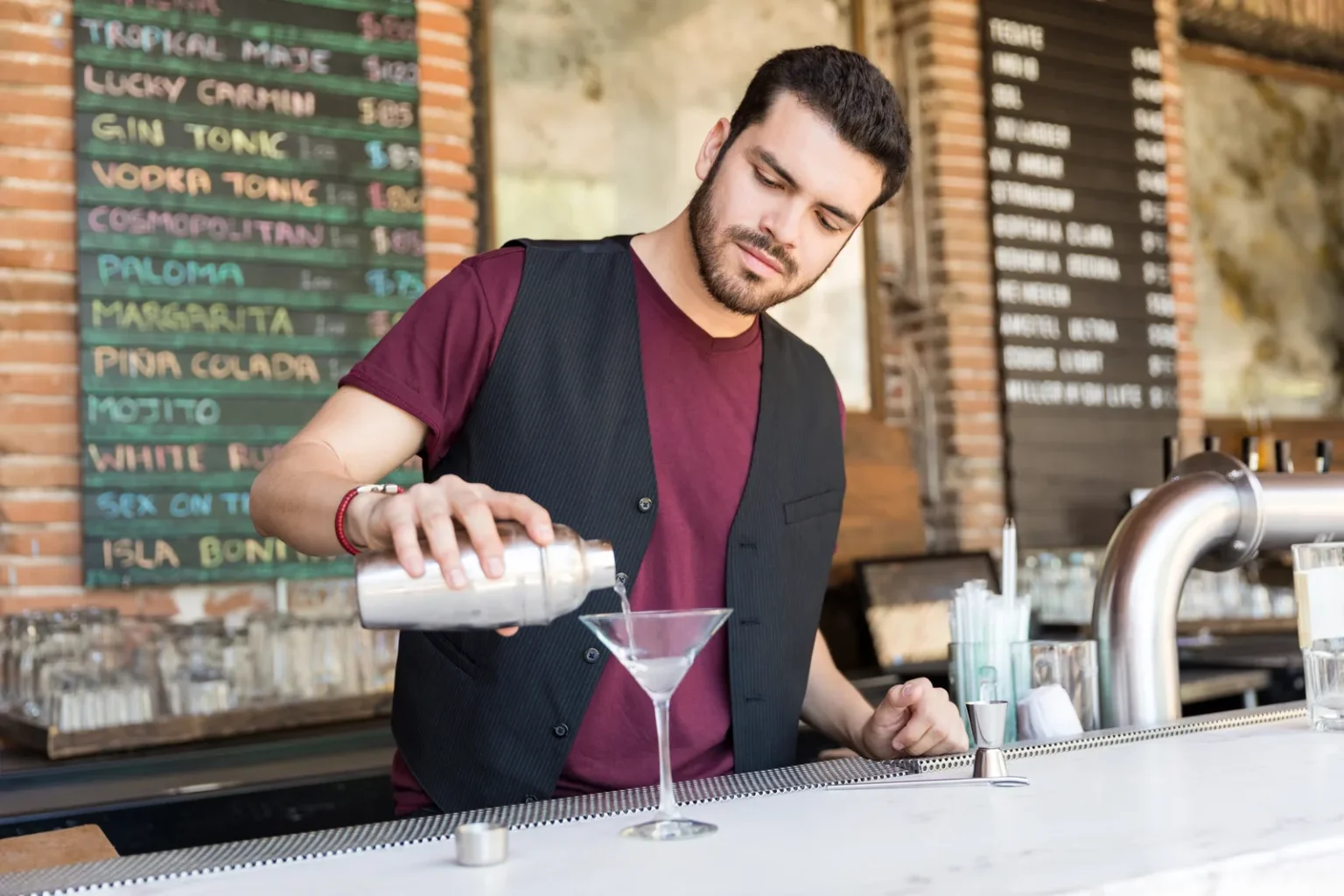
- Behind the bar, where dry vermouth goes into a Martini and sweet vermouth into a Negroni or a Manhattan.
Because vermouth starts as wine, it is easy to mix up with a table wine. Teach the difference early. An opened bottle of vermouth oxidises and goes flat, so refrigerate it and watch how quickly it sells instead of treating it like a bottle of spirit that keeps for months.
Where Do Non-Alcoholic Drinks Sit in the Classification of Beverages?
Group non-alcoholic drinks by what they do for the guest: they nourish, stimulate or refresh. This branch covers more of your daily covers than any other, because every table orders from it, including tables that also order alcohol.
- Nourishing drinks: milk, lassi, milkshakes and many fruit juices feed the guest as well as quench thirst.
- Stimulating drinks: tea, coffee and cocoa, and on an Indian floor that means masala chai and filter coffee ahead of anything imported.
- Refreshing drinks: everything served mainly to cool and quench: aerated soft drinks, nimbu pani, squashes, cordials, coconut water and mocktails.
A mocktail looks like a bar drink but belongs here, so the bar team and the beverage team need to agree on who prepares it. Guests who do not drink, drive home or fast during a festival will judge your whole outlet on this branch, and a thin non-alcoholic list tells them they were an afterthought. Good use of the classification of beverages means the non-alcoholic branch gets the same product knowledge as the bar. We break every group down, with service notes and Indian examples, in our guide to non-alcoholic beverages.
How Should Service Staff Use the Classification of Beverages on the Floor?
Use the chart as a quick sorting routine before every order, upsell and storage decision. Five steps cover almost every situation:
- Ask whether the drink contains alcohol: if it does, check the guest’s age and your state’s excise rules before anything else, because they differ from state to state.
- Place the drink on the chart: fermented, distilled, compound, aromatised or non-alcoholic.
- Pick the glass and the measure: the branch tells you which glassware and which pour to reach for.
- Choose the moment: aromatised drinks and light wines open a meal as aperitifs, while many spirits and liqueurs close it as digestifs.
- Offer a neighbour: if a guest likes one drink in a branch, suggest another from the same branch.
The routine works best as a pre-shift habit, not a manual. Five minutes before service is enough; supervisors who run it build a shared vocabulary quickly, and trainees stop whispering questions across the pass.
It also helps with the menu itself. When you plan a drinks list, a classification of beverages chart shows gaps at a glance: a bar heavy on spirits with no aromatised option, or a list with no serious non-alcoholic choice. Fix the gap on paper before the guest finds it at the table.
Anita, an F&B manager at a banquet venue in Bengaluru, ran a Sunday wedding where one side of the family drank and the other did not. Her captains split the welcome trays by branch: non-alcoholic drinks on one tray, aperitifs on another, each with a different coloured napkin. No guest received the wrong glass, and the family remarked on how orderly the service felt.
How Does Adevo Help With the Classification of Beverages?
Adevo, a name taken from Atithi Devo Bhava, is an integrated skill development platform for hospitality, and it teaches teams to place every drink on the chart before a guest asks. Its co-founders bring more than 80 years of combined experience, including years at the Taj and Oberoi hotel groups, in running F&B outlets and in teaching hotel management. Hotels, restaurants, caterers, clubs and corporate groups use Adevo to upskill staff at scale, through online courses on its learning platform, on-site training at their own bar and consulting on SOPs and learning plans. Students, freshers and working bartenders take the same courses and certifications to build job-ready product knowledge. Training runs in Hindi, Kannada, Tamil, Telugu and English.
Conclusion
The classification of beverages gives your team one map for every drink in the building. Ask whether a drink contains alcohol and how the maker produced it, then place it on the chart; done on every shift, that habit means the guest hears an answer and never a guess. Keep the classification of beverages chart where the whole team can see it, and revisit it whenever the menu changes.
Does your floor team place every drink on the chart without hesitation? Ask Adevo about food and beverage training courses built around your outlet.
Frequently Asked Questions: Classification of Beverages
Q: What is the classification of beverages?
A: The classification of beverages sorts drinks into groups by what they contain and how makers produce them. In this guide’s working scheme there are five rows: fermented, distilled and compound alcoholic drinks, aromatised wines and non-alcoholic drinks.
Q: What is the definition of a beverage?
A: A beverage is any prepared drink served for people to enjoy, whether to quench thirst, refresh, stimulate or nourish. In a hotel or restaurant it covers everything from tea and coffee to wine and spirits.
Q: How many types of alcoholic beverages are there?
A: This guide counts three production types: fermented, distilled and compound. Aromatised wines contain alcohol too, so they sit as a fourth alcoholic row on the chart, because they behave differently on the floor. Compound covers liqueurs and cocktails, built from drinks that already sit elsewhere on the chart.
Q: What is the classification of beverages with examples?
A: In the classification of beverages, fermented drinks include beer and wine, distilled drinks include whisky and rum, and compound drinks include liqueurs and cocktails. Vermouth is aromatised, and tea, coffee and soft drinks are non-alcoholic.
Q: How are non-alcoholic beverages classified?
A: The classification of beverages groups them as nourishing, stimulating or refreshing. Milk and lassi nourish, tea and coffee stimulate, and soft drinks, nimbu pani and mocktails refresh.
Q: What are aromatised wines?
A: Aromatised wines carry herbs and spices and extra spirit for strength. Vermouth is the best-known example, and bartenders pour it before a meal or stir it into cocktails. In the classification of beverages they sit on their own row, because the base is wine but the finished drink behaves differently from both wine and spirit.