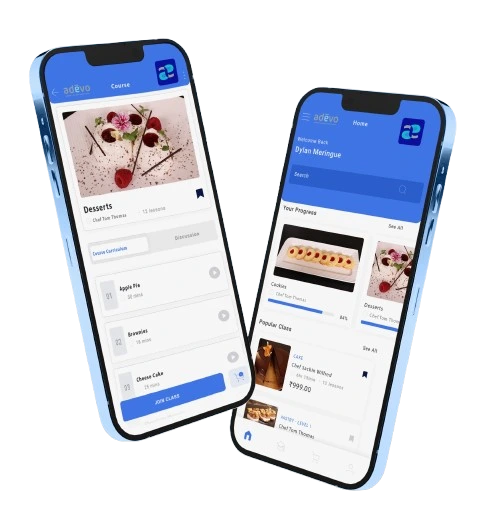

Every year, thousands of aspirants apply for chef jobs in India. Most never get a callback, and the reason is rarely culinary talent. It’s knowing what hiring managers actually screen for when a kitchen station opens up. If you’re preparing to apply, Adevo’s food and beverage training courses cover grooming, hygiene and communication standards, the basics that matter on a trial shift.
Key Takeaways
- Hotels and standalone restaurants use different hiring criteria; sending the same application to both wastes every attempt.
- A formal credential from an IHM or THSC-accredited institute is the first filter at 5-star properties, and cooking talent alone rarely passes it.
- Soft skills, especially communication and composure under service pressure, are evaluated during trial shifts, not just interviews.
- Matching your application to the correct NSQF chef level significantly improves your shortlisting rate for chef jobs in India.
What Qualifications Do Hotels in India Actually Expect from a Chef?
Hotels use formal credentials as the first filter for chef jobs in India, before they ever see you cook. For 5-star and 4-star branded properties, the baseline is a diploma or degree from an NCHMCT-affiliated IHM (Institute of Hotel Management). A 3-year BSc in Hospitality and Hotel Administration, or a 1–2 year diploma from a food craft institute plus kitchen experience, is the standard entry profile for Commis Chef positions at Taj, Oberoi, Lemon Tree, and ITC properties. Enrolling in soft skills training courses alongside a culinary qualification signals to hiring managers that you understand a professional kitchen demands far more than food knowledge.
Standalone restaurants offering chef jobs in India are more flexible. Most reputable mid-market outlets now expect at least a short-term culinary program recognized by THSC (Tourism & Hospitality Skill Council) or NSDC. Certificates from unaccredited private institutes carry almost no weight during a structured hiring round. Hotel HR teams check accreditation because it maps to defined NSQF competency levels, which directly tells them what a candidate can do without supervision.
The NCHMCT network (food craft institutes operating under the Ministry of Tourism) trains a significant share of India’s hotel-ready kitchen workforce. A one-year food craft diploma plus practical kitchen experience makes you competitive for Commis Chef positions at mid-market properties. Without any formal credential, you’re competing in a pool where most chef jobs in India at licensed hotels go to candidates with a documented training history.
What Skills Do Hotels and Restaurants Actually Test During Hiring?
Credentials get you the interview. Skills get you the offer for chef jobs in India, and trial shifts are where the hiring decision actually happens.
Hotels filling chef jobs in India don’t evaluate candidates primarily through taste tests. They evaluate execution under pressure. A common trial format: you’re assigned a station, given a prep list, and observed during service. What the chef-in-charge watches is how you set up your station, how clean your mise en place is, and whether your output is consistent plate after plate. Not spectacular, just consistent.
Hard skills hiring managers actually observe:
- Knife skills and speed: can you produce consistent cuts at volume under time pressure?
- Station awareness: do you understand how your section connects to the broader kitchen flow before being told?
- FSSAI compliance instincts: do you check temperatures, label prep items, and handle cross-contamination correctly without prompting?
- Cost awareness: do you understand yield and portion control, or do you cook as if ingredient cost is someone else’s problem?
Soft skills that disqualify candidates even when the cooking is good:
- Communication under pressure: Indian professional kitchens mix regional languages, Hindi, and English depending on the property and location. Candidates who shut down when misunderstood create real friction during service.
- Composure during high-volume service: a wedding buffet for 400 covers operates differently from a 20-seat standalone restaurant. Hotels screen for candidates who don’t panic and who escalate problems correctly.
- Coachability: chefs who argue about their previous kitchen’s way of doing things rarely survive probation at a new property. Hotels hire for fit, not just skill.
Preparing your kitchen team for hotel hiring standards? Explore Adevo’s F&B training and build the station discipline, hygiene habits and communication skills that trial shifts test.
How Chef Vacancy Levels in India Are Structured: From Commis to Executive
Applying for the wrong level is one of the most common and avoidable mistakes when pursuing chef jobs in India’s hospitality market. The Tourism & Hospitality Skill Council (THSC) maps chef roles to the National Skills Qualifications Framework (NSQF), and hotels use this framework whether they state it explicitly or not. Understanding which level matches your experience directly improves your conversion rate for chef jobs in India.
THSC’s qualification packs define competency standards, NSQF levels, and minimum experience benchmarks for every chef role in India’s hospitality sector:
- Commis Chef (NSQF Level 4): Entry-level. Fresh graduates or candidates with 1–2 years of kitchen experience. Responsible for basic prep, section support, and learning station ownership under a CDP.
- Demi Chef de Partie (NSQF Level 4.5): Transitional role common in large-volume hotel kitchens. Leads a sub-section under a full Chef de Partie.
- Chef de Partie (NSQF Level 5): Full section ownership. Manages one complete kitchen section: tandoor, cold kitchen, hot kitchen, pastry, or garde manger. Typically requires 5–7 years of relevant experience.
- Sous Chef: Execution and team management combined. Expected to run the kitchen in the Head Chef’s absence and manage junior staff directly.
- Executive Chef (NSQF Level 7): Full food operations ownership: menu development, vendor negotiation, food cost management, and team recruitment all fall within scope.
For a detailed look at how these roles fit into a working kitchen’s reporting structure, Adevo’s guide on kitchen hierarchy in India covers each level with India-specific salary ranges and career timelines at both metro and tier-2 properties.
Why Indian Hotels Reject Chef Applications Even from Good Cooks
The most common rejection cause across chef jobs in India isn’t a skill gap. It’s a readiness gap.
Candidates who’ve cooked excellent food at home, at events, or in training kitchens often struggle in a hotel kitchen for one predictable reason: producing dish 147 at the same standard as dish 1 is fundamentally different from inspired cooking. Hotels hiring for chef jobs in India need chefs who can perform with consistency under repetition and volume. This is what structured training builds, not kitchen instinct.
Three specific rejection triggers that repeat across India’s hotel hiring process:
No demonstrable FSSAI hygiene knowledge: FSSAI regulations are non-negotiable for any licensed kitchen. Candidates who’ve never worked in a regulated environment often fail basic HACCP-related questions, or make visible hygiene errors during trial shifts that end the conversation immediately.
Credential mismatch: Applying for a Chef de Partie role with a 3-month certificate signals unpreparedness. Applying for a Commis role with a BSc signals the candidate will leave within six months once the scope becomes clear. Both patterns actively hurt application success.
Weak references: Chain hotels recruiting for chef jobs in India call references. A kitchen manager who can confirm your station ownership, your hygiene standards, and your composure during service is worth more than any certificate in your application folder.
How to Get Hired for Chef Jobs in India: What Actually Works
The practical path to shortlisting for chef jobs in India is less about cooking harder and more about presenting the right evidence to the right level of property.
Get formally trained through an accredited institute: Candidates who pursue chef jobs in India without structured credentials are screened out before the trial shift at most branded properties. A 9–12 month diploma from a THSC or NSDC-accredited program is the minimum credentialing standard for serious hotel applications, and our guide to chef salary in India shows what each level pays. It demonstrates assessment against national competency benchmarks, not self-assessment.
Do trial shifts before you formally apply: Request a one or two-day trial at any property you’re targeting. Most mid-market hotels accommodate this. It builds a reference contact, gives you direct exposure to that kitchen’s SOP culture, and gives you something specific to reference in the actual interview.
Add FSSAI food handler certification to your credential stack: A FOSTAC certificate from an FSSAI-approved training provider signals compliance awareness and reduces onboarding cost for the employer. A practical signal that stands out from candidates with equivalent cooking skills.
Chef jobs in India are actively expanding across the hospitality sector. According to a TeamLease Services survey of 1,268 employers across 23 industries, India’s hospitality sector projects a net employment growth of 5.1% for H1 FY2026-27, with 63% of employers planning to add headcount, driven by new hotel openings, MICE tourism, and religious tourism routes reaching Tier 2 and Tier 3 cities. The chef vacancies are real. The question is whether your application matches what each role actually requires.
Want your kitchen team trained to hotel and restaurant standards? Ask about Adevo’s food and beverage courses built around your team and your guests.
Conclusion
Getting shortlisted for chef jobs in India is a systems problem, not a talent problem. Hotels screen in order: credential, hygiene compliance, practical consistency, communication, composure. Build your application to pass each stage in sequence.
If you’re preparing for a kitchen role, whether fresh from a culinary program or moving from a standalone restaurant to a branded hotel, Adevo’s F&B courses cover the grooming, hygiene and communication standards that hotel teams look for on trial shifts. Book a free demo with the Adevo team to build a training plan around the specific role and property tier you’re targeting.
Frequently Asked Questions: Chef Jobs in India
Q: What qualifications are needed for chef jobs in India at 5-star hotels?
A: Most 5-star properties require a diploma or degree from an NCHMCT-affiliated Institute of Hotel Management. A 3-year BSc in Hospitality and Hotel Administration or a food craft institute diploma, combined with 1–2 years of kitchen experience, is the standard profile for Commis Chef positions at major Indian hotel chains like Taj and Oberoi.
Q: How do I find a chef vacancy in India at hotel properties?
A: Most chef jobs in India at hotel chains are posted on their own careers pages and on hospitality-specific job boards. Registering with THSC’s job fair program also connects candidates directly with hotels running structured recruitment rounds. In-person approaches (visiting a hotel’s HR department with a CV and requesting a trial shift) still outperform online-only applications in the Indian market.
Q: What is the difference between hotel chef jobs in India and restaurant chef jobs?
A: Hotel kitchens operate at scale with strict FSSAI and HACCP compliance, SOPs for every dish, and shift-based structures with clear reporting lines. Restaurant kitchens, especially standalone F&B outlets, offer more creative flexibility but less structured career progression. Entry-level hotel roles build more transferable credentials; standalone restaurant experience develops speed and adaptability faster.
Q: Do I need FSSAI certification to apply for chef vacancies in India?
A: FSSAI food handler certification is not always listed as a stated requirement, but it is frequently checked during trial shifts and influences hiring decisions at licensed hotel kitchens. A FOSTAC certificate from an FSSAI-approved provider signals compliance awareness and reduces onboarding time, making your application stand out from candidates with equivalent cooking skills but no compliance training.
Q: What soft skills do hotels test when shortlisting candidates for chef jobs in India?
A: Hotels primarily evaluate communication clarity in mixed-language kitchen environments, composure during high-volume service, and the ability to follow SOPs consistently rather than improvise. Trial shifts are specifically designed to observe these behaviors, and candidates who perform well technically but fail on these dimensions rarely progress past probation at branded hotel properties.