Pastry is one of the few hospitality roles in India with a clear, fast promotion ladder. Pick the right hospitality management courses and get the sequence right. You can move from commis to head pastry chef in five to seven years. Get it wrong, and you spend a decade stuck making the same croissants.
Key Takeaways
– This career runs on a defined ladder: commis, demi chef de partie, chef de partie, sous chef, head of the pastry section.
– Course choice matters less than practical hours logged; a 6-month diploma with 950+ hands-on hours beats a 1-year course that is mostly theory.
– Government-recognised diplomas (NCHM, IHM) cost far less than private academies and carry equal weight with most Indian hotel employers.
What Does a Pastry Chef Actually Do in an Indian Kitchen?
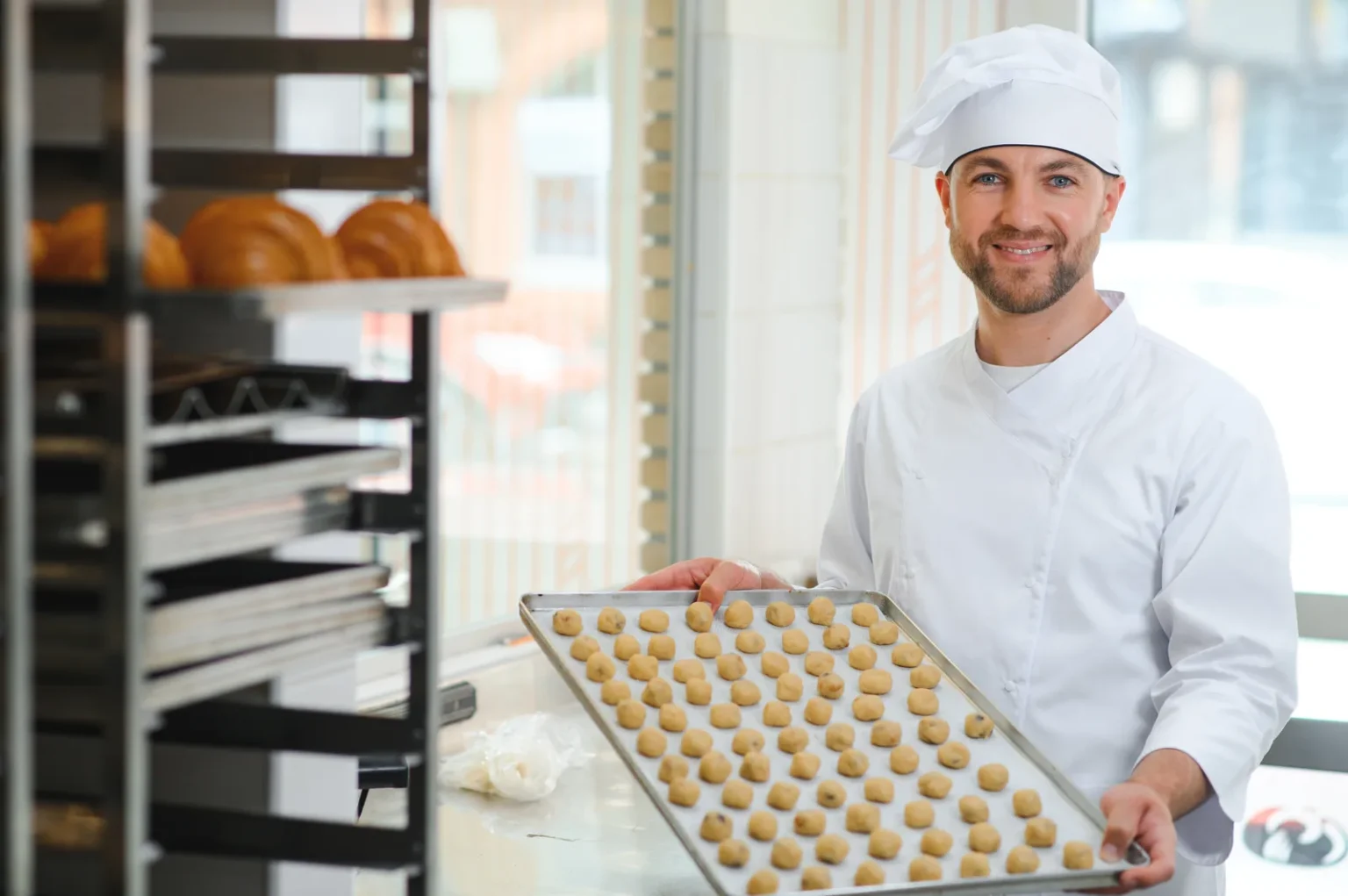
A pastry chef runs the sweet production line: breads, cakes, desserts, chocolate work, and plating for restaurant and banquet service. In Indian hotel kitchens, this sits as its own department. It reports to the Executive Chef, separate from the main kitchen brigade.
Entry-level commis spend most of their first year on repetitive prep: portioning dough, tempering chocolate, lining moulds. The technical skill (lamination, sugar work, entremets) comes after that foundation, not before it.
What Skills Do You Need to Become a Pastry Chef?
You need three things before technique: hygiene discipline, temperature control instinct, and speed under pressure. Everything else is teachable on the job. The Pastry/Bakery Commis Qualification Pack from THSC lists these as the core entry-level competencies. THSC is the government-recognised skill council for tourism and hospitality.
Indian bakery training programmes build technical skill in order. First, baking fundamentals. Then international breads. Then cake and pastry basics. Then chocolate and sugar work. Finally, plated dessert composition. Diploma in Bakery & Confectionery programmes at government institutes follow this exact sequence, over 36 weeks of instruction plus 24 weeks of industrial training.
What Are Your Course Options in India?
You have three real paths: government diploma, private academy diploma or certificate, or online/hobby course. Each suits a different starting point and budget.
Government & Subsidised Bakery Courses
Government-run diplomas cost a fraction of private academy fees. They also carry recognised weight with hotel HR teams. The National Council for Hotel Management and Catering Technology runs a Diploma in Bakery & Confectionery spanning 1.5 years, across three semesters. It’s open to any 12th-pass student. State-run Food Craft Institutes, like the Food Craft Institute in Kerala, run similar programmes. Placement support is built in.
Private Academy Diploma or Certificate Courses
Private academies run shorter, more intensive programmes, often 3 to 9 months. They pack in heavier practical hours and an international technique focus. These cost more, but they move faster. If you already have a 12th-pass qualification and want to start working within a year, this is usually the faster route.
Online Courses
Online courses can teach recipes and technique demonstration. They cannot replace hands-on lamination, tempering, and plating practice. Treat online courses as a supplement for working professionals. They’re not a substitute for real kitchen hours.
How Much Does Pastry Chef Training Cost in India?
Costs to train as a pastry chef range from roughly ₹15,000 for a government-subsidised certificate to over ₹2 lakh for a premium private diploma with international affiliation. The difference usually comes down to three things: practical hours, kitchen equipment access, and placement support. It’s rarely about the recipes taught.
What Is the Career Path and Salary Progression?
The Indian pastry career ladder runs: Commis Pastry → Demi Chef de Partie → Chef de Partie (Pastry) → Sous Chef (Pastry) → Head Pastry Chef. Promotion speed depends on hotel size and how much of your training was hands-on versus theoretical.
| Career Stage | Typical Time to Reach | Key Requirement |
|---|---|---|
| Commis Pastry | Entry level | Diploma or certificate completion |
| Demi Chef de Partie | 1–2 years | Consistent speed on repetitive prep |
| Chef de Partie (Pastry) | 3–4 years | Rotation across multiple stations |
| Sous Chef (Pastry) | 5–7 years | Section-level management skill |
| Head Pastry Chef | 7+ years | Costing, wastage control, full department ownership |
Standalone bakery chains and five-star hotel pastry kitchens both hire from the same talent pool. Taj, Oberoi, and Lemon Tree properties all run their own bakery divisions. A solid diploma keeps both doors open. For a closer look at what that diploma actually costs and covers, see our guides on diploma curriculum and duration and baking courses in Bangalore, the two most common starting points for this career.
What Mistakes Slow Down a Pastry Chef’s Promotion?
The most common one is chasing course prestige over practical hours. A candidate from a well-known private academy who logged mostly theory hours often loses out to a government-diploma graduate with 950+ hands-on hours. Because hotel kitchens promote on demonstrated speed and consistency, not brand name on a certificate. The second common mistake is staying too long in one section without rotating. Commis who deliberately request rotation across bread, cake, and chocolate stations within their first two years build the well-rounded skill set that sous chefs look for when picking who moves up next.
A third, quieter mistake is neglecting the business side entirely. Pastry chefs who eventually run their own section or bakery need basic costing and wastage-control skills alongside technique. Very few diploma programmes teach this in depth. Picking up food-cost fundamentals early, even informally, meaningfully shortens the path from chef de partie to a head-of-department role.
Sources
- Pastry/Bakery Commis Qualification Pack, THSC, retrieved 2026-09-07
- Diploma in Bakery & Confectionery, National Council for Hotel Management and Catering Technology, retrieved 2026-09-07
- Bakery Programme, Food Craft Institute Kerala, retrieved 2026-09-07
Conclusion
Choosing a pastry chef course in India comes down to one question: how many practical hours will you actually log before you’re expected to work unsupervised? Government diplomas offer the most affordable route to a recognised qualification, while private academies trade cost for speed. If you’re weighing a broader hospitality career against a bakery-specific path, Adevo’s bakery and confectionery training programmes are built around the same practical-hours-first approach that actually gets kitchens hiring.
Frequently Asked Questions: Becoming a Pastry Chef in India
Q: How long does it take to become a pastry chef in India?
A: Most diploma programmes run 6 months to 1.5 years, followed by 1 to 2 years working as a commis before promotion to demi chef de partie. Total time to a fully qualified pastry chef role is typically 4 to 6 years including on-the-job experience.
Q: What are the fees for this course in India?
A: Government-run diplomas cost roughly ₹15,000 to ₹40,000 total, while private academy diplomas range from ₹60,000 to over ₹2 lakh depending on duration and practical hours. Fee differences usually reflect equipment access and placement support, not curriculum quality alone.
Q: Can I enter this career without a diploma?
A: It’s possible through direct kitchen apprenticeship, but far slower and rarer in India’s structured hotel hiring system. Most five-star and branded hotel kitchens require at least a certificate-level bakery qualification for entry-level roles.
Q: Is a government diploma as good as a private academy diploma?
A: For employer recognition, yes. Government diplomas from institutes like NCHM or IHM carry equal or greater weight with Indian hotel HR teams than most private academy certificates.
Q: What is the difference between a baker and this specialisation?
A: A baker focuses primarily on bread and yeast-based products, while this role covers the broader range of desserts, cakes, chocolate work, and plated sweets. Most Indian training programmes teach both skill sets before students specialise.