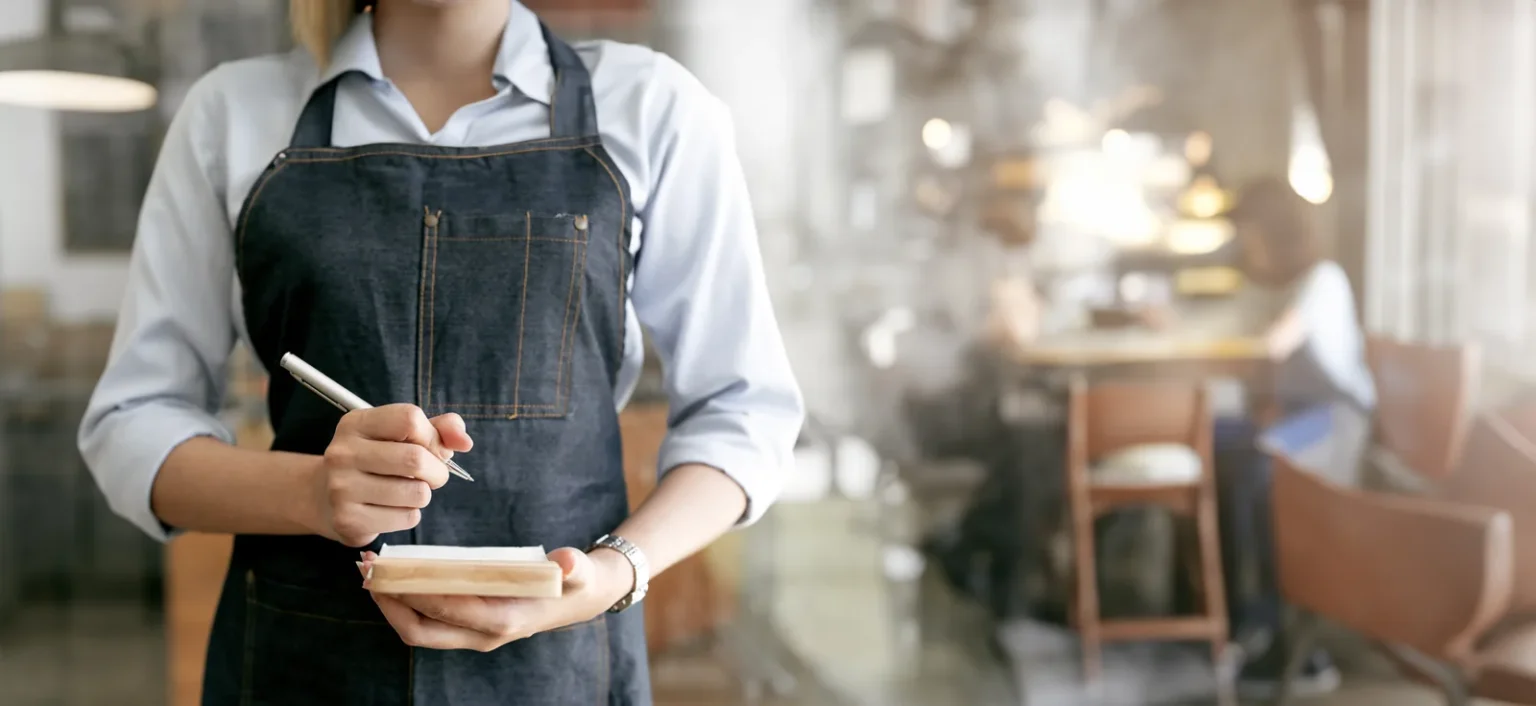
When service quality changes depending on who is on shift, the instinct is to fix the staff. The real fix is usually the system. A soft skills training courses programme improves individual performance, but without documented operating standards behind it, results depend on the individual rather than the system. Instead, a restaurant SOP consultant builds the system that produces consistent results.
Restaurant SOP. A written, role-specific procedure that sets out exactly how one operational task (a kitchen opening, a table setup, a hygiene check) is carried out, and in what order, so that any trained team member produces the same result. This article focuses on what the consultant actually builds and when you need one.
Key Takeaways
– Service inconsistency is a systems problem rather than a staffing problem, so a restaurant SOP checklist documents the standard while a consultant makes sure that standard is executable and adopted on every shift.
– A complete SOP set covers five areas: kitchen prep, service sequences, hygiene and FSSAI compliance, opening and closing routines, and complaint handling.
– Generic templates fail because they describe the average restaurant, whereas a consultant maps your real processes first — work that runs four to eight weeks end to end in Adevo’s engagements.
– Multi-outlet operators, franchise applicants and high-turnover kitchens justify a consultant, while a single stable outlet under 15 staff can usually start from a facilitated template.
What Does Service Inconsistency Actually Cost a Restaurant?
Inconsistency costs repeat custom and referrals, which makes it a financial problem rather than a service problem. When a guest receives a different experience on Tuesday than on Friday, they do not attribute it to “good shift, bad shift.” They form a generalised view of the restaurant’s quality. That view determines whether they return and whether they recommend you.
For multi-outlet Indian chains, the cost compounds. Brand reputation is set by the weakest location, because a customer who has a poor experience at one outlet assigns that perception to all of them.
The revenue at stake is substantial. As of 2026, India’s restaurant industry contributes over INR 5.69 lakh crore to the economy, projected to reach INR 7,76,511 crore by FY28 at an 8.1% CAGR, according to NRAI’s industry update. That growth is drawing restaurant brands increasingly toward Tier II and Tier III cities, where lower commercial rentals offer stronger growth potential.
That expansion pattern is exactly where documented procedure matters most. A brand entering a Tier II market is usually hiring staff with no prior experience of its standards. As a result, the chains that scale well are the ones that solved consistency early, through written systems rather than through managers who carry the standard in their heads.
The measure of a good restaurant SOP checklist is whether the newest staff member on their first week can produce the same output as your most experienced team lead.
What Does a Restaurant SOP Consultant Actually Build?
This kind of specialist builds five interlocking sets of procedures rather than a single checklist: kitchen, service, hygiene, opening and closing, and complaint handling. Together they cover every area where service quality or compliance consistency is required.
Kitchen procedures. These are the core of any restaurant operation. A kitchen SOP covers prep sequences and timing, portioning and recipe standards, FIFO and stock rotation, FSSAI food hygiene compliance checkpoints, allergen handling, equipment cleaning schedules, and opening and closing procedures. The restaurant SOP checklist for kitchen operations is typically the most detailed and highest-stakes document in the set.
Service and floor procedures. Table setup standards, service sequence (greeting, order-taking, upsell prompts, payment handling, farewell), complaint escalation pathways, and shift handover protocols. For full-service restaurants, this is where inconsistency most directly affects the guest experience.
Hygiene and safety compliance. Indian multi-outlet operators name documentation as the control that holds standards steady across sites; one founder listed “standardized SOPs with clear processes that keep quality uniform across every outlet” first among their operating essentials. A consultant translates licensing, hygiene and food-handling requirements into daily artefacts a shift can run: cleaning schedules, sanitisation logs, personal hygiene standards, and food-contact surface protocols written as executable steps rather than regulatory language.
Opening and closing procedures. These are the most frequently ignored documents in most Indian restaurants, and the ones that cost the most when missing. An opening checklist prevents food safety failures from missed prep steps. A closing checklist prevents inventory shrinkage and equipment damage. A restaurant SOP consultant documents both as role-by-role, step-by-step procedures that can be verified by a supervisor in two minutes.
Complaint and escalation handling. What the server may resolve on the spot, what goes to the duty manager, and what must be logged and reviewed the next morning. Because complaints arrive at the busiest moments, this SOP is written as a short decision path rather than a policy statement.
How Does a Consultant’s Output Differ from a Generic Template?
A template assumes your operation looks like the average restaurant, while a restaurant SOP consultant maps your actual operation before writing a single procedure. The difference shows up in four places: source material, format, compliance detail, and rollout.
| Dimension | Generic SOP template | Consultant-built SOP system |
|---|---|---|
| Starting point | The average restaurant | Your processes, observed on live shifts |
| Kitchen detail | Standard prep sequences | Your menu, layout and equipment |
| Compliance | Generic hygiene clauses | FSSAI checkpoints mapped to your daily logs |
| Format | PDF written for management review | Phone-accessible checklists for shift use |
| Rollout | Handover of documents | Train-the-trainer, supervisor briefings, review cycle |
| Best fit | Single outlet, stable team | Multi-outlet, franchise prep, high turnover |
That mapping reveals what gets assumed rather than written. Every team has informal adaptations: unofficial prep sequences the head chef developed, shortcuts that work in your layout but would not work in a generic kitchen, compliance steps that have been absorbed into habit rather than documented. A template will not capture any of this. A restaurant SOP consultant’s process audit will.
The second difference is format. Templates are often written in compliance language, formatted for management review rather than operational use. A restaurant SOP consultant writes for the person who will use the document under pressure: a kitchen hand at 6 a.m. working from a phone-accessible checklist, not a manager reviewing a PDF.
The third difference is adoption. Templates are handed over. Consultants build in rollout: train-the-trainer sessions, supervisor briefing guides, and a review cycle that catches drift before it becomes habitual. Adevo’s leadership and management skills training works alongside this rollout process. Supervisors who know how to coach and hold standards are the ones who make SOP adoption stick across shifts.
What Are the Stages of an SOP Consulting Engagement?
A full engagement runs in five stages, from shift observation through to a scheduled review cycle. In Adevo’s engagements, the sequence matters more than the speed: skipping observation is what produces documents nobody uses.
- Observation. The restaurant SOP consultant works the floor and the kitchen across different shifts and days, recording how tasks are actually performed rather than how the manual says they should be.
- Gap mapping. Observed practice is compared against food safety requirements, brand standards and the operator’s own expectations, and every gap is logged with an owner.
- Drafting. Procedures are written role by role, in operational language, in the format the user will hold at 6 a.m., usually a short phone-accessible checklist.
- Validation on shift. Drafts are tested by the people who will use them, not by management, and rewritten wherever a step proves ambiguous under pressure.
- Rollout and review. Supervisors are briefed and trained to coach the standard, and a review date is fixed so drift is caught before it becomes habit.
In Adevo’s SOP engagements with independent Indian hotels and restaurants, the recurring failure point is not the writing but stage five. Documents get produced, no supervisor owns the review cycle, and within weeks the team drifts back to shift-by-shift habit.
When Do You Need a Consultant Rather Than a Template?
A restaurant SOP consultant becomes the right choice the moment inconsistency shows up across more than one team, one outlet or one shift pattern. A template, by contrast, is a reasonable starting point for a small operation that has never documented anything. Consider a consultant when:
- You operate more than one outlet and service quality varies between locations
- You are preparing for a franchise arrangement and need documented standards for replication
- Staff turnover is high and new team members take more than two weeks to reach acceptable performance
- A recent audit (health inspection, franchise compliance review, or internal quality check) identified SOP gaps
- Previous attempts to write procedures in-house stalled or produced documents your team does not use
If you are deciding whether to hire a specialist or use a template instead, Adevo’s hotel and restaurant SOP writing services guide covers that decision.
Competency standards alone do not close the gap. India’s Tourism & Hospitality Skill Council’s Qualification Pack framework defines role-level competency standards for restaurant and hotel staff, describing what a steward or commis chef should be able to do. However, those standards only deliver consistent output when they are backed by operational SOPs a supervisor can enforce shift by shift.
As a rule of thumb Adevo applies in scoping calls, a standalone restaurant with fewer than 15 staff and a stable team can get adequate results from a well-chosen template adapted in a facilitated session. For anything more complex, a consultant-led engagement is the safer starting point.
Is a Restaurant SOP Consultant Worth the Investment?
It is worth the investment once the cost of inconsistency exceeds the cost of documenting the system, which for most multi-outlet Indian operators happens well before the third location opens. A restaurant SOP checklist is the output, not the solution. The solution is a set of documented, validated, operationally formatted procedures that the team actually uses on every shift. That is what this kind of specialist builds, and it is why generic templates, which solve the documentation problem without solving the adoption problem, fall short for most growing hospitality operations.
If you have tried templates and found that service consistency did not improve, the documentation is not the issue. The process behind the documentation is.
Book a free consultation with Adevo to discuss SOP development for your operation.
Frequently Asked Questions: Restaurant SOP Consultant
Q: What does a restaurant SOP include and how is it formatted?
A: A restaurant SOP is a step-by-step procedure document for a specific operational task: kitchen opening, table setup, food safety checks, or closing procedures. The checklist format works well for daily compliance tasks (FSSAI hygiene checks, opening readiness), while narrative-format SOPs work better for service sequences and complaint handling. A complete set covers every department where consistency is required.
Q: How long does this kind of engagement take?
A: For a single restaurant covering all departments, a professional engagement typically takes four to eight weeks: one to two weeks for process observation, two to four weeks for drafting and internal review, and one week for validation and rollout preparation.
Q: Can documented SOPs help reduce staff turnover?
A: Indirectly, yes. Operations with documented standards onboard new staff faster and reduce the frustration caused by unclear expectations. Staff who know what is expected and how to meet it perform better and stay longer. The SOP system does not reduce turnover by itself, but a documented, consistent environment is a material factor in retention.
Q: Is a restaurant SOP consultant necessary for a single-outlet restaurant?
A: Not always. A single-outlet restaurant with a stable, experienced team and no immediate plans to scale can usually get adequate results from a well-structured template combined with a facilitated session to customise it. A consultant is most cost-effective when you are managing multiple locations, preparing to franchise, or dealing with high turnover that a generic template has already failed to solve.