
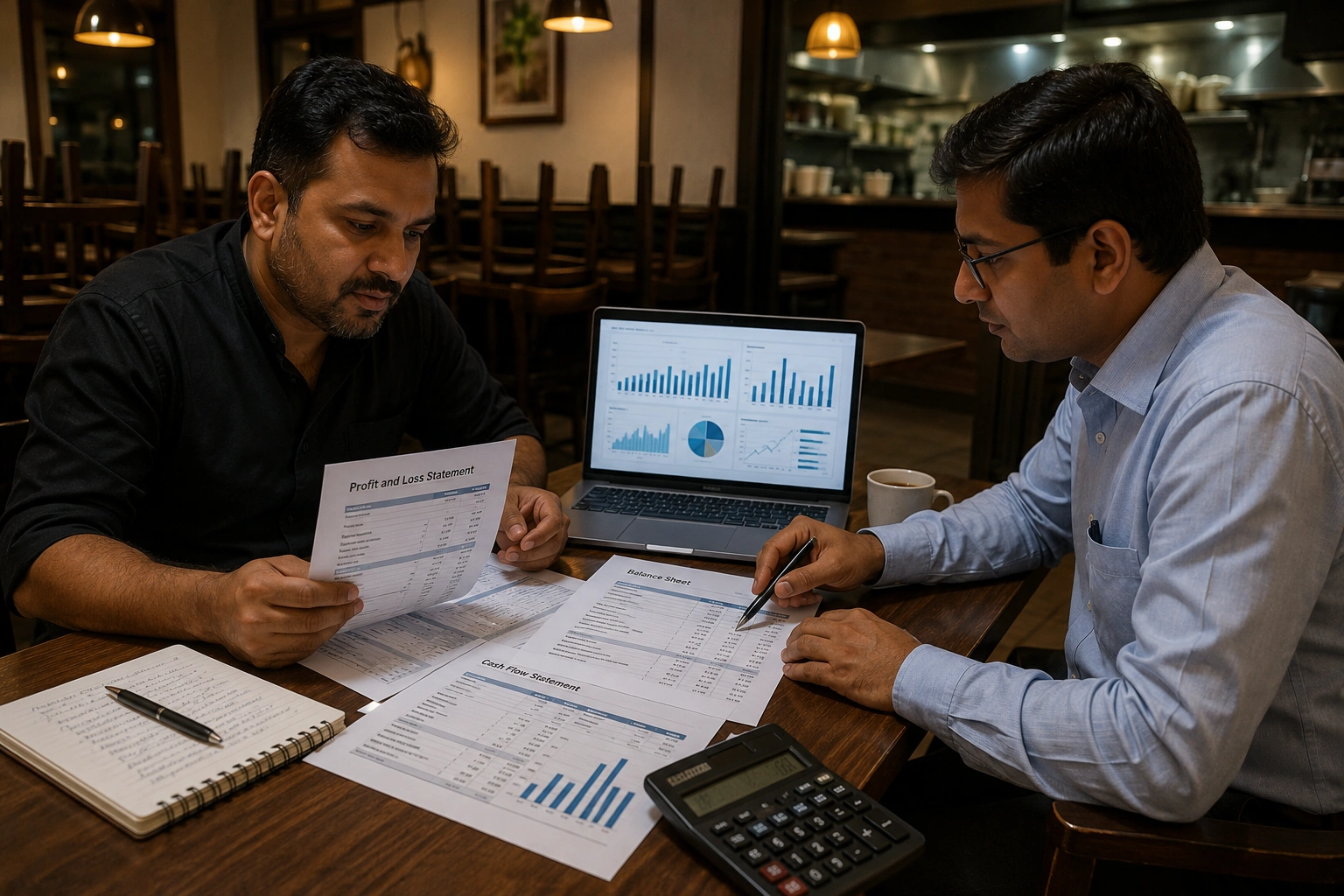
Most Indian food business owners can tell you yesterday’s revenue from memory. Few can tell you their actual profit margin without pulling the books, which means the number that decides whether the business survives is usually the one nobody’s watching closely. This guide covers what profit margin actually means for a food business, the food cost calculation behind it, and — the part every listicle skips — soft skills training courses as the operational fix that protects margin day to day.
Key Takeaways
– Gross margin measures revenue minus direct food/labor cost; net margin subtracts every other operating expense too.
– Food cost is typically the single largest controllable expense line — see Adevo’s food cost calculation guide for exact format benchmarks.
– Close to 60% of Tier-II/III restaurant operators report kitchen and service staff shortages, a direct threat to margin discipline.
– Two restaurants with an identical menu can post very different margins — the gap is almost always staff execution, not pricing.
What Is a Good Profit Margin in a Food Business?
A “good” profit margin depends entirely on format, but the honest answer for most Indian food businesses is: thinner than owners expect, and thinner than global benchmarks suggest. What actually protects a margin isn’t the number itself — it’s whether costs are tracked and controlled closely enough to hit whatever target the format allows.
Gross Margin vs. Net Margin — What’s the Difference?
Gross margin is revenue minus direct cost of goods sold (food and beverage cost) — it tells you how efficiently you’re using ingredients. Net margin subtracts every other cost too: labor, rent, utilities, marketing, and delivery aggregator commissions. A restaurant can post a healthy gross margin and still run at a net loss if fixed costs are too high for its revenue base.
Profit Margin Benchmarks by Restaurant Format in India
Format drives the achievable margin more than almost any other factor — a QSR’s standardized, high-volume model behaves very differently from a fine-dining kitchen’s premium, lower-turnover model. Adevo’s food cost calculation guide breaks down the exact food cost benchmark range by format, which is the biggest single lever on where net margin ends up.
How Do You Calculate Food Cost?
The Food Cost Percentage Formula
Food Cost % = (Beginning Inventory + Purchases − Ending Inventory) ÷ Food Sales × 100
Worked Example: Food Cost Calculation for an Indian Restaurant
A standalone casual-dining restaurant, tracked over one month:
| Line Item | Amount (₹) |
|---|---|
| Beginning Inventory | 3,10,000 |
| Purchases (month) | 8,40,000 |
| Ending Inventory | 2,95,000 |
| Food Sales (month) | 26,50,000 |
COGS = 3,10,000 + 8,40,000 − 2,95,000 = ₹8,55,000
Food Cost % = 8,55,000 ÷ 26,50,000 × 100 = 32.3%
What’s Actually Eating Into Your Food Business Profit Margin?
Food Cost as a Share of Revenue
Food cost is typically the single largest controllable line, and the one that moves fastest week to week based on purchasing and portioning discipline.
Delivery Aggregator Commissions
Aggregator commissions take a direct cut of every online order before the restaurant sees a rupee, which means a dish priced profitably for dine-in can quietly lose money on a delivery platform unless pricing accounts for the commission separately.
Rent and Labor Cost Thresholds
Rent and labor are largely fixed in the short term, which means when food cost or aggregator commissions rise, there’s little room left to absorb the hit without raising prices or cutting into profit directly.
How Can You Improve Profit Margin in a Food Business?
Menu Engineering and Pricing
Price against actual plate cost, not against what competitors charge — a popular dish priced below its true cost quietly drags margin down even as sales volume looks healthy.
Portion Control and Waste Reduction
Standardized recipe cards and trained staff to follow them consistently are what actually hold a food cost number in place, week after week, not a one-time policy memo.
Supplier Negotiation and Bulk Buying
Reviewing supplier pricing on a regular cycle, rather than only when costs spike, catches savings before they become a crisis-driven renegotiation.
Using POS Data to Track Margin in Real Time
A POS system that reports food cost by dish, not just total revenue, turns margin management from a monthly guessing game into a weekly decision tool.
Why Do Two Restaurants With the Same Menu Have Different Margins?
The formula and the menu can be identical; the margin outcome rarely is, because execution is where margin is actually won or lost. Close to 60% of Tier-II and Tier-III restaurant operators report shortages in both kitchen and service staff, driven by migration to metros and limited local training infrastructure, according to a Grant Thornton Bharat and NRAI report. That staffing gap is exactly why two restaurants with the same menu post different margins: one has trained staff executing portioning, service, and upselling consistently, and the other doesn’t. Bakery & Confectionery training closes that gap directly for bakery and confectionery businesses specifically, the same way kitchen operations training does for full-service restaurants.
FAQ
Q: What is a good profit margin for a food business in India?
A: It depends heavily on format — the number that matters most is whether your actual margin is being tracked and defended month to month, not a single universal benchmark.
Q: How do you calculate food cost percentage?
A: Food Cost % = (Beginning Inventory + Purchases − Ending Inventory) ÷ Food Sales × 100, tracked with a physical inventory count, ideally weekly.
Q: Why is food cost so high in Indian restaurants?
A: Usually portion drift, spoilage, and untrained receiving staff — operational leaks that don’t show up in the formula until an inventory count exposes them.
Q: Do delivery apps reduce restaurant profit margin?
A: Yes — aggregator commissions take a direct cut of online order revenue, so dishes need separate pricing logic for delivery versus dine-in to protect margin.
Q: What is the difference between gross and net profit margin?
A: Gross margin is revenue minus direct food and beverage cost; net margin subtracts every other operating expense too, including labor, rent, and commissions.
Conclusion
Know your actual number, calculate food cost regularly, and fix the people and process behind it before reaching for a price increase. That order matters — most margin problems are execution problems wearing a pricing disguise.
Explore Adevo’s F&B and Kitchen Operations training to build the staff execution that protects your margin.