
Introduction
Three days. That is how long the programme ran. Your senior trainer flew in, your supervisors sat through every session, and your F&B team completed a structured induction covering guest handling, service standards, and order accuracy. On the final afternoon, your GM walks in and asks the one question nobody has an answer for: “How do we know if this actually worked?”
The room goes quiet. Because nobody measured anything before it started.
This is the most common gap in Indian hospitality L&D. Training happens. Sessions are attended. The daily grind resumes. Within a week, nobody can say with confidence whether attrition has improved, whether service errors have reduced, or whether the investment was worth making. And when the next budget cycle arrives, the training line item is the first one questioned.
The problem is not that training fails. The problem is that most operators have no measurement infrastructure in place before training begins. Without a baseline, there is nothing to compare against. Without KPIs, the GM’s question has no answer. This guide gives you a practical framework to fix that. Whether you have already invested in online skill development courses or are planning your first structured programme, measurement is what turns training spend into a defensible investment.
Why Most Indian Hotels Cannot Measure Their Training ROI
The gap is not in training quality. It is in measurement infrastructure. Three patterns explain why ROI tracking consistently fails in Indian hospitality operations:
No baseline metrics collected before training begins. Indian hospitality sees 40-60% annual attrition per industry reports. If you do not know your 90-day attrition rate before the onboarding programme, you cannot know whether it improved after. If you have not captured your upsell conversion rate before the service training, there is nothing to compare against post-programme. Measurement must start before the training starts.
Guest feedback and operational data exist but are not connected to training interventions. Most properties track TripAdvisor scores, exit interview data, and revenue per cover in separate systems. Nobody has built the link between a guest satisfaction improvement and the training session that preceded it. The data is there; the connection is not.
Training is treated as a one-time event rather than an ongoing investment. A three-day induction produces no measurable long-term return if it is never followed up with on-floor observation, refresher modules, or skills assessment at 30 and 90 days. Without continuity, even good training dissolves into routine within a month.
For context on the financial case that makes measurement essential, Adevo’s article on the cost of poor training in hospitality India covers what the absence of structured L&D actually costs Indian operators — the companion piece to what this guide covers.
What “Training ROI” Actually Means in Hospitality
Return on investment for training is not a single number. It is a set of outcomes tracked across different time horizons, connected to operational metrics your team already generates.
- Reaction: Did staff engage with the training? Did supervisors observe attentiveness and participation during sessions?
- Learning: Did staff demonstrate the skills covered? Module completion scores, practical sign-offs, and post-training assessments measure this.
- Behaviour: Are trained behaviours showing up on the floor? Guest feedback, peer observation, and supervisor check-ins track this.
- Results: What changed operationally? This is the ROI level — attrition rates, upsell revenue, guest satisfaction scores, and error frequency.
Most Indian operators measure Reaction (“the session went well”) and occasionally Learning (“they passed the quiz”). Almost none reach Results. The framework below gives you a practical path to the level that justifies the budget.
Short-term ROI (0-90 days): Speed to competency for new hires, reduction in early-stage errors, reduction in 90-day attrition.
Long-term ROI (6-12 months): Staff retention rates, internal promotion rates, guest satisfaction score trends, upsell revenue growth.
The critical discipline: measure before and after, not just after.
The 5 KPIs Every Indian Hotel Should Track for Training ROI
KPI 1: Time to Competency (New Hire)
What it measures: How many days before a new hire performs their core tasks at the expected standard without prompting.
How to track it: A supervisor sign-off checklist at Day 7, Day 30, and Day 60 of employment. For each core task in the role, the supervisor marks whether the new hire can perform it independently. Record the date each task is signed off.
Why it matters: Structured onboarding training reduces time to competency. If your average currently sits at 45 days but drops to 28 days after implementing a proper induction programme, the difference is measurable productivity gain multiplied by every new hire you onboard that year.
KPI 2: 90-Day Attrition Rate
What it measures: The percentage of new hires who leave within their first 90 days of employment.
How to track it: Count new joiners per month. Count how many have left by Day 90. Divide to express as a percentage. Track this monthly and look for a directional trend over six to twelve months.
Why it matters: Poor onboarding training is one of the primary drivers of early attrition in Indian hospitality. The 90-day window is where most first-year exits happen. If structured training reduces early exits by even two people per quarter, the cost saving per avoided replacement — recruitment fees, downtime, retraining effort — is calculable and significant.
KPI 3: Guest Satisfaction Score (Department Level)
What it measures: Your TripAdvisor, Google, or internal CSAT scores, broken down by department rather than tracked as a single property number.
How to track it: Record your baseline scores for F&B and housekeeping departments before running training. Track the same scores for 60 days following the programme. Look for directional movement rather than expecting immediate dramatic shifts.
The F&B lens: For restaurant operations specifically, track order accuracy complaints and speed-of-service ratings. These are the metrics most directly linked to service training outcomes and easiest to connect to a specific intervention.
KPI 4: Upsell and Cross-Sell Conversion
What it measures: The percentage of guest interactions that result in an add-on order, dessert recommendation, room upgrade, or beverage pairing suggestion.
How to track it: Most Indian restaurant POS systems (Petpooja, Gofrugal, Restroworks) can generate revenue-per-cover reports. Establish a pre-training baseline, then run the same report 30 and 60 days after your upselling and menu knowledge training, from mains and beverages through to Bakery & Confectionery add-ons like desserts and pastries, where upsell training produces measurable revenue uplift.
A restaurant owner in Bangalore ran exactly this exercise after a focused two-day upselling workshop with their floor team. Average spend per cover moved measurably within 45 days — not through price increases, but through a team that now understood the menu well enough to recommend with confidence. The training cost was a fraction of the revenue uplift it generated over the following quarter.
KPI 5: Training Completion Rate (LMS)
What it measures: The percentage of assigned training modules completed within the target timeline.
Why it matters: Completion rate does not measure learning directly — but non-completion is a definite indicator of a training gap. If 40% of your team has not completed the guest complaint handling module, you have a direct explanation for your complaint resolution score.
The LMS advantage: If your training runs through a digital platform, three of these five KPIs become automatically trackable without additional effort. The data exists — it just needs to be connected to operational outcomes.
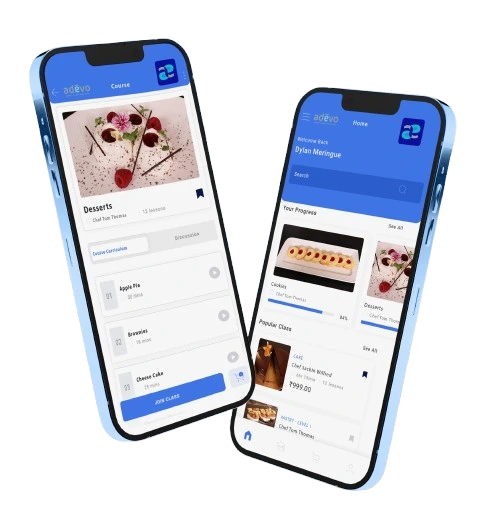
Looking for a training platform that makes KPI tracking automatic? Adevo’s multilingual LMS tracks completion rates, assessment scores, and training timelines in the background — giving you the data for KPIs 1, 2, and 5 as a standard output of your training programme.
How to Calculate Training ROI: A Simple Formula for Operators
The core formula is straightforward:
Training ROI (%) = [(Training Benefit — Training Cost) / Training Cost] x 100
Training Benefit includes: reduced recruitment costs from lower attrition, measurable revenue increase from upsell training improvements, cost savings from reduced error incidents, and time savings from faster time to competency.
Training Cost includes: trainer time and fees, content creation or LMS subscription, staff time away from the floor during sessions, and any printed or digital materials.
Illustrative example (indicative framework only — not published data):
A 50-cover restaurant spends ₹45,000 on a structured two-day induction programme for eight new hires. Over the following 90 days, two fewer hires leave early compared to the previous cohort. Each avoided replacement saves approximately ₹25,000-30,000 in recruitment, downtime, and retraining costs. Separately, average spend per cover increases after an upselling module — generating additional revenue over the period.
The exact figures will differ for your property. The framework for calculating them is the same. The key is setting a baseline first, then measuring the same metrics at 30, 60, and 90 days after training.
Building a Training Scorecard for Your Property
A one-page monthly scorecard with five rows is all you need. Track these five KPIs against your baseline.
KPI | Baseline | Month 1 | Month 3 | Month 6 | Target |
Time to competency (days) | |||||
90-day attrition rate (%) | |||||
Guest satisfaction score | |||||
Upsell conversion (%) | |||||
Training completion rate (%) |
Who reviews it: GM, HR head, and F&B manager — together. Monthly for the first six months after a new programme launches, quarterly thereafter.
The critical discipline: Your baseline must be set before training starts. A data point collected after training has already happened cannot be used as a before figure.
Frequently Asked Questions About Training ROI in Hospitality
How Do You Measure the ROI of a Hotel Training Programme?
Track five KPIs before and after training: time to competency for new hires, 90-day attrition rate, guest satisfaction scores by department, upsell conversion rates, and training completion rates. Use the ROI formula: [(Training Benefit – Training Cost) / Training Cost] x 100. Training benefits include reduced attrition costs, revenue from upselling improvements, and time savings from faster onboarding.
What Are the Most Important Training KPIs for Indian Hospitality Operations?
The 90-day attrition rate is the single highest-impact KPI for most Indian hospitality operations, because early attrition is where training gaps create the most directly calculable cost. Guest satisfaction scores at department level and upsell conversion rates are the most useful ongoing indicators of training effectiveness once staff are established in their roles.
What Is the Kirkpatrick Model and How Does It Apply to Indian Hospitality?
The Kirkpatrick Model evaluates training across four levels: Reaction (did staff engage?), Learning (did they acquire the skill?), Behaviour (are they applying it on the floor?), and Results (what changed operationally?). Most Indian operators measure only Reaction. Operators who reach the Results level are the ones who can justify their L&D budgets, demonstrate real operational improvement, and build the business case for continued training investment.
How Do You Justify a Training Budget to a Hotel Owner or GM?
Present a before-and-after comparison using two KPIs: 90-day attrition rate and one revenue metric — guest satisfaction score or upsell conversion. Quantify the cost of an average replacement hire. Show that if training reduces attrition by even two exits per quarter, the saving exceeds the training cost. Owners and GMs respond to rupee figures, not percentage improvements in abstract metrics.
Conclusion: If You Cannot Measure It, You Cannot Improve It
Every rupee spent on structured training is potentially recoverable in lower attrition costs, better guest scores, and higher revenue per cover. But only if you measure it.
The operators who continue investing in L&D year after year are not doing so on faith. They are doing so because they have a scorecard that shows them the return. That scorecard does not need to be complex. It needs five KPIs, a baseline set before training begins, and a monthly review with the right people in the room.
If you are ready to build a measurable L&D programme with tracking infrastructure built in, explore Adevo’s Leadership & Management Training — or contact the team to discuss an L&D consultation that maps your training gaps against your operational data.