
Introduction
A server at a 4-star hotel in Mumbai assured a guest their dish was “completely nut-free.” It wasn’t. The guest spent the night in a hospital. The restaurant faced a lawsuit, paid ₹5 lakh in damages, and lost reputation for months.
This was entirely preventable. Food allergen training for restaurant staff isn’t luxury—it’s essential risk management.
In India, FSSAI mandates allergen labeling and staff awareness. Yet most independent restaurants and even smaller hotel chains skip structured training. The result: guests get hospitalized, restaurants face legal liability, and staff carry the guilt.
This guide gives you everything needed to implement comprehensive allergen training for your F&B team. We’ll cover FSSAI requirements, practical training methods, staff protocols, and how to ensure compliance across your restaurant.
FSSAI Allergen Labeling Regulations for Restaurants
FSSAI regulations are clear: restaurants must disclose allergens on menus and train staff to communicate allergen information accurately.
The 8 major allergens that require declaration:
- Peanuts – Found in many sauces, desserts, fried snacks
- Tree nuts (almonds, cashews, walnuts) – Common in Indian sweets, gravies
- Milk/Dairy – Butter, cream, paneer, yogurt bases
- Eggs – Baked goods, pasta, some sauces
- Seafood – Fish, shrimp, crab, mollusks
- Soy – Soy sauce, tofu, some processed foods
- Wheat/Gluten – Breads, pastas, thickening agents
- Sesame – Sesame seeds, tahini, certain Indian sweets
FSSAI Menu Labeling Requirements:
- All menu items must clearly indicate which allergens they contain
- Use a symbol system (asterisk, color-coding, or icon)
- Provide a legend explaining symbols
- Update menus when recipes change
- Maintain allergen documentation in the kitchen
Real consequence: A Delhi restaurant didn’t label paneer dishes as containing dairy. A guest with severe lactose intolerance ordered thinking it was dairy-free. Hospital visit. Lawsuit. ₹3 lakh settlement. The restaurant’s menu update would have cost ₹5,000.
Understanding Cross-Contamination & Prevention
Allergen training must cover both direct contact and cross-contamination.
Direct contamination: A dairy-free dish physically contains dairy (paneer mixed in, milk-based sauce, butter on the side).
Cross-contamination: A dairy-free dish is prepared in contact with dairy, contaminating the final product. A server uses the same spoon for paneer and non-dairy dishes. A cutting board used for nuts isn’t washed before preparing a nut-free salad.
High-risk areas in kitchens:
- Prep surfaces: Where multiple dishes are prepared side-by-side
- Utensils/cutting boards: Reused without washing between dishes
- Fryers: Oil used for breaded shrimp, then for vegetable pakora (seafood allergen transfers)
- Shared spoons & tongs: One spoon dips into nut sauce, then into another dish
- Hand contact: Cook handles peanuts, then touches other food without washing hands
Prevention protocol:
Designate allergen-safe zones. Use separate cutting boards, utensils, and prep areas for common allergens. Wash hands thoroughly between tasks. Never reuse oil from nut-fried dishes.
A chef at a Mumbai restaurant implemented allergen-safe zones: one prep area only for nut-free items, separate utensils color-coded, hand-washing between stations. Result: zero cross-contamination incidents in 18 months.
Training Restaurant Staff: Role-Specific Approach
Not all staff need identical training. Customize by role.
F&B Service Staff (Servers, Bussers, Bartenders):
Core training (4 hours):
- Module 1 (1 hour): Allergen awareness
- Know the 8 major allergens
- Understand guest allergies are serious (not preferences)
- Learn common dishes containing each allergen
- Module 2 (1.5 hours): Guest communication
- How to ask: “Do you have any food allergies?”
- What NOT to do: “This is probably nut-free” (never guess)
- Escalation: “Let me ask the chef” if uncertain
- Documentation: Write allergen notes on order ticket clearly
- Module 3 (1 hour): Service protocols
- Plate presentation (keep allergen-free food separate)
- Avoid cross-contact while serving
- Emergency response (guest having allergic reaction)
- Module 4 (1 hour): Practice & role-play
- Simulate guest allergen questions
- Practice saying “I’ll verify with the kitchen”
Kitchen Staff (Chefs, Line Cooks, Prep Team):
Core training (6 hours):
- Module 1 (1 hour): Deep allergen knowledge
- Identify allergens in all ingredients (read labels)
- Know cross-contamination risks
- Module 2 (2 hours): Safe preparation
- Allergen-safe zone protocols
- Utensil & board washing between tasks
- Oil management (separate fryers if possible)
- Hand hygiene between allergens
- Module 3 (1.5 hours): Recipe verification
- Check ingredients list for hidden allergens
- Update checklists when suppliers change products
- Communicate recipe changes to servers
- Module 4 (1.5 hours): Practice
- Prepare dishes while avoiding cross-contamination
- Demonstrate proper utensil washing
- Role-play scenarios (rush hour allergen order)
Management (Owners, Managers, Chefs):
Compliance training (3 hours):
- FSSAI regulations & penalties
- Menu labeling requirements
- Staff training documentation
- Incident response procedures
- Supplier communication (verify allergen info)
Creating an Allergen Training Program
A complete program takes 4 weeks. Here’s the timeline:
Week 1: Preparation
- Audit current menu for allergen accuracy
- Create allergen checklist for each dish
- Develop training materials (slides, handouts, videos in English & Hindi)
- Translate key terms (paneer, dairy, sesame, etc.) in staff languages
Week 2: Staff Training
- Classroom training by role (servers, cooks, management)
- Knowledge quizzes (80% pass required)
- Practical demonstrations in kitchen
Week 3: Implementation
- Update menus with allergen labels
- Post allergen symbols at service points
- Brief all staff on new protocols
- Practice real-world scenarios
Week 4: Monitoring
- Observe staff interactions with guests asking about allergens
- Audit kitchen procedures (are utensils being washed properly?)
- Gather feedback from staff
- Make adjustments as needed
Menu Design & Labeling Best Practices
Your menu is the first defense. Design it carefully.
Option 1: Allergen Symbol System
- Use asterisks (*dairy), (peanuts), (seafood) next to dish names
- Include legend at bottom of menu
- Clear and quick for guests to understand
- Example: “Butter Chicken* (contains dairy)”
Option 2: Color-Coding
- Red highlight = peanuts, Blue highlight = dairy, Green highlight = seafood
- Color legend at top/bottom of menu
- Visual & quick
- Requires reprint if changes
Option 3: Detailed Descriptions
- List main allergens in dish description
- “Paneer Tikka Masala (paneer cheese, cream, yogurt)” on menu
- Most transparent but takes menu space
Kitchen Communication:
Use a ticket system that flags allergen orders:
- Server writes allergen info clearly on order ticket
- Chef sees it immediately
- Double-check before plating
- Plate marked or separated to prevent cross-contact
Handling Guest Allergen Inquiries
This is the critical moment. Most incidents happen due to miscommunication.
The right response:
Guest: “I’m allergic to peanuts. Is the Tandoori Chicken safe?”
Server: “That’s important. Let me ask the chef to verify all ingredients and preparation.” [Goes to kitchen, asks chef, confirms, returns.] “The Tandoori Chicken itself doesn’t contain peanuts, but it’s prepared on a surface that we also use for peanut-containing dishes. Given your allergy severity, I’d recommend the Grilled Fish instead, which is prepared in a nut-free area.””
What NOT to do:
- ❌ “Oh yeah, that’s fine” (guessing)
- ❌ “We don’t use peanuts in that dish” (uncertain)
- ❌ “It might have cross-contamination, but probably not” (vague)
- ❌ Serving without asking the chef (assuming knowledge)
The safe protocol:
- Listen without interruption
- Ask severity (“Is this a severe allergy or mild intolerance?”)
- Say: “Let me verify with our chef”
- Go to kitchen, ask the chef directly
- Return with specific answer: “Yes, safe” OR “No, contains X” OR “Cross-contamination risk”
- If uncertain, recommend a different dish
- Document the inquiry for kitchen records
Common Allergen Mistakes & Prevention
Mistake 1: Assuming knowledge of ingredients
- Kitchen doesn’t know that “spice mix” from supplier contains sesame
- Solution: Get allergen documentation from all suppliers; update ingredients lists monthly
Mistake 2: Inconsistent preparation
- Sometimes the paneer dish is made with ghee, sometimes with oil (both contain dairy, but staff thinks oil is allergen-free)
- Solution: Standardized recipes with clear allergen labels; no variations without manager approval
Mistake 3: Server doesn’t ask about allergies
- Guest doesn’t volunteer allergy; server doesn’t ask
- Guest orders without knowing about allergen
- Outcome: Allergic reaction
- Solution: Mandatory question at ordering: “Do you have any food allergies or dietary restrictions?”
Mistake 4: Reusing utensils without washing
- Spoon dips into cashew sauce, then into yogurt salad (both contaminated)
- Solution: Visible hand-washing station in kitchen; color-coded utensils by allergen
Mistake 5: Not communicating recipe changes
- Chef changes paneer supplier (new brand has different additives with allergens)
- Menu not updated
- Staff unaware
- Solution: When ingredients change, update ingredient list, retrain staff, update menu
Digital & Academy-Based Training Solutions
For India’s diverse hospitality workforce, training must be accessible.
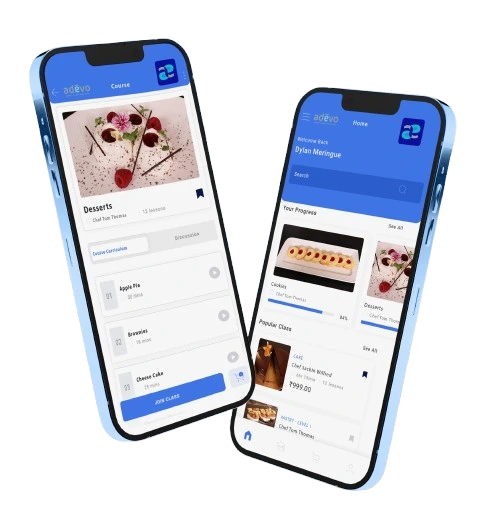
Adevo’s Multilingual LMS:
Our digital platform delivers allergen training in English, Hindi, Tamil, Telugu, and Marathi. Staff learn at their own pace, with quizzes, completion tracking, and audit trails for compliance.
- Interactive modules: Video demonstrations, real-world scenarios
- Knowledge quizzes: Ensure understanding before certification
- Mobile-accessible: Staff can learn on breaks
- Language flexibility: Each staff member learns in their preferred language
- Compliance documentation: Complete audit trail for regulators
In-Academy Training:
Hands-on, 2-3 day intensive at our Bangalore academy:
- Demonstration with real ingredients & dishes
- Practice preparing allergen-safe meals
- Role-play with service staff
- Certification upon completion
Recommended Hybrid Approach:
- Week 1-2: Digital training (multilingual) for all staff
- Week 3: On-site academy training for chefs & key supervisors
- Week 4: On-property mentorship for service staff
- Ongoing: Monthly refresher modules on digital platform
Measuring Allergen Training Success
Training is only effective if staff comply and incidents don’t happen.
Key metrics:
- Allergen incident rate: Should be zero after training
- Guest satisfaction (allergen-related): Track reviews mentioning allergies
- Training completion: % of staff certified (target: 100%)
- Knowledge retention: Quiz scores (target: 80%+ pass rate)
- Supplier audits: % of suppliers providing allergen documentation (target: 100%)
- Kitchen compliance audits: Weekly spot-checks on utensil washing, cross-contamination prevention (target: 100% compliance)
Tracking allergen incidents:
Create a simple log:
- Date, guest name, allergen involved
- What happened (incident or near-miss)
- Why it happened
- How it was resolved
- What training was needed to prevent
A restaurant in Pune tracked incidents for 6 months pre-training (8 incidents including 2 hospitalizations) vs. 6 months post-training (zero incidents). They presented this to staff as proof that training works.
Conclusion: Allergen Training Protects Everyone
Food allergen training isn’t just regulatory compliance. It’s protecting your guests’ lives and your restaurant’s future.
Here’s your action plan:
- Audit your menu: Identify all allergens in each dish
- Create allergen checklists: For kitchen and service staff
- Design labeling: Choose symbol or color system
- Train staff: Role-specific programs for servers & kitchen
- Implement protocols: Safe preparation & guest communication
- Monitor & refresh: Monthly refreshers, quarterly audits
The cost is minimal. The liability protection—knowing your staff can handle allergen questions confidently—is invaluable.
Ready to implement allergen training? Adevo’s online skill development courses include comprehensive allergen awareness modules in multilingual format. Our hospitality management courses cover F&B staff training. Explore our L&D outsourcing services for complete allergen program design.
Schedule a free consultation. We’ll assess your current allergen protocols and design a training program that ensures FSSAI compliance while protecting your guests.