
Introduction
Ravi manages a 70-room hotel in Pune. His housekeeping team works split shifts. His front desk staff rotate between morning and night. His F&B team is on their feet from lunch prep until the last dinner guest leaves. Every time he schedules a group training session, half the team cannot attend. The other half sits through it exhausted, retaining almost nothing. If this sounds like your property, you are not alone — and soft skills training courses delivered through mobile-first platforms are solving this problem for Indian hotels right now.
Mobile learning — training delivered directly to your staff’s smartphones — is built for the reality of Indian hospitality operations. Your team already carries the device. The training comes to them in 3–7 minute lessons, between room turnovers, before a shift, or during a quiet front desk period. No classroom. No scheduling conflicts. No travel costs. Just learning that fits into how your staff actually works.
This guide walks you through what mobile learning means for Indian hotels, why it works, and exactly how to implement it at your property.
What Is Mobile Learning in Hospitality?
Mobile learning — also called m-learning — delivers training content directly to employee smartphones and tablets. Instead of pulling staff off the floor for hour-long classroom sessions, you send them short, focused lessons they complete on their own schedule.
In Indian hospitality, this looks practical. A housekeeper watches a 4-minute video on bathroom deep-cleaning between rooms. A front desk agent completes a 5-minute upselling module before the evening check-in rush. An F&B server reviews allergen protocols on the bus ride to work. Each lesson teaches one skill. Each one fits into real working life.
How Mobile Learning Differs from Traditional Training
Traditional training in Indian hotels follows a familiar pattern. You gather staff in a conference room, a trainer reads from slides, and everyone returns to work having forgotten most of what they heard. Or you hand new hires a printed SOP binder and hope they read it. Neither approach works well for a workforce that is always on the move.
Mobile learning changes the model:
- Smartphone-first interface: Designed for phone screens, not desktop computers your staff never sit at
- Microlearning format: 3–7 minute lessons instead of 60–90 minute classroom sessions
- Offline capability: Staff can download modules on WiFi and complete them in areas with poor connectivity — critical for basements, kitchens, and many tier-2 city properties
- Vernacular support: Content available in Hindi, Kannada, Tamil, Telugu, and other regional languages — essential for Indian hospitality teams
- Real-time progress tracking: Managers see who has completed what, without chasing paper sign-off sheets
The shift from classroom to mobile is not about replacing human interaction. It is about making sure your staff can access the knowledge they need, when they need it, in a language they understand.
Microlearning: Why Short Lessons Work Better
Microlearning is the backbone of effective mobile training. It breaks complex skills into focused, bite-sized modules — typically 3–7 minutes each.
This approach works because of how people actually learn. A 90-minute training session overwhelms working memory. A 5-minute lesson on one specific task — say, the 8-point room inspection checklist — is easy to absorb and immediately apply.
For a housekeeping team, instead of a 3-hour “Complete Room Cleaning Training,” you build a path of short modules:
- Bathroom deep-clean technique (video demo, 4 minutes)
- Bed-making to brand standard (step-by-step, 5 minutes)
- Mini-bar restocking checklist (interactive quiz, 3 minutes)
- Guest complaint prevention tips (scenario-based, 6 minutes)
Staff complete these as they need them. Retention improves because each lesson connects directly to what they do on the floor that same day.
Why Indian Hotels Need Mobile Training Now
The Turnover Problem Is a Training Problem
Indian hospitality indeed grapples with high workforce turnover, with rates commonly cited between 25-30% annually, aligning with FHRAI’s representation of the sector. This churn stems from factors like low salaries, extended hours, and poor work-life balance, exacerbating recruitment and training burdens.
Most of this turnover happens early. New hires who feel unprepared or unsupported leave within their first few weeks. This is exactly the window where mobile learning makes the biggest impact. When a new housekeeper can access step-by-step video guides on their phone from day one — in their own language — they feel competent faster. Competent staff stay longer.
The Scale of What Is Coming
India’s tourism and hospitality sector faces a massive workforce gap, with projections for an additional 61.31 lakh workers needed by 2036–37 to meet rising demand, as per reports cited by IBEF and others. Tier-2 and tier-3 cities like Indore, Jaipur, Surat, and Ayodhya are hotspots for this expansion due to new hotel developments and tourism growth, but skilled talent remains limited.
Mobile learning is the only training approach that scales to meet this demand. You cannot build enough classrooms or hire enough trainers. But you can deliver structured, multilingual training content to every staff member’s phone, whether they work at a 200-room property in Bangalore or a 30-room hotel in Udaipur.
The Multilingual Reality
Walk into any mid-size Indian hotel kitchen and you will hear three or four languages being spoken. Your housekeeping team in Bangalore might include staff from Karnataka, Tamil Nadu, Andhra Pradesh, and Bihar. Traditional classroom training conducted in English or Hindi misses half your workforce.
Mobile platforms solve this with multilingual content libraries. A housekeeper who speaks Kannada watches the same room-cleaning module as her colleague who speaks Telugu — each in their own language, at their own pace. This is not a nice-to-have feature. For Indian hospitality operations, it is essential.
Key Benefits for Indian Hotel Operations
Faster Onboarding: Days Instead of Weeks
The traditional Indian hotel onboarding process takes two to three weeks before a new hire works independently. Mobile microlearning compresses this to three to five days. New staff complete core modules on their phones, practise on the floor with supervisor support, and reach basic competency far faster.
This matters because every day a new hire is not productive is a day your existing team carries extra load. Faster onboarding reduces strain on your current staff and gets new hires contributing to guest service sooner.
Training That Fits 24/7 Operations
Hotels never close. Your staff work morning shifts, afternoon shifts, night shifts, and split shifts. Scheduling group training that works for everyone is nearly impossible.
Mobile learning removes the scheduling problem entirely. A front desk agent starting the night shift completes a 5-minute module before clocking in. A housekeeping supervisor does a quick leadership lesson during a mid-morning break. Off-season staff refresh their skills before peak season starts. The training adapts to your operation — not the other way around.
Consistent Standards Across Properties
If you manage multiple properties, consistency is your biggest training challenge. The standard of service at your Goa property should match your Bangalore property. But when training depends on individual trainers and local interpretation of SOPs, standards drift.
Mobile learning delivers identical content to every property. Your online skill development courses reach staff at every location simultaneously. When you update a procedure, every team member gets the updated module — no need to retrain property by property.
Better Guest Experiences
Trained staff deliver better service. This is not abstract — it shows up in your Google reviews, your OTA ratings, and your repeat booking rates. When your front desk team has completed upselling modules, they convert more room upgrades. When your F&B staff know allergen protocols, you avoid incidents that damage reputation. When housekeeping follows consistent standards, guest satisfaction rises.
Mobile learning creates a direct line between training investment and guest experience outcomes.
Designing Mobile Training Modules for Your Hotel
Start with One Skill Per Module
The most common mistake is trying to cover too much in a single lesson. Each module should teach one skill, one procedure, or one concept. “How to Handle a Guest Complaint” is a good module. “Everything About Guest Relations” is not — break it into five separate lessons.
Use Video First
For hotel operations, video beats text. A 3-minute video showing proper bed-making technique communicates more than a page of written instructions — especially for staff who may not be comfortable reading in English. Pair short videos with quick text summaries and interactive quizzes to reinforce learning.
Design for Indian Connectivity Realities
Many Indian hotels have unreliable WiFi in work areas — kitchens, basements, laundry rooms, certain floors. Your training platform must support offline learning. Staff download modules when they have connectivity, then complete them anywhere. This is non-negotiable for Indian hospitality training.
If you are transitioning your hotel processes to digital formats, our guide on How to Develop Hotel SOPs covers connectivity and adoption challenges in detail.
Build Role-Specific Learning Paths
Do not force all staff through the same training. A front desk agent does not need kitchen safety modules. A housekeeper does not need PMS training. Build distinct paths:
- Housekeeping: Room cleaning standards, chemical safety, guest interaction, speed techniques
- Front desk: Check-in procedures, upselling, complaint resolution, PMS navigation
- F&B service: Table standards, menu knowledge, allergen protocols, FSSAI compliance
- Kitchen: Food safety, hygiene, equipment handling, waste management
- Management: Team leadership, performance coaching, service recovery, budgeting
Role-specific paths respect your staff’s time. They complete only what is relevant to their job, which increases engagement and completion rates.
Add Gamification to Drive Engagement
Points, badges, leaderboards, and streaks turn training from a chore into a challenge. When housekeeping teams compete for the highest weekly quiz scores, engagement rises sharply. When a front desk agent earns a badge for completing the upselling path, they feel recognised.
Gamification works particularly well in Indian hotel teams because of the natural competitive energy on the floor. Use it to reward consistency, not just speed — you want staff who complete modules thoroughly, not just quickly.
How to Implement Mobile Learning at Your Property
Step 1: Identify Your Biggest Training Gaps
Before choosing a platform, answer these questions:
- Which roles have the highest turnover at your property?
- Where do guest complaints most often originate?
- What training currently takes too long or gets skipped?
- Which departments struggle most with consistency?
- What languages does your team need content in?
Survey your department heads. Their answers will tell you what content to build first.
Step 2: Choose a Platform That Fits Indian Hospitality
Evaluate mobile learning platforms on criteria that matter for Indian operations:
- Multilingual content: Does it support Hindi, Kannada, Tamil, and other languages your team speaks?
- Offline capability: Can staff complete modules without WiFi?
- Hospitality-specific content: Does it include ready-made modules for housekeeping, F&B, and front desk — or do you build everything from scratch?
- Mobile experience: Test it on the phones your staff actually use, not on the latest flagship device
- Manager dashboard: Can supervisors track completion and identify gaps without complex reporting?
- Cost: Does pricing work for Indian hospitality budgets, including mid-size and independent properties?
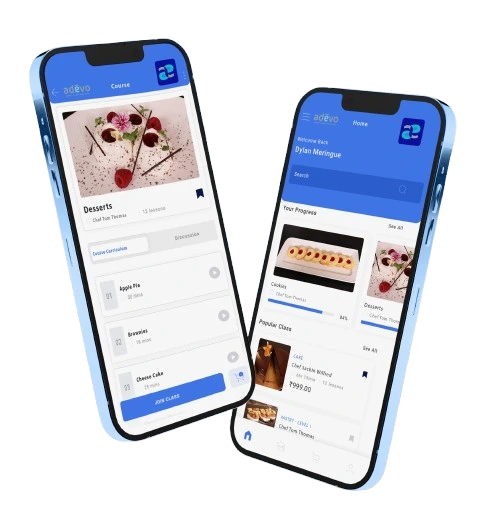
Adevo’s multilingual LMS is built specifically for Indian hospitality teams. It combines a curated content library with the ability to create custom modules — and it works on the devices your staff already carry.
Step 3: Start Small, Then Scale
Do not try to digitise all your training at once. Start with your highest-impact area:
Launch first (Week 1–2): New hire onboarding for your highest-turnover role Add next (Month 2): Safety and compliance modules (FSSAI, fire safety, chemical handling) Expand (Month 3+): Upselling, guest service, advanced role-specific skills
Run a pilot with 15–20 staff members before rolling out to the full team. Collect their feedback on usability, content clarity, and language quality. Real staff feedback matters more than feature comparison charts.
Step 4: Make It Part of the Daily Routine
The biggest challenge with mobile learning is not technology — it is adoption. Staff will use it if you make it part of their routine:
- Allocate 5–10 minutes at the start of each shift for a training module
- Have supervisors complete modules too — staff follow what managers model
- Recognise and reward consistent learners in team briefings
- Track completion through manager dashboards, not through policing
When mobile learning becomes “just what we do here,” adoption stops being a problem.
Step 5: Measure What Matters
Track the metrics that connect training to business outcomes:
- Onboarding time: How many days until new hires work independently?
- Retention rates: Are trained staff staying longer than before?
- Guest satisfaction: Have review scores improved since training rolled out?
- Completion rates: What percentage of staff finish assigned modules?
- Competency gaps: Which topics show low quiz scores and need redesign?
Review these monthly. Adjust your content based on what the data tells you. If a module has low completion, it is probably too long, not relevant enough, or not available in the right language.
Overcoming Common Challenges in Indian Hotels
Poor WiFi in Work Areas
Kitchens, basements, laundry rooms, and many guest floors in Indian hotels have unreliable connectivity. Choose a platform with genuine offline capability — not just a “works offline” claim, but tested performance on your actual property. Staff should download modules during breaks in high-connectivity areas and complete them anywhere.
Multilingual Teams
A 60-room hotel in Bangalore may employ staff speaking Kannada, Hindi, Tamil, Telugu, and Marathi. Your platform must deliver the same training content in multiple Indian languages. Video-based modules help bridge language gaps, but vernacular text and audio are equally important for comprehension.
Staff Smartphone Limitations
Not every staff member owns a high-end phone. Your training platform must work smoothly on entry-level Android devices with limited storage. Small file sizes, efficient loading, and minimal app storage requirements are essential — not optional.
Manager Buy-In
Some managers resist new training approaches because they see technology as additional work. Show them the time savings: less scheduling overhead, fewer repeat training sessions, and clear visibility into who needs support. When managers see that mobile learning reduces their training burden rather than adding to it, resistance fades.
Consistency Across Multiple Properties
For hotel groups, centralised content management ensures every property delivers the same training. Update a food safety module once, and it reaches all properties immediately. Allow property-level customisations for local procedures, but keep core standards consistent through your central platform.
Mobile Learning for Specific Roles
Front Desk
Front desk agents benefit from modules on check-in and check-out procedures, room upgrade upselling, guest complaint de-escalation, PMS system navigation, and VIP guest handling. Short scenario-based modules — “A guest says the room is not what they booked. What do you do?” — build practical confidence faster than classroom role-plays.
Housekeeping
Housekeeping training is ideal for microlearning because it is highly procedural. Room inspection checklists, cleaning workflows, chemical safety, and guest interaction protocols translate naturally into short, visual modules. Video demonstrations of proper techniques reduce training time significantly compared to verbal instruction.
F&B Service
F&B staff need training on table service standards, menu knowledge, wine and beverage basics, allergen awareness, and FSSAI compliance. Short modules on specific topics — a 4-minute allergen protocol refresher before service — are far more effective than comprehensive day-long F&B training sessions.
Management and Supervisors
Hospitality management courses delivered through mobile platforms help supervisors build leadership skills without taking them off the floor for days. Modules on team motivation, performance feedback, service recovery, and operational decision-making give managers practical tools they can apply the same day.
Conclusion: Start with One Department, Measure Results, Then Scale
Mobile learning is not a future trend for Indian hotels. It is the practical answer to workforce challenges you face today — high turnover, multilingual teams, inconsistent training, and the impossibility of scheduling classroom sessions for staff who work around the clock.
The implementation path is straightforward. Identify your biggest training gap. Choose a platform built for Indian hospitality realities — multilingual content, offline capability, and mobile-first design. Start with one department. Measure onboarding time, retention, and guest satisfaction. Let the results justify expanding to your full team.
Indian hotels that invest in structured mobile training build stronger teams, deliver better guest experiences, and spend less on constant rehiring. In a sector that will need over 61 lakh additional workers in the coming decade, the properties that train smarter will win.
Explore Adevo’s multilingual LMS and hospitality training programmes — built specifically for Indian hotel and restaurant teams. Book an L&D consultation to see how mobile learning fits your property.